

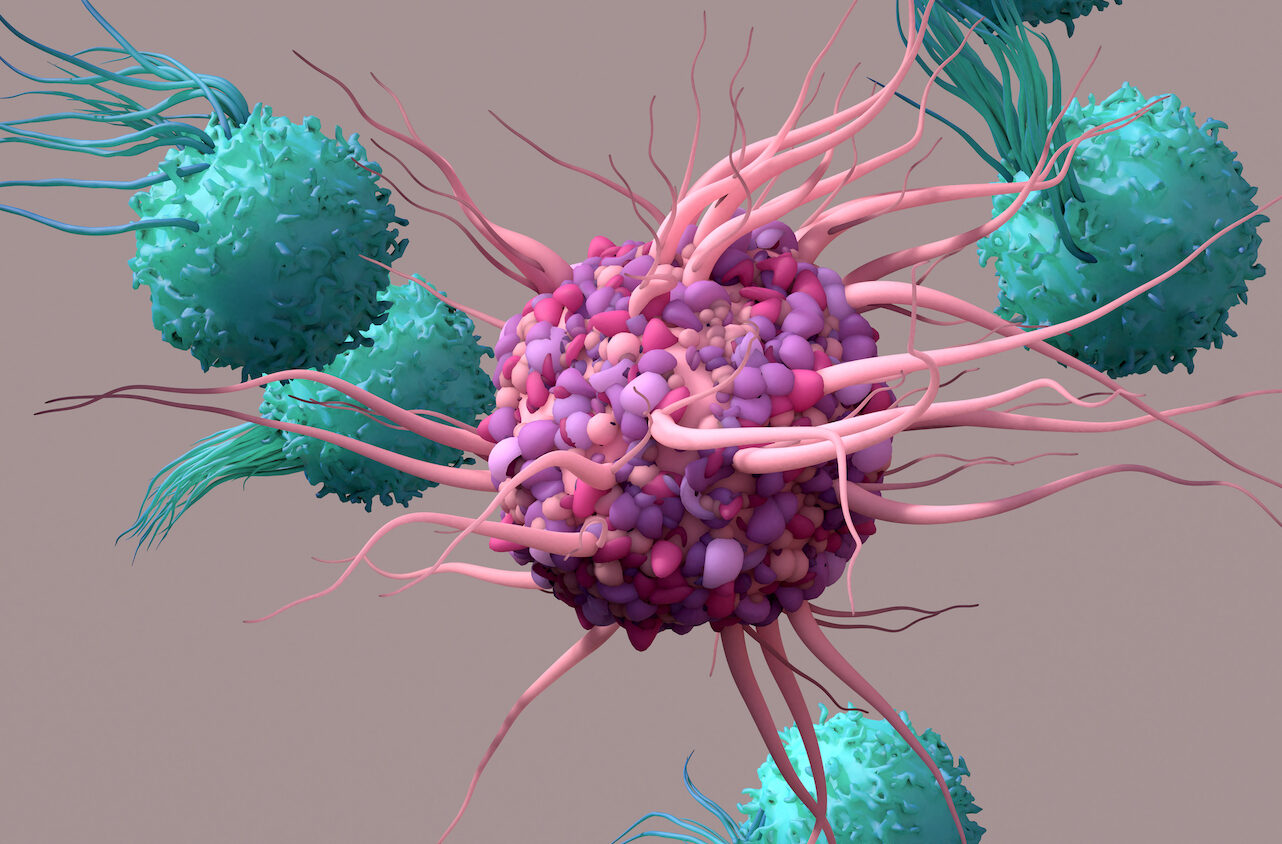
Findings from a new study led by scientists at Stanford University School of Medicine and their colleagues elsewhere show that a single signaling pathway controls whether immune cells attack or befriend cells that they encounter in the body. By manipulating this pathway, scientists may be able to tweak the immune response to treat a range of diseases, including cancers, autoimmune disorders, and more. Full details are provided in a new Nature paper titled “Erythropoietin receptor on cDC1s dictates immune tolerance.”
The findings build on work published in an earlier study by the same research group that described a role for erythropoietin (EPO) in the immune system—specifically, controlling how dendritic cells respond to real or perceived threats. The current study, which was performed in mice, helps to illuminate an aspect of peripheral immune tolerance, which is responsible for preventing inappropriate attacks on healthy tissue. The scientists who discovered regulatory T cells (Tregs), which are the key cellular players in peripheral immune tolerance, were awarded the 2025 Nobel Prize in physiology or medicine.
“The Nobel prize was awarded for identifying regulatory T cells, or Tregs, and their role in immune tolerance, without knowing what triggers them,” noted Edgar Engelman, MD, PhD, a pathology professor at Stanford, a member of Stanford Cancer Institute, and senior author on the paper. “Now we know the EPO signaling pathway in dendritic cells is what triggers them.”
Understanding the findings requires a bit of background. To help the immune system develop a tolerance to itself, B cells and T cells of the immune system go through a first round of selection to eliminate or reprogram self-reactive cells before they are released into the bloodstream. Then the peripheral immune system kicks in to act as a backup to screen cells once they are circulating in the bloodstream. These activities are important because overactive immune systems can attack healthy tissue, resulting in a range of autoimmune disorders like rheumatoid arthritis and multiple sclerosis. Lax immune systems can allow harmful cells, such as tumor cells, to escape destruction.
“What had yet to be discovered is the mechanism responsible for inducing or activating Tregs in those circumstances when they are needed to suppress a dangerous immune response,” Engleman said. “We not only discovered this mechanism, but we also learned how it can be turned on and off.”
Digging into the details, the scientists irradiated the thymus, spleen, and lymph nodes of mice to kill off as many T and B cells without destroying antigen-presenting cells such as type 1 dendritic cells. These cells work by engulfing dead or dying cells or pathogens and then displaying bits of cells on their surfaces for other immune system cells to pick up.
Engelman explained the reasoning behind his team’s approach. “All T cells, including Tregs, must first be presented with … an antigen that is recognized by their receptors for the cells to develop into mature T cells that either attack a target or suppress the immune response to that target,” he said. It stands to reason “that this process of tolerance or activation must be initiated by antigen-presenting cells.”
Following irradiation, Engelman and his team, which includes Xiangyue Zhang, PhD, a senior research scientist at Stanford Medicine and lead author of the study, investigated whether and how mouse genes changed in response. They found that the gene for the EPO receptor was expressed at much higher levels in the dendritic cells of irradiated animals. The mice also showed elevated levels of EPO in their blood. This is where the findings from the earlier study come in. Previously, Engelman and his colleagues showed that cells in immunologically tolerated tumors can trick the immune system by making EPO and releasing it into the tumor environment. Once there, it binds to macrophages and causes the cells to become immunosuppressive.
That bit of information suggested a role for EPO as a master immune regulator. This was confirmed when Zhang genetically manipulated the mice to remove the ability of the dendritic cells to express the EPO receptor. The modified animals rejected transplants of unmatched tissue after irradiation, according to the paper.
Simply put, when EPO interacts with its receptors on the dendritic cells, it causes the dendritic cells to embark on a series of maturation steps that promote tolerance and selectively activate Tregs that tamp down any immune response to that antigen. Removing the EPO receptor resulted in tumor regression in mice with immune-resistant melanoma or colon cancer tumors.
“It’s fascinating that this fundamental mechanism took so long to discover,” Engleman said. “It’s even possible that this is the primary function of EPO, and that its effect on red blood cell formation is secondary. I’m more than a little excited about it. I believe that manipulation of this pathway will eventually be used to treat a wide range of diseases.”
