

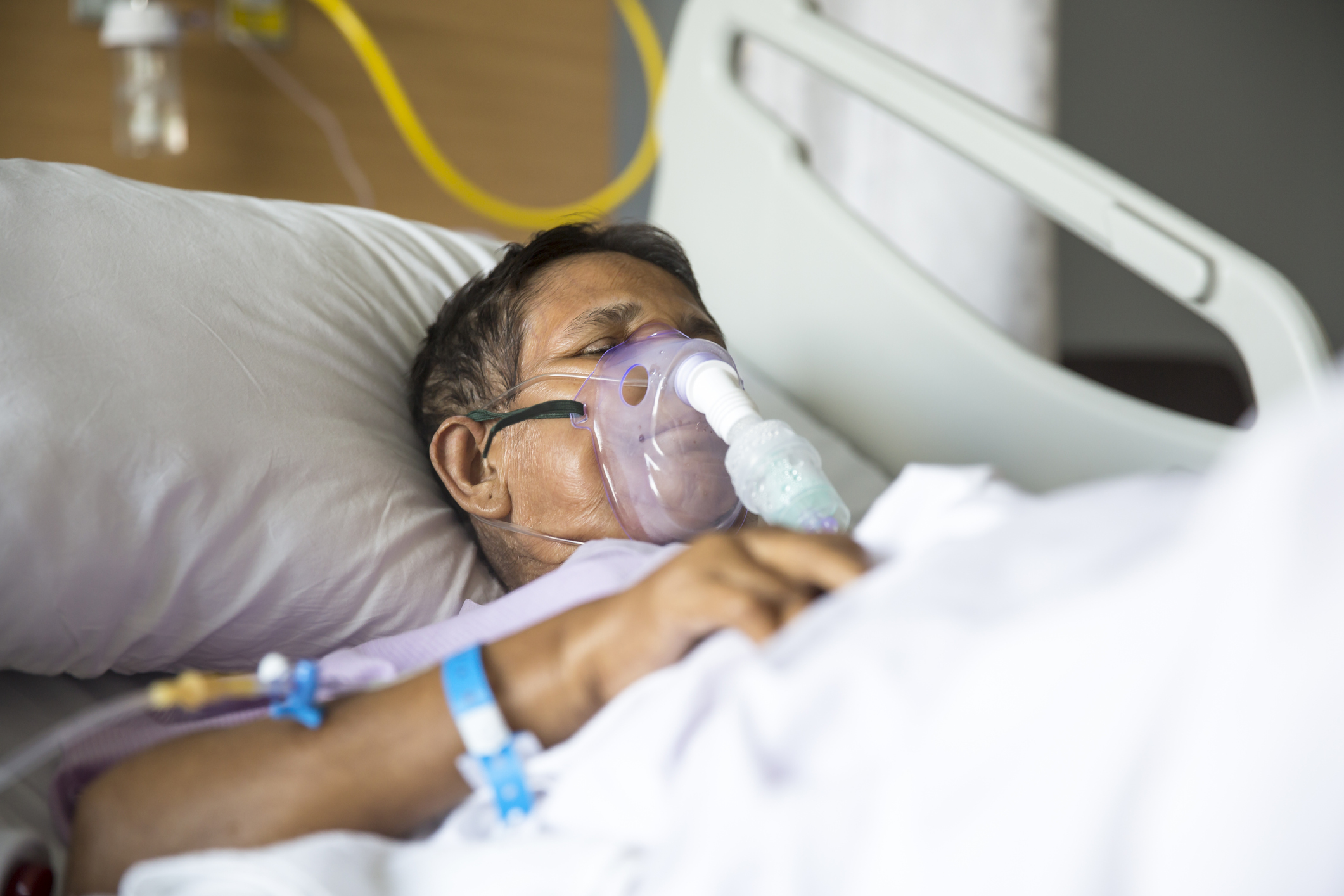
Precision immunotherapy tailored to patients with sepsis can improve their outcomes compared with placebo treatment, according to a trial conducted at 33 intensive care units in six countries.
The approach, outlined in JAMA, could help clinicians design targeted interventions in which sepsis patients are treated according to their distinct immune responses.
Personalizing immunotherapy according to immune profile was better at reducing dysfunction in the vital organs of these critically ill patients versus placebo in the ImmunoSep trial.
Nearly twice as many patients receiving immunotherapy based on biomarkers achieved the primary endpoint threshold for improvement in organ function versus placebo.
“Among patients with sepsis, precision immunotherapy targeting macrophage activation-like syndrome and sepsis-induced immunoparalysis improved organ dysfunction by day 9 compared with placebo,” summarized Evangelos Giamarellos-Bourboulis, PhD, from the National and Kapodistrian University of Athens, and co-workers.
Sepsis is a life-threatening immune response to infection that injures vital organs and is a major cause of death worldwide. It is caused by an abnormal immune response to infection, which varies from hyperinflammation to immunosuppression.
To examine whether a precision approach relying on the classification of immune dysregulation might help, investigators conducted a multicenter trial that included 276 adults who met sepsis 3 criteria secondary to pneumonia or primary bacteremia.
Over 30 months, the researchers screened 672 patients, of whom 53% had an unclassified host response and 42% met criteria with either macrophage-activation-like syndrome (7%, n = 48) or immune paralysis (34%, n = 228).
After removing five people who withdrew consent, 131 patients were randomly assigned to receive precision immunotherapy in the form of anakinra for hyperinflammatory state or recombinant interferon gamma for immunoparalysis, while the remaining 145 received placebo.
The mean age was 70 years, and around a third of the participants were women.
Two assays—serum ferritin and human leukocyte antigen (HLA)–DR expression on circulating monocytes—were performed on drawn blood.
This was then used to characterize the host response into one of three groups: macrophage-activation-like syndrome, with high ferritin and normal HLA-DR; sepsis-induced immune paralysis normal ferritin and low HLA-DR; or unclassified, with normal ferritin and HLA-DR expression.
Patients with an unclassified response were not randomized, while the remainder were randomly assigned to receive precision treatment of placebo.
Precision therapy consisted of a 15-day course of either intravenous anakinra if the patient had macrophage-activation-like syndrome or subcutaneous recombinant interferon if they had immune paralysis.
To ensure blinding, all patients received intravenous and subcutaneous injections, with control patients receiving double placebo and those assigned precision therapy receiving the placebo form of the nonindicated intervention in addition to their indicated active agent.
The primary outcome was the change in vital organ dysfunction from baseline, assessed as a minimum 1.4-point decrease in the Sequential Organ Failure Assessment score, which ranged from 0 reflecting no organ dysfunction to 24 in which there was most severe multiorgan failure or more at day 9.
A significantly greater proportion of the precision immunotherapy group reached this endpoint versus placebo, at a corresponding 35.1% versus 17.9%.
Secondary analyses suggested that therapy was effective in both host immune signatures with respect to the primary outcome. The immunotherapy group was more likely to have their infection resolved by day 15.
In a subset of patients with sequential biomarkers, host immune signatures appeared to normalize more rapidly in patients receiving active treatment compared with placebo. Secondary analyses of organ dysfunction broadly supported the primary findings, but without significant benefits in terms of preventing death.
Adverse events were infrequent and similar between the groups. However, there was an increased incidence of anemia with anakinra and hemorrhage with interferon gamma.
In an accompanying editorial, Derek Angus, MD, from the University of Pittsburgh, noted: “The 2 signatures together accounted for less than half of all screened cases, leaving unaddressed the role of precision therapy for the majority of patients.”
He added: “ImmunoSep has not found the cure for sepsis, and, indeed, there are a number of issues over which many may quibble.
“However, to paraphrase Winston Churchill: this study represents neither the end of the war on sepsis nor the beginning of the end. But it is the end of the beginning.”
