

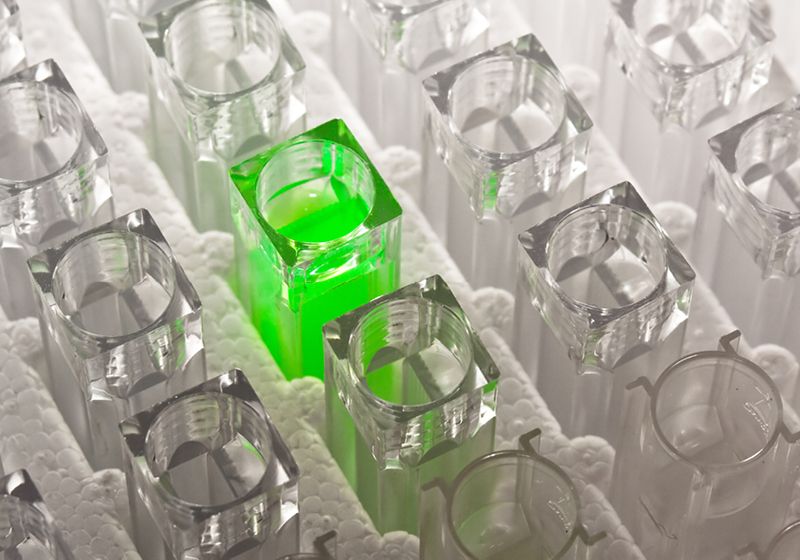
ATP bioluminescence assays reveal microbial contamination in laboratory samples, enabling more rapid and sensitive quality control testing than traditional culture-based methods.
©iStock, rsporea
Researchers and therapeutic manufacturers have long relied on classical microbiological methods to check their samples and surfaces for microbial contamination, primarily using lengthy culture-dependent approaches.1 Such quality control (QC) testing is essential, but despite their widespread use and regulatory acceptance, traditional methods pose challenges in the modern laboratory, where rapid results and objective measurements are needed to strengthen scalable workflows. Scientists and regulatory experts increasingly turn to luminometry to automate and accelerate QC via ATP bioluminescence assays.
The Trouble with Culture-Based QC
Conventionally, researchers inspect visual turbidity or perform manual colony-counting after inoculating a culture to test a product’s sterility, bioburden, and microbial limit.1,2 These approaches remain validated and widely implemented, but they no longer match the pace or complexity of product manufacturing QC.
For instance, culture-dependent sterility assays may require up to 14 days, while Mycoplasma testing may take up to 28 days.2 During this wait time, a sample or product must remain in quarantine, increasing inventory costs and, in the case of drug development pipelines, delaying release. This lost time can be an especially heavy burden for biologics or cell and gene therapies that have short shelf lives.2
Additionally, manual culture readouts introduce subjectivity and data recording uncertainties. Visual turbidity assessments vary between operators, and slow microbial growth can go undetected.1 Counting colony-forming units (CFUs) also depends on a scientist’s judgment, particularly at the low contamination levels that are common in pharmaceutical production.2 Manual data transcription compounds risk, increasing the potential for documentation errors and integrity gaps. As regulators and researchers elevate their standards for data reliability, these vulnerabilities present serious compliance challenges.
Keeping Up with A Changing Regulatory Framework
Recognizing these limitations, scientists and regulatory experts such as the United States Pharmacopeia (USP) are proposing and implementing properly validated ATP-bioluminescence assays for sterility, bioburden, and microbial-limit testing.2
ATP-bioluminescence assays combine microbial ATP with luciferase/luciferin reagents to produce light that can be sensitively and objectively quantified with a luminometer.3 The USP has recently endorsed ATP-bioluminescence in biopharmaceutical industry standardized analytical testing to ensure pharmaceutical products or ingredients meet quality, purity, and safety standards related to microbial contamination.
How Luminometry Meets Modern QC Demands
Speed defines luminometry’s primary advantage. Microbial-limit and bioburden testing via luminometry typically yields results within 24 to 36 hours rather than several days, and ATP bioluminescence assays for sterility testing shorten timelines substantially. Faster results improve manufacturing agility, reduce quarantine inventory burden, and enable earlier intervention when contamination occurs. Luminometers also have the potential for higher throughput capacity, helping laboratories process large sample volumes for raw materials testing, water monitoring, in-process controls, and final product release.
Additionally, luminometry overcomes challenges associated with complex matrices common to biologics and advanced therapies that can inhibit growth, causing visual turbidity or plating assays to fail or become unreliable.2,4
Implementing Luminometry at Scale
Manufacturers across pharmaceutical, biologic, and advanced-therapy sectors can use luminometry to accelerate microbial testing while maintaining compendial compliance. This technology streamlines workflows, standardizes results, improves data reliability, and supports faster release decisions without compromising safety.

The Celsis Advance II™ ATP Luminometer helps manufacturers combine established sample preparation methods with automated ATP-based detection, accelerating objective microbial screening.
Charles River Laboratories
The Celsis Advance II™ ATP Luminometer from Charles River is designed for high-throughput QC environments, combining established sample preparation methods with automated ATP-based detection to deliver rapid and objective microbial screening. The Celsis® assay quickly confirms the presence or absence of microbial contamination using an amplified ATP-based bioluminescence reaction that preserves scientists’ originally validated sample preparation methods, such as bioburden filtration or direct inoculation.
Once prepared, samples can be quickly loaded into the Celsis Advance II™ ATP Luminometer, which uses up to four variable-volume reagent injectors to ensure accuracy, reduce handling, and increase flexibility. The luminometer’s LIMS-compatible system processes up to 120 tests per hour, allows scientists to combine multiple batches or protocols, and displays results in a color-coded table or graphical view that digitizes straightforward data interpretation.
This system demonstrates how luminometry transforms contamination testing from a prolonged incubation process into a fast, data-driven decision that keeps pace with modern biomanufacturing.

