

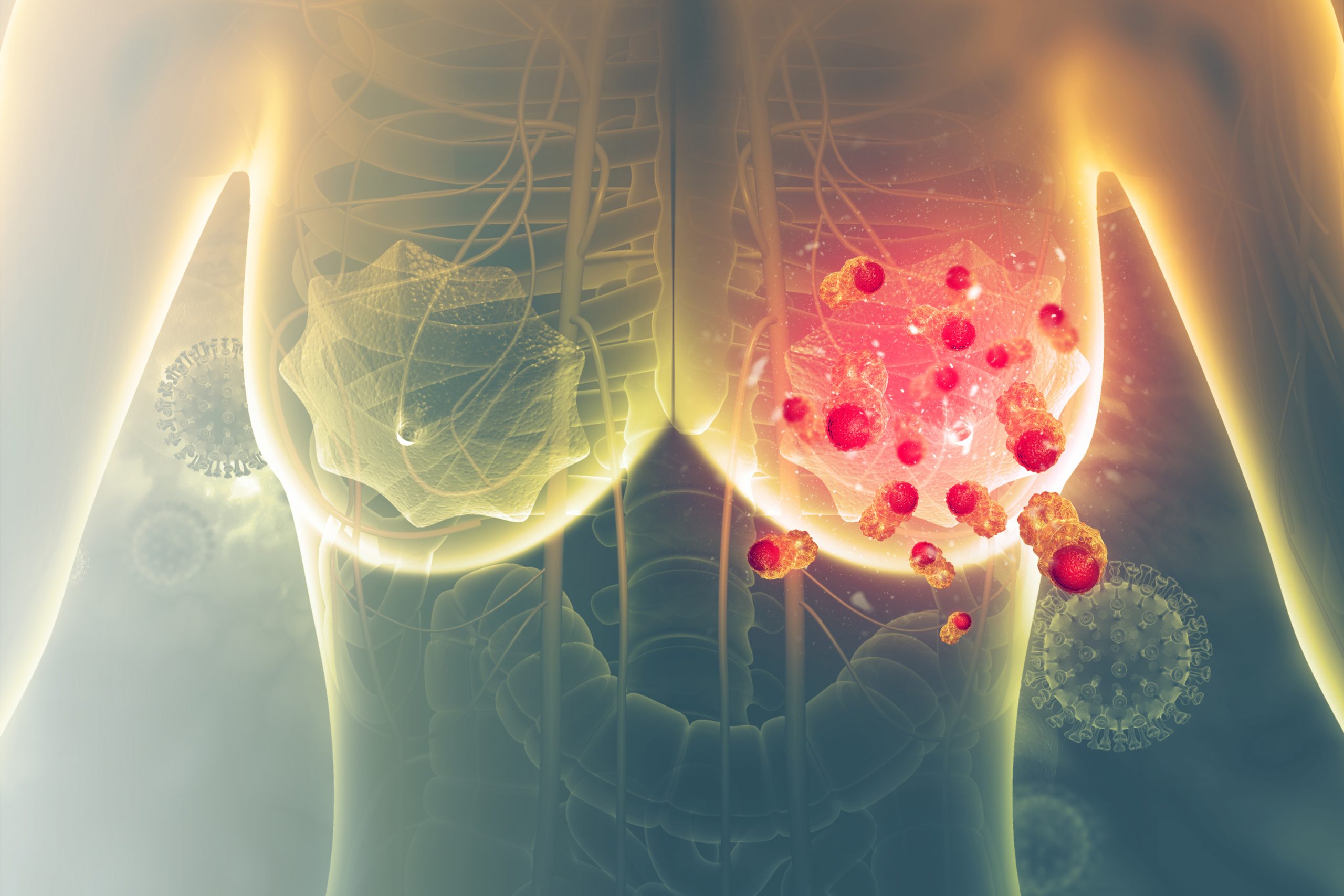
Final results from a Phase I clinical study suggest that a preventive vaccine strategy for triple-negative breast cancer (TNBC) may be biologically feasible in humans. Investigators at Cleveland Clinic reported that an experimental vaccine targeting the lactation protein α-lactalbumin was well tolerated and elicited immune responses in most participants across three high-risk groups. The findings (PS4-06-19) were presented at the 2025 San Antonio Breast Cancer Symposium and will guide the design of a forthcoming Phase II trial.
TNBC remains one of the most challenging breast cancer subtypes to address. The disease lacks estrogen, progesterone, and HER2 receptors, rendering it unresponsive to hormonal or HER2-targeted therapies. Although TNBC accounts for only 10–15% of breast cancer diagnoses, it is responsible for a disproportionate share of breast cancer mortality and is diagnosed more frequently in Black women. Individuals with inherited mutations such as BRCA1 also face substantially elevated lifetime risk, highlighting the need for preventive strategies beyond surveillance and prophylactic surgery.
Targeting a developmentally restricted antigen
Unlike most cancer vaccines, which aim to target tumor-specific mutations, the Cleveland Clinic vaccine focuses on α-lactalbumin, a protein normally expressed during lactation but largely absent from healthy breast tissue after breastfeeding ends. Preclinical work led by the late Vincent Tuohy, PhD, established the concept of α-lactalbumin as a “retired protein,” dispensable later in life yet aberrantly expressed in the majority of TNBC tumors.
In multiple mouse models, vaccination against α-lactalbumin prevented spontaneous breast tumor formation and inhibited growth of established tumors without causing autoimmunity. The Phase I study was designed to test whether this immune strategy could be safely translated to humans and whether it could generate measurable immune responses.
Immune responses observed across high-risk cohorts
The trial enrolled 35 participants across three cohorts representing populations at elevated risk of recurrence or future disease. These included individuals who had completed treatment for high-risk TNBC and were tumor-free, carriers of pathogenic BRCA1, BRCA2, or PALB2 mutations undergoing prophylactic mastectomy, and patients with residual TNBC following neoadjuvant chemo-immunotherapy.
Participants received three vaccinations administered every two weeks using recombinant human α-lactalbumin formulated with zymosan and Montanide ISA 51 VG. Immune responses were evaluated using enzyme-linked immunospot assays to detect interferon-γ and interleukin-17 production, along with antibody measurements by ELISA.
Across all cohorts, 74% of participants met protocol-defined criteria for an immune response. These responses reflected both cellular and humoral immunity, indicating coordinated activation of T-cell and antibody-mediated pathways.
Favorable safety profile and dose selection
The vaccine was generally well tolerated. Reported adverse events were primarily localized injection-site reactions. A small number of Grade 3 ulcerations occurred at higher dose levels, requiring drainage, which informed dose escalation decisions. Dose Level 1 was defined as the maximum tolerated dose, producing no more than Grade 1 toxicity in most participants.
“The results from this trial are promising, as they suggest the investigational vaccine is not only safe and well tolerated but also capable of inducing immune responses in over 70% of participants,” said G. Thomas Budd, MD, principal investigator and oncologist at Cleveland Clinic’s Cancer Institute.
Justin Johnson, PhD, a researcher in Cleveland Clinic’s Department of Inflammation and Immunity, emphasized the translational relevance of the results, noting that immune activation was observed across all three study cohorts.
Positioning cancer vaccination in prevention research
Although preventive vaccines are traditionally associated with infectious diseases, interest in cancer prevention through immunologic intervention has grown steadily. TNBC presents a particularly compelling target because α-lactalbumin is consistently expressed in tumors but largely silent in non-lactating adults, reducing the risk of off-target immune effects.
The Phase I study was not designed to assess cancer prevention or long-term clinical benefit, and investigators caution that durability of immune responses and protective efficacy remain open questions. These endpoints will be addressed in a planned Phase II study, which is expected to begin next year and will evaluate whether vaccination can meaningfully reduce cancer risk or recurrence.
Toward broader preventive immunotherapy
If future trials demonstrate clinical benefit, the α-lactalbumin strategy could represent a broader paradigm in cancer prevention—targeting developmentally restricted proteins that re-emerge during oncogenesis. Similar approaches may ultimately be explored in other malignancies where such antigens are reactivated.
As the program advances to Phase II testing, the results mark a meaningful step toward translating cancer vaccination from concept to clinic, shifting the focus of immunotherapy from treatment alone toward the possibility of prevention.
