
Close Menu
My Blog

    Subscribe to Updates

    Get the latest creative news from FooBar about art, design and business.

    What's Hot

    Nautilus debuts Voyager platform in push toward next-gen proteomics

    March 1, 2026

    First-in-Human Success for Prenatal Stem Cell Therapy in Spina Bifida

    February 28, 2026

    Pressure-Driven Pathway Links Liver Congestion to Fibrosis and Cancer

    February 28, 2026
    Facebook X (Twitter) Instagram
    X (Twitter) YouTube
    My BlogMy Blog
    Sunday, March 1
    • Home
    • About Us
    • Healthy Living
    • DNA & Genetics
    • Podcast
    • Shop
    My Blog
    Home»DNA & Genetics»Colorectal Cancer Outcomes Explained by Distinct Regulatory T-Cell Subsets
    DNA & Genetics

    Colorectal Cancer Outcomes Explained by Distinct Regulatory T-Cell Subsets

    adminBy adminDecember 16, 2025No Comments3 Mins Read
    Facebook Twitter Pinterest LinkedIn Tumblr WhatsApp VKontakte Email
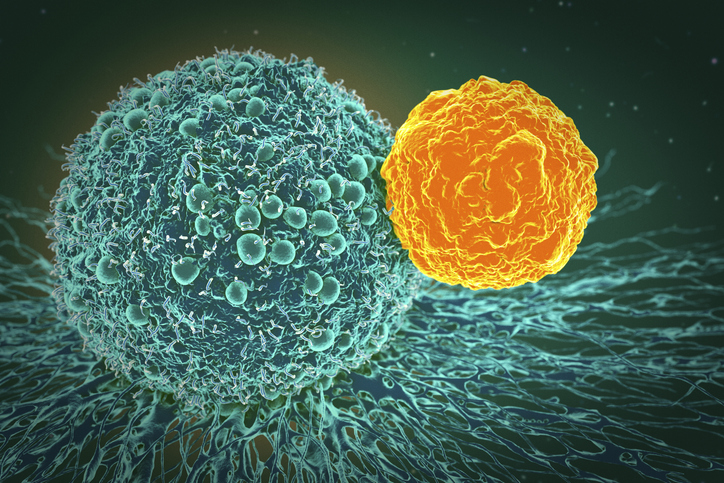
    cancer cell and T cell
    Share
    Facebook Twitter LinkedIn Pinterest Email

    According to the American Cancer Society, colorectal cancer is the second leading cause of cancer death. Enrichment of regulatory T cells (T-regs) in solid cancers is generally associated with poor prognosis because these cells dampen the immune system’s ability to fight against a tumor. However, colorectal cancer stands out as an exception, as high density of T-regs in colorectal tumors is associated with improved survival. The mechanism for these improved outcomes has not been understood.

    In a new study published in Immunity titled, “Opposing functions of distinct regulatory T cell subsets in colorectal cancer,” researchers from Memorial Sloan Kettering Cancer Center (MSK) have identified two distinct tumoral T-reg subsets with differential Il10 expression in colorectal cancer. The results could improve immunotherapy treatment for patients with cancers that affect tissues such as the skin and the lining of the stomach, mouth, and throat. 

    “Instead of the regulatory T cells promoting tumor growth, as they do in most cancers, in colorectal cancer we discovered there are actually two distinct subtypes of T-reg cells that play opposing roles—one restrains tumor growth, while the other fuels it,” said Alexander Rudensky, PhD, co-corresponding author of the study, Howard Hughes Medical Institute (HHMI) Investigator, and chair of the Immunology Program at MSK. “It’s these beneficial T-reg cells that make the difference, and this underscores the need for selective approaches.” 

    The researchers focused on microsatellite stable (MSS) with proficient mismatch repair (MMRp), a type of colorectal cancer that accounts for 80% to 85% of all colorectal cancers. The DNA of these tumors is relatively stable, leading these cancers to be largely resistant to checkpoint inhibitor immunotherapies. 

    The team employed a mouse model that recapitulated common mutations, behaviors, and immune cell composition of human colorectal cancer. Results showed that IL-10-positive T-regs dampen the activity of Th17 cells, which produce interleukin 17 (IL-17) and acts as a growth factor for the tumor. Tumor growth accelerated when IL-10-positive cells were removed. 

    In contrast, IL-10-negative T-regs, suppress immune defenders, such as CD8+ T cells with strong anti-cancer capabilities. This subtype of T-regs is largely found within the tumor itself. The researchers validated their laboratory findings using tumor samples from 100 patients with colorectal cancer.  

    “This research shows how important these positive cells are,” said Xiao Huang, PhD, first author of the study and research associate at MSK. “And it highlights the need to develop therapies that can selectively eliminate the harmful T-regs while preserving the helpful ones.” 

    Rudensky says the research points to opportunities to improve outcomes for the majority of colorectal cancer patients. Notably, results showed that the IL-10-negative cells expressed high levels of CCR8. 

    “This idea of using CCR8-depleting antibodies, which was pioneered at MSK, is the main target of global efforts to bring regulatory T cell–based immunotherapy to the clinic,” said Rudensky. 

    Numerous clinical trials are underway at MSK to test the approach as a standalone treatment and in combination with other immunotherapies. The researchers also suggest that approaches that selectively target IL-10-negative cells in colorectal cancer may be effective against other barrier-tissue cancers. 

    Cancer Colorectal Distinct explained outcomes Regulatory Subsets TCell
    Share. Facebook Twitter Pinterest LinkedIn Tumblr WhatsApp Email
    Previous Article7 habits longevity experts say will add life to your years
    Next Article CRISPR and Precision Cancer Therapy Efficacy Influenced by Common Drugs
    admin
    • Website

    Related Posts

    Pressure-Driven Pathway Links Liver Congestion to Fibrosis and Cancer

    February 28, 2026

    A Video Report from AGBT

    February 27, 2026

    Novo Nordisk, Vivtex Ink Up to $2.1B Deal to Develop Oral Biologics for Metabolic Conditions

    February 27, 2026

    Advanced Brain Cancer Survival Rates Double with LITT

    February 27, 2026
    Leave A Reply Cancel Reply

    Our Picks

    9 Time-Saving Kitchen Gadgets for Fall at Amazon

    September 5, 2025

    Why Exercise Is So Important For Heart Health, From An MD

    September 5, 2025

    An Engineered Protein Helps Phagocytes Gobble Up Diseased Cells

    September 5, 2025

    How To Get Rid Of Hangnails + Causes From Experts

    September 5, 2025
    • Facebook
    • Twitter
    • Pinterest
    • Instagram
    • YouTube
    • Vimeo
    Don't Miss
    Longevity

    Nautilus debuts Voyager platform in push toward next-gen proteomics

    By adminMarch 1, 20260

    Company’s new benchtop system promises a clearer view of proteins following validation at a leading…

    First-in-Human Success for Prenatal Stem Cell Therapy in Spina Bifida

    February 28, 2026

    Pressure-Driven Pathway Links Liver Congestion to Fibrosis and Cancer

    February 28, 2026

    A cellular atlas of aging comes into focus

    February 28, 2026

    Subscribe to Updates

    Get the latest creative news from SmartMag about art & design.

    About Us

    At FineGut, our mission is simple: to enhance your self-awareness when it comes to your gut health. We believe that a healthy gut is the foundation of overall well-being, and understanding the brain–gut connection can truly transform the way you live.

    Our Picks

    9 Time-Saving Kitchen Gadgets for Fall at Amazon

    September 5, 2025

    Why Exercise Is So Important For Heart Health, From An MD

    September 5, 2025

    An Engineered Protein Helps Phagocytes Gobble Up Diseased Cells

    September 5, 2025
    Gut Health

    Nautilus debuts Voyager platform in push toward next-gen proteomics

    March 1, 2026

    First-in-Human Success for Prenatal Stem Cell Therapy in Spina Bifida

    February 28, 2026

    Pressure-Driven Pathway Links Liver Congestion to Fibrosis and Cancer

    February 28, 2026
    X (Twitter) YouTube
    • Contact us
    • Privacy Policy
    • Disclaimer
    • Terms and Conditions
    © 2026 finegut.com. Designed by Pro.

    Type above and press Enter to search. Press Esc to cancel.