
Close Menu
My Blog

    Subscribe to Updates

    Get the latest creative news from FooBar about art, design and business.

    What's Hot

    Nautilus debuts Voyager platform in push toward next-gen proteomics

    March 1, 2026

    First-in-Human Success for Prenatal Stem Cell Therapy in Spina Bifida

    February 28, 2026

    Pressure-Driven Pathway Links Liver Congestion to Fibrosis and Cancer

    February 28, 2026
    Facebook X (Twitter) Instagram
    X (Twitter) YouTube
    My BlogMy Blog
    Sunday, March 1
    • Home
    • About Us
    • Healthy Living
    • DNA & Genetics
    • Podcast
    • Shop
    My Blog
    Home»Microbiome»CRISPR and Precision Cancer Therapy Efficacy Influenced by Common Drugs
    Microbiome

    CRISPR and Precision Cancer Therapy Efficacy Influenced by Common Drugs

    adminBy adminDecember 16, 2025No Comments3 Mins Read
    Facebook Twitter Pinterest LinkedIn Tumblr WhatsApp VKontakte Email
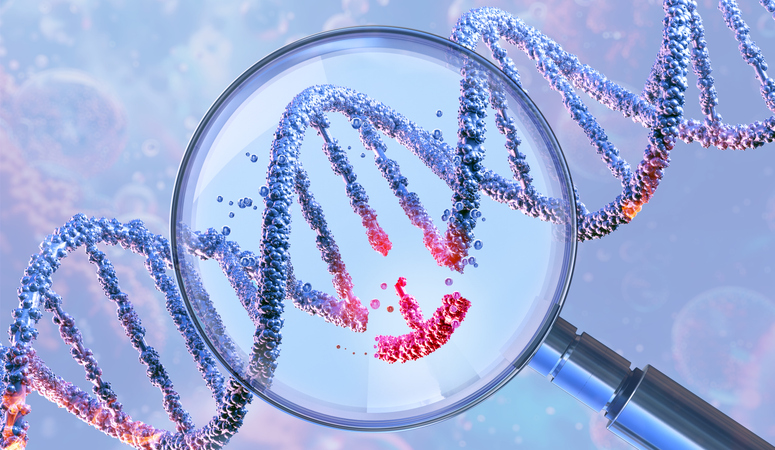
    DNA double helix under a magnifying glass, symbolizing genetic engineering and gene manipulation.
    Share
    Facebook Twitter LinkedIn Pinterest Email

    Credit: quantic69 / iStock / Getty Images Plus

    A large analysis of thousands of FDA-approved drugs carried out at the Max Planck Institute for Evolutionary Anthropology in Leipzig shows that a number of commonly used drugs can influence the efficacy of CRISPR-based gene editing therapies.

    In addition, the researchers showed two proteins, estrogen receptor 2 (ESR2) and aldehyde oxidase 1 (AOX1) play an important role in the DNA repair pathway and identified some drugs that could potentially be repurposed as cancer therapies for specific DNA repair defects seen in some cancers.

    “Every cell in the human body faces the threat of naturally occurring DNA double strand breaks. Double strand break repair pathways are therefore essential for preventing cell death,” explain lead author Stephan Riesenberg, PhD, a group leader at the Max Planck Institute for Evolutionary Anthropology, and colleagues in Nature Communications.

    “Repair pathway choice is of great importance in genome editing and synthetic lethality. Consequently, clinically safe drugs that can alter repair pathway choice would be of great benefit for gene therapy and oncology.”

    In the current study, the researchers carried out a lab-based CRISPR editing assay to model an environment where gene editing had occurred and study the potential effects of 2,344 FDA-approved drugs in more than 7,000 different conditions (e.g. different dosing) on this process.

    “Understanding how everyday medicines interact with CRISPR-based treatments will be increasingly important as these therapies enter real-world clinical use,” said first author Dominik Macak, also based at the Max Planck Institute for Evolutionary Anthropology, in a press statement.

    They found that a number of commonly used drugs did impact CRISPR gene editing. For example, tolterodine and orphenadrine, anticholinergic drugs prescribed for overactive bladder and as a muscle relaxant, respectively, raised the fraction of precise edits between 1.4-1.7 fold. In contrast, the cardiac glycoside ouabain, used to treat low blood pressure and heart rhythm disorders, distorted gene editing and was also toxic to edited cells.

    The researchers also discovered the role of ESR2 and AOX1 in the DNA repair pathway, as well as finding new candidates for inducing synthetic lethality in cancer cells. Use of synthetic lethality as a therapy is based on the idea that two separate genetic weaknesses are tolerated on their own, but lethal together. If a cell already has a fault in one DNA repair pathway, blocking a second, compensating pathway with a drug pushes it over the edge and the cell dies. This is useful for targeting cancer cells with cancer specific mutations.

    Riesenberg and team identified several drugs with potential to treat cancers with DNA repair mutations. For example, the antimalarial drug artemether and raloxifene, primarily used to treat osteoporosis, were good candidates for this, as was ouabain, as it caused profound cell death in cells with particular mutations linked to DNA repair.

    “Our study identifies several approved medicines as promising candidates for treating cancers with DNA-repair deficiencies, offering potential options beyond current therapies,” said Riesenberg. “Nevertheless, additional research is needed to validate if our findings obtained from experiments with cultured cells would actually translate to real-world medical use.”

    Cancer Common CRISPR drugs efficacy Influenced precision Therapy
    Share. Facebook Twitter Pinterest LinkedIn Tumblr WhatsApp Email
    Previous ArticleColorectal Cancer Outcomes Explained by Distinct Regulatory T-Cell Subsets
    Next Article Senescence Exacerbated by Mitochondrial RNA Leakage
    admin
    • Website

    Related Posts

    First-in-Human Success for Prenatal Stem Cell Therapy in Spina Bifida

    February 28, 2026

    Pressure-Driven Pathway Links Liver Congestion to Fibrosis and Cancer

    February 28, 2026

    Genetic Biomarkers to Predict Efficacy of GLP-1 Therapies Uncovered

    February 28, 2026

    Mapping the Cellular Architecture of Aging Across 21 Organs

    February 28, 2026
    Leave A Reply Cancel Reply

    Our Picks

    9 Time-Saving Kitchen Gadgets for Fall at Amazon

    September 5, 2025

    Why Exercise Is So Important For Heart Health, From An MD

    September 5, 2025

    An Engineered Protein Helps Phagocytes Gobble Up Diseased Cells

    September 5, 2025

    How To Get Rid Of Hangnails + Causes From Experts

    September 5, 2025
    • Facebook
    • Twitter
    • Pinterest
    • Instagram
    • YouTube
    • Vimeo
    Don't Miss
    Longevity

    Nautilus debuts Voyager platform in push toward next-gen proteomics

    By adminMarch 1, 20260

    Company’s new benchtop system promises a clearer view of proteins following validation at a leading…

    First-in-Human Success for Prenatal Stem Cell Therapy in Spina Bifida

    February 28, 2026

    Pressure-Driven Pathway Links Liver Congestion to Fibrosis and Cancer

    February 28, 2026

    A cellular atlas of aging comes into focus

    February 28, 2026

    Subscribe to Updates

    Get the latest creative news from SmartMag about art & design.

    About Us

    At FineGut, our mission is simple: to enhance your self-awareness when it comes to your gut health. We believe that a healthy gut is the foundation of overall well-being, and understanding the brain–gut connection can truly transform the way you live.

    Our Picks

    9 Time-Saving Kitchen Gadgets for Fall at Amazon

    September 5, 2025

    Why Exercise Is So Important For Heart Health, From An MD

    September 5, 2025

    An Engineered Protein Helps Phagocytes Gobble Up Diseased Cells

    September 5, 2025
    Gut Health

    Nautilus debuts Voyager platform in push toward next-gen proteomics

    March 1, 2026

    First-in-Human Success for Prenatal Stem Cell Therapy in Spina Bifida

    February 28, 2026

    Pressure-Driven Pathway Links Liver Congestion to Fibrosis and Cancer

    February 28, 2026
    X (Twitter) YouTube
    • Contact us
    • Privacy Policy
    • Disclaimer
    • Terms and Conditions
    © 2026 finegut.com. Designed by Pro.

    Type above and press Enter to search. Press Esc to cancel.