

Bets on automation underscore investor confidence in industrializing cell therapies as patient demand continues to outpace supply.
Cellular Origins, a Cambridge, UK–based manufacturing automation company, has closed a $40 million over-subscribed Series A financing round, marking a significant step toward industrializing the production of cell therapies.
The round was led by Johnson & Johnson, through its corporate venture capital arm, Johnson & Johnson Innovation – JJDC, Inc, with participation from Highland Europe, BGF, NYBC Ventures and TTP Group.
The funding comes as cell therapies, often described as one of the most transformative advances in modern medicine, continue to face a persistent and costly challenge: manufacturing at scale.
This bottleneck has particular relevance for longevity and healthspan-focused medicine, where cell-based interventions are increasingly being explored to address age-related degeneration, immune decline and other chronic conditions associated with aging populations.
While clinical breakthroughs have accelerated, production processes remain labor-intensive, fragmented and difficult to replicate reliably across facilities. As a result, many therapies struggle to reach all eligible patients.
Cellular Origins positions itself at this bottleneck, offering a robotics-led approach designed to bridge the gap between clinical promise and commercial reality.
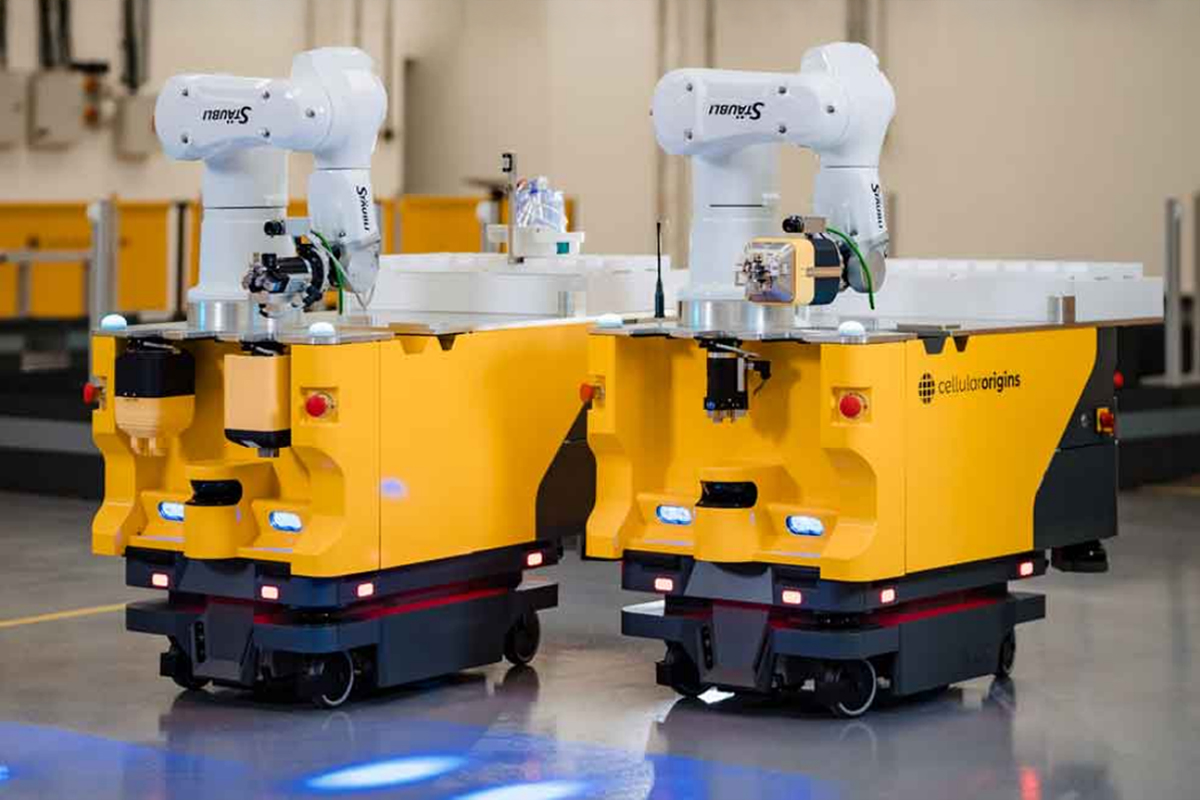
The company’s strategy is focused on its proprietary Constellation platform, which uses robotic automation to connect existing third-party unit operations already common in cell therapy manufacturing. Rather than forcing developers to redesign their therapies for automation, the platform integrates into current workflows.
This means that steps traditionally performed by skilled technicians – often in cleanrooms, under strict sterile conditions – can be automated and coordinated by mobile robotics and automated sterile welding. The goal is not just speed, but consistency: preserving biological performance while reducing operational risk and spatial constraints.
Cellular Origins says this approach enables the reliable manufacture of hundreds of thousands of doses, a scale that has historically been difficult to achieve without compromising quality or driving up costs.
For Edwin Stone, CEO of Cellular Origins, the Series A marks more than just an infusion of capital.
“This fundraise is a pivotal milestone in our mission to industrialise cell therapy manufacturing,” Stone said. “The support from our investors is a strong endorsement of both our technology and the urgent need for scalable, automated solutions in this space.”
Stone emphasized that the funding recognizes the progress that Cellular Origins, its partners and customers have collectively made towards enabling access to cell therapies at scale.
“This investment gives us access to the capital and networks to drive our next phase of growth. Through this fundraise, we will accelerate the development and deployment of our robotic platform to help make life-saving cell therapies more accessible, reliable and affordable,” he added. Such scalability is increasingly seen as a prerequisite if cell-based interventions are to move beyond rare diseases and into broader applications that support longer, healthier lives.
The investor syndicate brings experience across life sciences, advanced manufacturing and global scale-up – capabilities that align closely with the company’s next phase. Johnson & Johnson’s participation, in particular, underscores the strategic importance of manufacturing innovation as cell therapies move deeper into late-stage development and commercialization.
With the new funding, Cellular Origins plans to expand its commercial team to meet growing demand from pharmaceutical companies developing late-stage and commercial therapies.
As global populations age and the burden of chronic, degenerative disease grows, the ability to manufacture advanced therapies reliably and at scale is becoming not just a technical challenge, but a systemic one for healthcare systems under strain.
Beyond sales, a significant portion of the capital will go toward broadening the range of unit operations integrated into the Constellation platform.
This matters because cell therapy developers rely on multiple specialized instruments across the manufacturing process. Ensuring these tools can operate together, at scale and without compromising biological outcomes, is critical to de-risking commercialization.
The company will also invest in systems and infrastructure to support full manufacturing and services scale-up, laying the groundwork for a robust global operation. Over time, Cellular Origins intends to extend its platform beyond cell therapies into the wider Advanced Therapies Medicinal Products (ATMP) sector, where similar scaling challenges persist. Many ATMPs under development target mechanisms closely associated with aging biology, from tissue regeneration to immune modulation, making scalable manufacturing a critical enabler for future healthspan-oriented treatments.
“Cellular Origins is yet another wonderful spin-out from TTP Group, who have a tremendous track record of success,” said Laurence Garrett, General Partner at Highland Europe. “As a leader in the robotics market and scalable cell therapy manufacturing, Cellular Origins will have a crucial and essential role to play in the commercialization of cellular therapeutics.”
Cellular Origins emerged from TTP Group, a technology and product development company known for translating complex engineering into commercial ventures. That lineage continues to shape the company’s focus on practical deployment, not just technical novelty.
“This investment is a strong endorsement of the Cellular Origins team and of TTP Group’s track record in creating and growing impactful new businesses,” said Sam Hyde, CEO of TTP Group.
“Conceived to meet a critical need in advanced therapy manufacturing, the Constellation platform has the potential to transform cell therapy production, and we are proud to continue to support Cellular Origins as it enters this next phase of growth,” he added.
As the cell therapy field matures, attention is shifting from scientific feasibility to industrial execution. With fresh capital and heavyweight backing, Cellular Origins is betting that automation, done flexibly and at scale, will be key to turning breakthrough therapies into widely accessible treatments – an essential step if advanced therapeutics are to play a meaningful role in extending healthspan in aging societies.
