

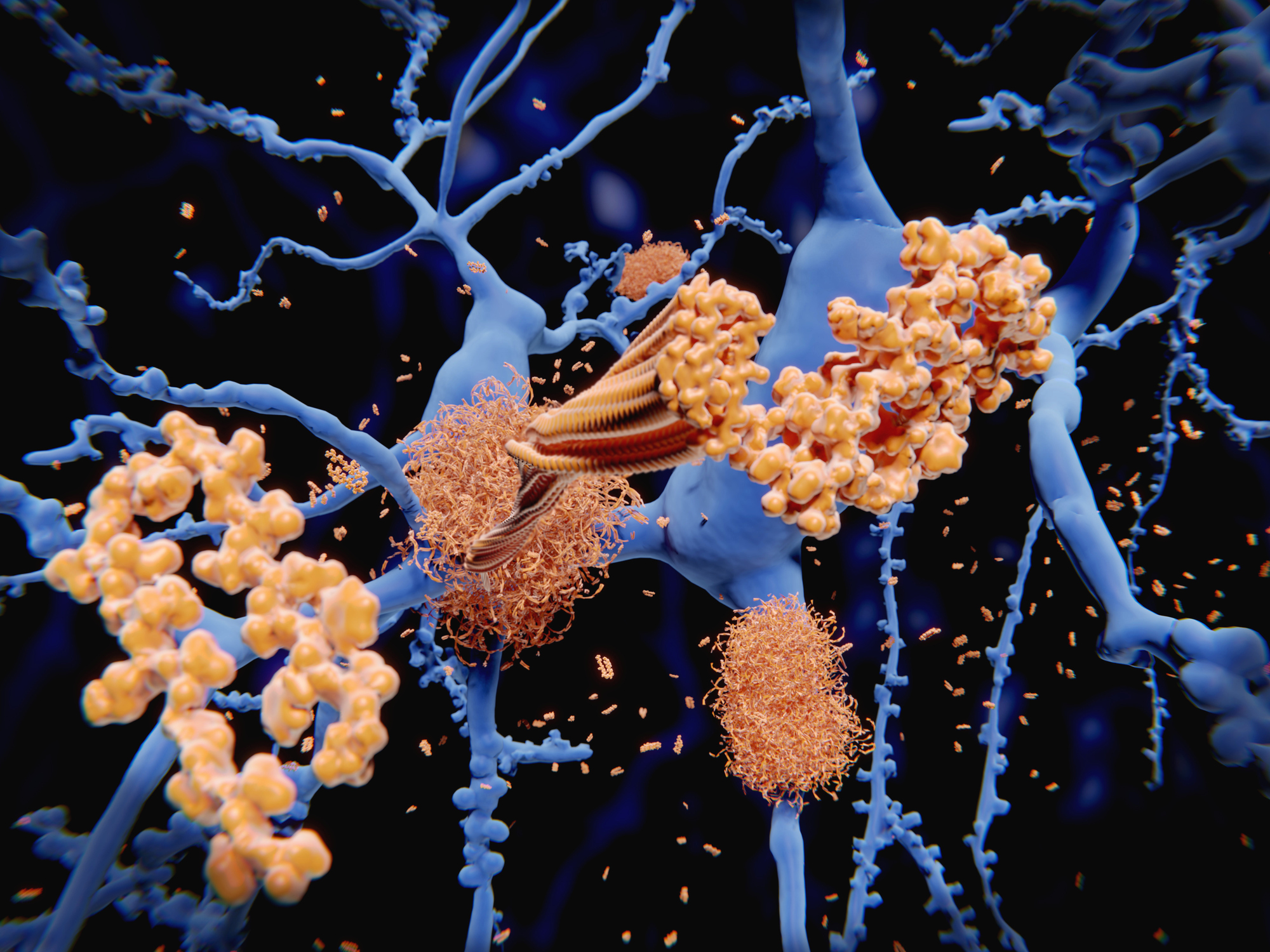
A drug developed at Northwestern University, called NU-9, has shown promise to prevent early brain damage leading to the development of Alzheimer’s disease. In a study published today in the Alzheimer’s and Dementia journal, the drug was found to target a newly discovered type of highly-toxic amyloid beta oligomer that drives the onset of Alzheimer’s.
“Alzheimer’s disease begins decades before its symptoms appear, with early events like toxic amyloid beta oligomers accumulating inside neurons and glial cells becoming reactive long before memory loss is apparent,” said Daniel Kranz, PhD, researcher at Northwestern University and first author of the study. “By the time symptoms emerge, the underlying pathology is already advanced. This is likely a major reason many clinical trials have failed. They start far too late.”
A hallmark of many neurodegenerative conditions, including Alzheimer’s, Parkinson’s and amyotrophic lateral sclerosis (ALS), is the buildup of toxic protein aggregates inside neurons. Previous studies had shown NU-9 could clear aggregates of SOD1 and TDP-43 proteins in animal models of ALS, receiving FDA clearance in 2024 to begin clinical trials in ALS patients.
The researchers suspected this mechanism of action could also benefit Alzheimer’s patients, showing in a study published earlier this year that NU-9 could clear amyloid beta plaques in neurons found in the hippocampus, a brain region critical for memory that is one of the first to be damaged in Alzheimer’s disease.
“In both ALS and Alzheimer’s disease, cells suffer from toxic protein buildup,” said William Klein, PhD, professor of cellular and molecular neuroscience at Northwestern University. “Cells have a mechanism to get rid of these proteins, but it gets damaged in degenerative diseases like ALS and Alzheimer’s. NU-9 is rescuing the pathway that saves the cell.”
In the current study, the team employed a pre-symptomatic mouse model of Alzheimer’s disease that replicates the earliest stages of the disease, before symptoms first appear. NU-9 was given orally to the mice daily for a total of 60 days, resulting in a dramatic reduction of inflammation and neuronal damage across multiple brain regions.
The drug significantly decreased levels of amyloid beta oligomers and of an abnormal form of TDP-43 linked to cognitive impairment. In addition, the treatment sharply reduced early reactive astrogliosis, an inflammatory process that damages astrocytes and drives neuroinflammation during the earliest stages of Alzheimer’s disease.
A key finding of the study was that NU-9 targets a subtype of amyloid beta oligomers they called ACU193+, which was found to spearhead the cascade of inflammation that activates neurodegenerative processes long before cognitive symptoms become evident.
“We identified a distinct amyloid beta oligomer subtype that appears inside neurons and on nearby reactive astrocytes very early in the disease,” said Kranz. “It potentially acts as an instigator of early Alzheimer’s pathology.”
These findings suggest that NU-9 could halt neurodegeneration at the earliest stages of Alzheimer’s, when intervention has the potential to be most effective. By targeting ACU193+, the experimental drug could prevent the overactivation of astrocytes, which causes inflammation and synapse damage early on in the progression of the disease.
“If you have high cholesterol, it doesn’t mean that you will have a heart attack soon, but it’s time to take drugs to lower your cholesterol levels to prevent that heart attack from happening down the road,” said Richard B. Silverman, PhD, professor at Northwestern University. “NU-9 could play a similar role. If someone has a biomarker signaling Alzheimer’s disease, then they could start taking NU-9 before symptoms appear.”
