

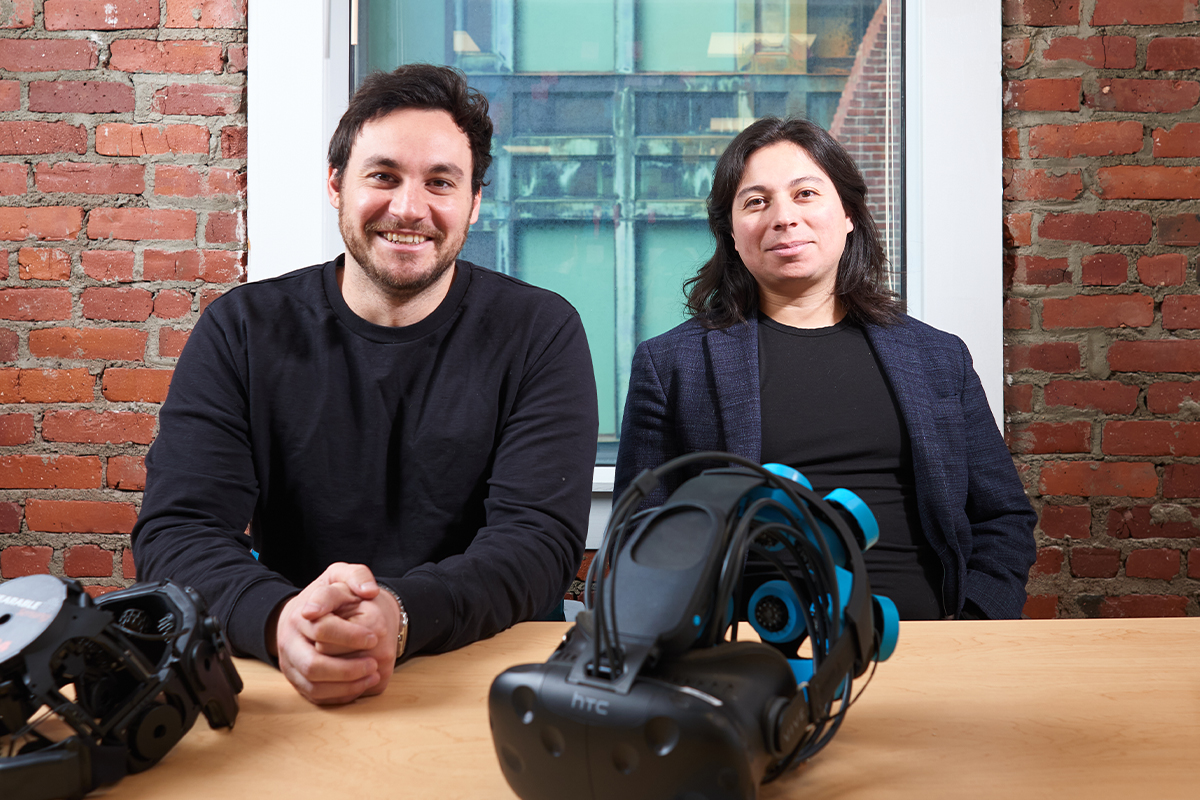
Startup targets ‘brainspan’ with EEG-powered headphones designed to make monitoring cognitive health as normal as heart rate.
Consumer neurotech company Neurable has secured $35 million in Series A financing to advance its wearable EEG technology designed to support brain health. The Boston-based firm claims its non-invasive approach can make brain health a component of everyday health tracking, alongside well-established metrics such as sleep, activity, and heart rate.
“Our mission is to make understanding your brain as natural and intuitive as checking your steps,” said Neurable CEO Dr Ramses Alcaide.
The new funding, which brings the total raised by Neurable to $65 million, was led by Spectrum Moonshot Fund, and is being used to scale the company’s platform as cognitive health emerges as a new category within consumer technology. The company’s approach is aimed at extending what it calls “brainspan” – or how long our brains maintain high levels of cognitive function.
Building on research conducted at the University of Michigan, Neurable has spent more than a decade developing compact, AI-driven signal processing technology that allows electroencephalography to be used in consumer-grade wearable devices. The company claims it can decode meaningful cognitive signals using comfortable, wearable EEG sensors embedded directly into consumer devices, without surgery or specialized setups.
Neurable’s first products are headphone-based systems leveraging integrated EEG sensors that continuously collect neural data, allowing the detection of fluctuations in focus, cognitive load, fatigue, and recovery throughout the day. Through the company’s app, this data is translated into practical indicators intended to make brain function more legible to users. Short assessments provide guidance on whether the brain is primed for deep work or lighter tasks, while daily and weekly views track mental recovery, cumulative cognitive strain, and longer-term trends in what the company refers to as “brain age.”
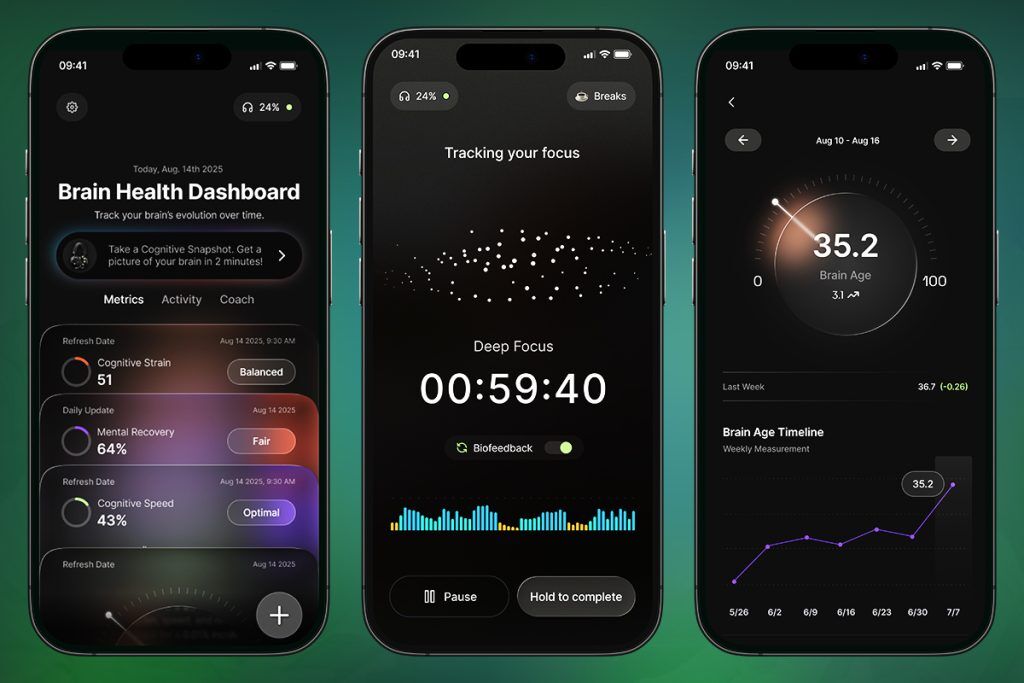
From a brainspan perspective, it appears Neurable’s strategy is ultimately to address the challenges of cognitive decline by making brain health more measurable in daily life. The feedback loop enabled by continuous brain tracking is designed to connect daily habits with cognitive outcomes. Patterns related to sleep quality, physical activity, stress, nutrition, and mental engagement can be observed directly in neural data, allowing users to see how lifestyle choices affect focus, recovery, and long-term cognitive trends. Over time, the company says its approach aims to drive personalized, data-driven decision-making, reinforcing behaviors that support sustained brain health.
“Our goal isn’t just to track brain activity, it’s to help people understand it, respond to it, and finally have a conversation with their own minds,” said Alcaide, about the recent launch of Neurable’s new lower cost ($499) headphones.
Beyond brain health and wellness, the company also sees applications of its platform in sectors where cognitive performance is critical, such as gaming and esports, where marginal improvements in concentration, reaction time, and endurance can materially affect outcomes. By integrating neural insights into gaming workflows and hardware, Neurable sees opportunities not only for player optimization but also for new forms of adaptive game design.
