

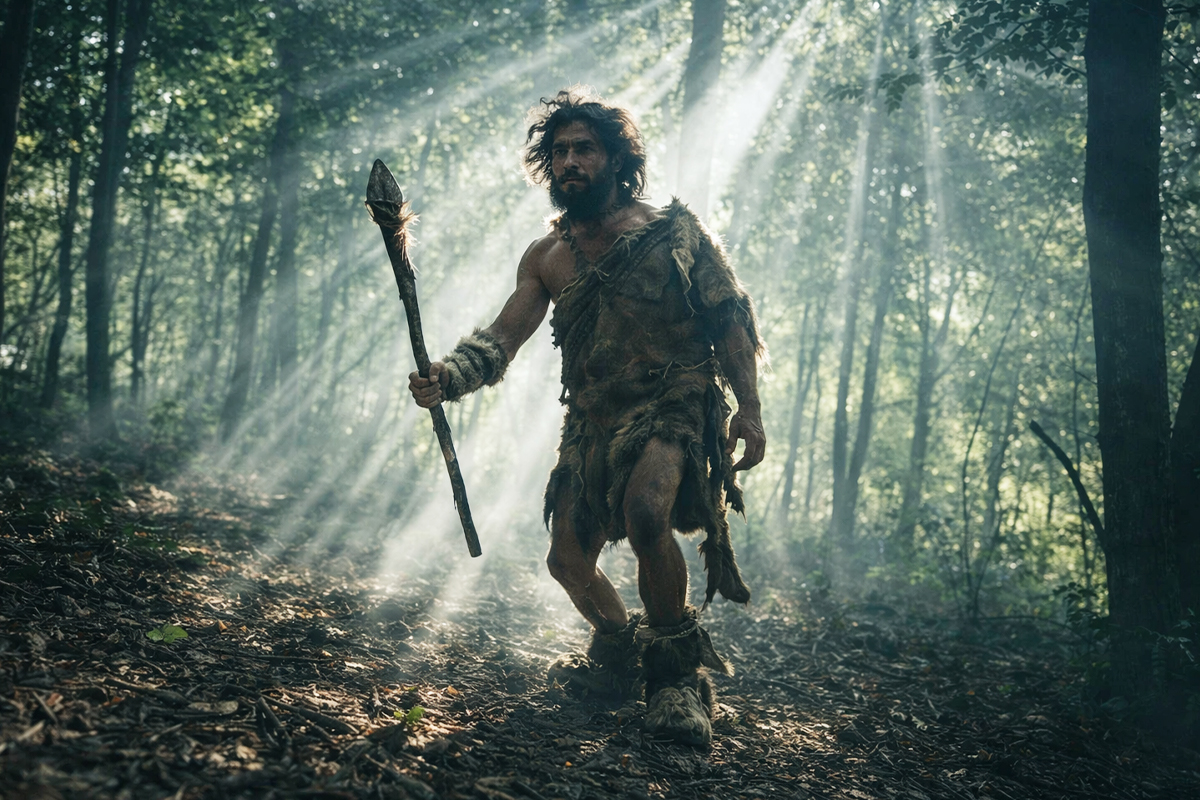
New research suggests that DNA inherited from prehistoric hunter-gatherers could quietly boost the chances of living to 100.
We like to believe that living longer is all about discipline: eat well, move more, stress less. And while that still matters, a new study published in GeroScience suggests that some people may have a small but meaningful advantage they did nothing to earn, except be born into the right genetic family tree [1].
According to the research, ancient hunter-gatherer genes passed down over thousands of years could be helping modern humans live longer. Literally.
The study focuses on Italy, a country famous for good food, strong family ties and an unusually high number of people who live past 100. The question researchers asked was simple but bold: what if some of that longevity started long before olive oil, longevity medicines and afternoon walks?
Italy is a favorite among longevity researchers for good reason. Its population history is relatively well documented, and centenarians are not a rarity. That makes it a natural testing ground for studying how genetics and long life intersect.
Researchers analyzed DNA samples from 333 Italian centenarians and compared them with samples from 690 healthy adults in their 50s. Instead of hunting for a single “longevity gene,” they looked at something broader: ancestral DNA patterns that trace back thousands of years.
Modern Europeans are genetic blends shaped by migration, survival and adaptation. The study focused on four major ancestral groups believed to have shaped European populations: Western hunter-gatherers, Bronze Age nomads, Neolithic farmers from Anatolia and ancient populations from the Iranian and Caucasus regions.
Everyone in the study carried some combination of all four. But among those who had lived to 100 or beyond, one ancestral signal kept showing up louder than the rest.
Centenarians consistently had a stronger genetic connection to Western hunter-gatherers, people who survived Europe after the last Ice Age, long before cities, supermarkets or indoor plumbing.
“The present study shows for the first time that the Villabruna cluster/WHG lineage, which has been linked to population shifts within Europe after the Last Glacial Maximum, contributes to longevity in the Italian population,” the researchers wrote [1].
Of course, this does not mean hunter-gatherers had a secret antiaging serum, and it certainly does not mean lifestyle is irrelevant; however, the findings do suggest that some inherited traits may make the body a little better at handling wear and tear over time.
The researchers found that even a slight increase in Western hunter-gatherer genetic material was linked to a 38% higher chance of reaching 100 years old. These traits may influence how the body manages inflammation, repairs cellular damage or copes with long-term stress – small advantages that add up across decades.
Think of it less as a guarantee, and more as starting the marathon with slightly better shoes.
The study also confirmed a familiar trend: women were more likely than men to become centenarians. Even with favorable ancestry, men appear to lose some ground over time. Genetics may load the dice, but biology and environment still decide how the game plays out.
One of the most striking takeaways is just how old these longevity-linked traits appear to be. The research suggests they entered the Italian gene pool centuries, possibly millennia, ago.
“We propose that the variants involved in this trait [longevity] may have been introduced into the Italian gene pool at a very ancient time,” the researchers said.
They argue that longevity should be seen not as a fixed or universal condition, but as something shaped by deep history and constant change.
“This approach, grounded in an evolutionary framework, provides a historical-genomic perspective that reframes the concept of healthy ageing and longevity – not as a static or universal state, but as a dynamic phenotype shaped by the interplay of genomic population history and continually changing environmental contexts,” they concluded.
For investors, biotech firms and longevity-focused startups, the message is clear: aging is not one-dimensional. As the field moves toward precision medicine and personalized health strategies, understanding how ancestry influences aging could reshape how interventions are designed and deployed.
Longevity, it turns out, is not just about how we live but also about who came before us. Somewhere in your DNA, an Ice Age survivor might still be quietly helping you age a little better.
[1] https://link.springer.com/article/10.1007/s11357-025-02043-4
