

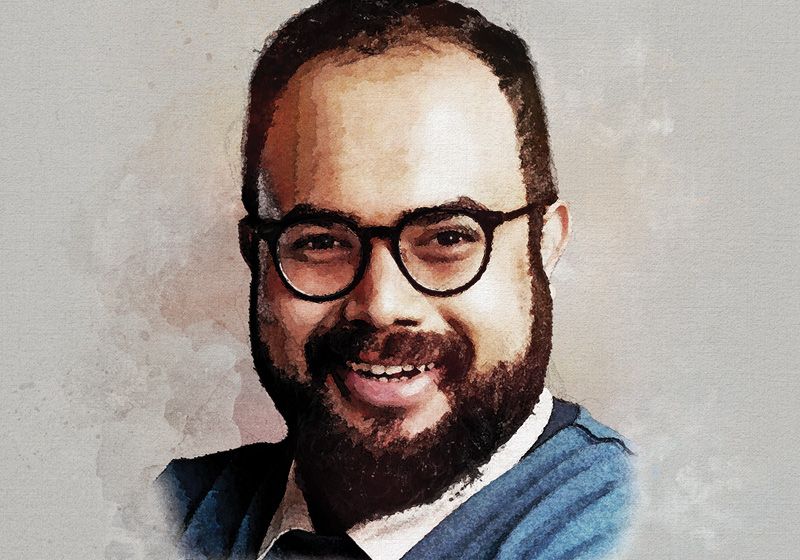
Inspired by biomimicry, this postdoc investigates how material structure governs energy conversion efficiency.
Q | Write a brief introduction to yourself including the lab you work in and your research background.
My name is Anurag Roy. I am a research fellow at the University of Exeter in the Renewable Engineering department. As a material chemist, I focus on energy harvesting materials, studying their structure-property-performance relationships. I completed my PhD in 2019 at CSIR-CGCRI and Jadavpur University, before continuing my research here.
Q | How did you first get interested in science and/or your field of research?
I’ve always been curious about how things work, even as a kid. I remember taking apart gadgets and wondering why certain materials behaved the way they did. This early fascination grew into a deeper interest in science, especially when I learned about biomimicry—the idea of looking to nature for solutions. Nature’s designs are incredibly efficient, and I found it amazing how every material in the natural world has unique properties perfectly suited to its purpose.
When I started studying renewable energy, I realized how important these natural principles could be in solving real-world problems. I became passionate about energy harvesting materials, intrigued by how their structure directly impacts their performance. Each material has its own story, its own strengths and limitations, and understanding these details felt like unlocking a puzzle.
What truly motivates me is the idea of energy justice—making clean energy accessible and fair for everyone. It’s not just about creating better materials but about using science to help build a sustainable future where energy is available to all, regardless of background or location. This blend of curiosity, nature-inspired design, and social impact has shaped my research journey and continues to drive me every day.
Q | Tell us about your favorite research project you’re working on.
One of my favorite research projects focuses on developing smart hydrogel membranes for smart windows. These materials are designed to respond to environmental changes, such as temperature and sunlight, by altering their transparency and thermal properties. The goal is to create windows that can automatically regulate heat and light entering a building, which can lead to significant energy savings.
Traditional windows let in heat during summer and lose it during winter, which means buildings need a lot of energy for cooling and heating. By using these smart hydrogel membranes, windows can block or allow heat and light as needed, reducing the need for air conditioning and heating. This not only lowers energy bills but also decreases carbon emissions, helping combat climate change.
What makes this project exciting is the use of biomimetic materials—materials inspired by nature. These hydrogels mimic how some natural systems adapt to their environment, making them efficient and sustainable. The ability to fine-tune the material’s structure allows us to optimize its performance, making the windows both smart and eco-friendly.
Q | What has been the most exciting part of your scientific career/journey so far?
The most exciting part of my scientific journey has been seeing how fundamental research can lead to real-world impact. Early on, I focused on understanding the basic properties of materials, but over time, I’ve applied that knowledge to develop smart, sustainable solutions like energy-harvesting materials and smart window hydrogels.
A big part of this process is data analysis and interpretation. Collecting data from experiments and making sense of it to understand how material structure affects performance is both challenging and rewarding. It’s like solving a puzzle where every detail matters. This deep dive into data helps me optimize materials for better energy efficiency and sustainability.
Collaborating with researchers from diverse backgrounds has also been a highlight. It pushes me to think differently and improves the quality of my work. Moving from my PhD in India to a research role in the UK has broadened my perspective on global energy challenges, especially energy justice. Knowing my work could help make clean energy more accessible keeps me motivated every day.
Are you a researcher who would like to be featured in the “Postdoc Portraits” series? Send in your application here.
