

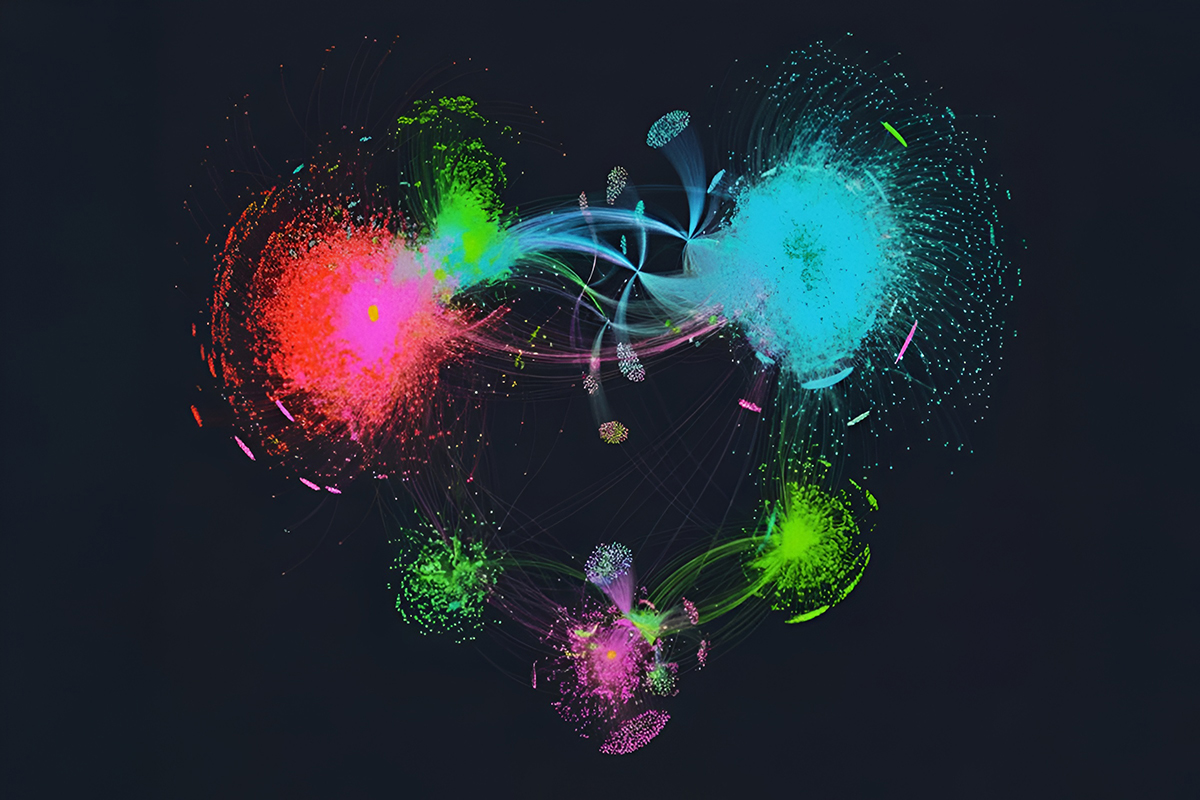
Data-rich heart scans are fused with AI to spot drug opportunities faster, offering clearer path for future of cardiovascular innovation.
For years, researchers have relied on vast biological databases to understand how genes, diseases and drugs connect. These databases are powerful but abstract. In heart disease, that missing detail matters; two patients can share a diagnosis while their hearts look and function very differently.
A new AI-driven tool called CardioKG aims to close that gap. Developed by researchers at the MRC Laboratory of Medical Sciences and published in Nature, the platform brings detailed heart imaging into what’s known as a “knowledge graph,” a structured map of relationships between genes, diseases and treatments [1].
The result is a system that doesn’t just connect dots on paper, but grounds them in how real hearts behave.
CardioKG’s idea is simple: if you can see disease more clearly, you can treat it more precisely. To build the model, the research team analyzed heart scans from more than 9,500 people in the UK Biobank. Around half had conditions such as atrial fibrillation, heart failure or a previous heart attack; the rest were healthy.
From these scans, the AI extracted over 200,000 measurable features, details about heart shape, performance and motion. These imaging traits were then combined with information from 18 biological databases, creating a richly layered picture of how genetic risk translates into real-world heart changes.
“One of the advantages of knowledge graphs is that they integrate information about genes, drugs and diseases,” says Professor Declan O’Regan, who led the study. “This means you have more power to make discoveries about new therapies. We found that including heart imaging in the graph transformed how well new genes and drugs could be identified.”
One of the most immediate implications of CardioKG is drug repurposing, a strategy increasingly attractive to investors because it can shorten development timelines and reduce risk. Instead of starting from scratch, researchers look for existing drugs that could work for new conditions.
Using its imaging-enhanced model, CardioKG flagged several surprising candidates. Among them: methotrexate, a long-standing treatment for rheumatoid arthritis, showed potential benefits for heart failure.
Gliptins, commonly prescribed for diabetes, emerged as possible treatments for atrial fibrillation. The model also surfaced an unexpected insight about caffeine, suggesting a protective effect in some patients with atrial fibrillation despite its reputation for making the heart more excitable.
“What’s exciting is there are other recent studies in the field which support our preliminary findings,” O’Regan notes. “This highlights the huge potential of knowledge graphs in uncovering existing drugs that might be repurposed as new treatments.”
Cardiovascular disease remains the world’s leading cause of death and one of the most expensive areas of healthcare. Yet drug discovery in this space has been notoriously slow and costly. Tools like CardioKG signal a shift toward smarter, more targeted pipelines.
By rapidly generating shortlists of high-priority genes and drug targets, the technology could give pharmaceutical companies a head start, pointing them toward mechanisms that are both biologically meaningful and clinically relevant.
For investors, this means earlier signals of viability and a clearer sense of where capital and partnerships may flow next.
While CardioKG focuses on cardiovascular disease, its implications extend far beyond it. The same approach could be applied anywhere detailed imaging exists, from brain scans in dementia research to body-fat imaging in obesity studies.
“Building on this work, we will extend the knowledge graph into a dynamic, patient-centred framework that captures real disease trajectories,” says Dr Khaled Rjoob, the study’s lead author. “This will open new possibilities for personalized treatment and predicting when diseases are likely to develop.”
The author’s forward-looking vision aligns closely with longevity science: treating disease earlier, more precisely and with fewer trial-and-error steps.
CardioKG does not replace human expertise, but rather sharpens it. By blending AI, imaging and biology, the platform offers a more intuitive way to understand disease as it actually unfolds in the body. For a sector hungry for speed, clarity and impact, this could be a meaningful turning point.
