
Close Menu
My Blog

    Subscribe to Updates

    Get the latest creative news from FooBar about art, design and business.

    What's Hot

    Nautilus debuts Voyager platform in push toward next-gen proteomics

    March 1, 2026

    First-in-Human Success for Prenatal Stem Cell Therapy in Spina Bifida

    February 28, 2026

    Pressure-Driven Pathway Links Liver Congestion to Fibrosis and Cancer

    February 28, 2026
    Facebook X (Twitter) Instagram
    X (Twitter) YouTube
    My BlogMy Blog
    Sunday, March 1
    • Home
    • About Us
    • Healthy Living
    • DNA & Genetics
    • Podcast
    • Shop
    My Blog
    Home»Longevity»Retro Bio commences first-in-human trial
    Longevity

    Retro Bio commences first-in-human trial

    adminBy adminDecember 31, 2025No Comments3 Mins Read
    Facebook Twitter Pinterest LinkedIn Tumblr WhatsApp VKontakte Email
    Retro Bio commences first-in-human trial
    Share
    Facebook Twitter LinkedIn Pinterest Email

    Autophagy-enhancing drug candidate enters Phase 1 trial as longevity focused biotech eyes Alzheimer’s as a potential first indication.

    Longevity biotech Retro Biosciences has achieved its goal of becoming a clinical-stage company in 2025, after dosing the first participant in a clinical trial of its autophagy-focused drug candidate. The San Francisco–based company enters the clinic following reports earlier this year that it was preparing to raise as much as $1 billion to support its next phase of growth, having already raised a $180 million seed round funded exclusively by OpenAI boss Sam Altman.

    Retro’s clinical drug candidate, RTR242, is a small-molecule therapy designed to restore lysosomal function, a core component of autophagy – our cells’ waste-handling and recycling system. In healthy, younger cells, lysosomes maintain an acidic environment that allows the autophagy process to break down damaged proteins and cellular debris. As people age, and particularly in neurodegenerative diseases such as Alzheimer’s, lysosomes lose acidity and efficiency. The result is a buildup of toxic protein aggregates that place chronic stress on neurons and contribute to their dysfunction and eventual loss. Retro’s approach aims to repair this decline at its source, reactivating the cell’s own cleanup machinery rather than targeting the problem downstream.

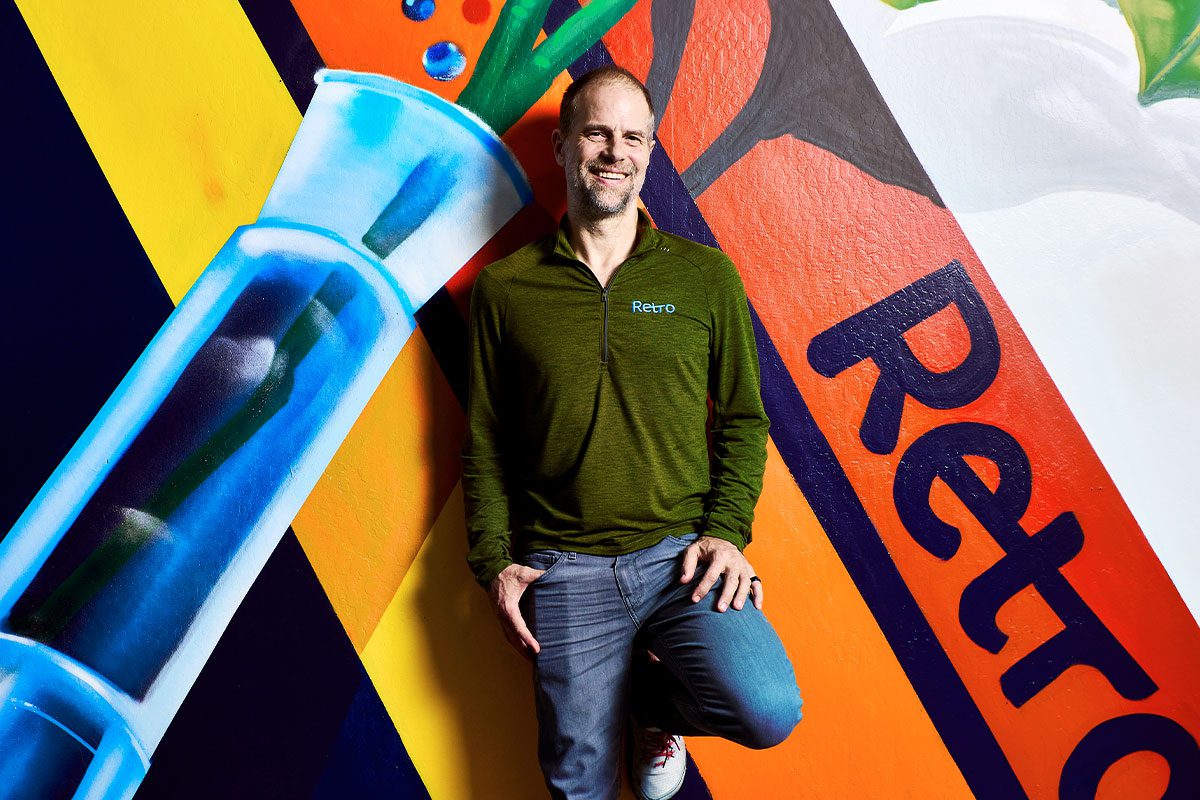
    Joe Betts-LaCroix is founder and CEO of Retro Biosciences.

    By restoring lysosomal function, RTR242 is intended to help neurons clear harmful proteins more effectively and return cellular behavior toward a more youthful state. In Alzheimer’s, Retro suggests its approach could address the underlying cellular failures that accumulate over time rather than attempting to compensate for damage after it has already occurred – potentially enabling intervention before significant cognitive decline begins.

    The Phase 1 study is a randomized, double-blind, placebo-controlled trial in healthy volunteers, conducted at a specialized early-phase clinical unit in Adelaide, Australia. In addition to standard safety and tolerability measures, the study includes exploratory biomarkers tied to autophagy and lysosomal biology, giving Retro its first opportunity to observe whether its mechanistic hypotheses translate into measurable biological signals in humans. Failures in cellular clearance are a common feature across many degenerative conditions, so if the biology proves tractable in humans, the hope is that the approach could have applications beyond neurodegeneration, informing approaches to other disorders where accumulated cellular damage plays a central role.

    In addition to autophagy, Retro is working on multiple approaches focused on aging biology to extend human healthspan, with additional programs in cellular reprogramming and microglia therapeutics. In cellular reprogramming, the company is building on the Nobel Prize–winning discovery that mature cells can be reverted toward a more youthful, pluripotent state using a set of transcription factors known as the Yamanaka factors. In a collaboration with OpenAI, Retro applied a specialized AI model trained for protein engineering to redesign key components of its reprogramming cocktail. The resulting engineered transcription factors showed markedly higher efficiency in lab experiments, accelerating the appearance of stem cell markers and improving indicators of DNA damage repair, a central hallmark of aging.

    Retro is also exploring cell therapies, including one aimed at rejuvenating the brain’s immune cells, microglia, which become chronically inflammatory with age. By replacing dysfunctional microglia with younger counterparts, Retro hopes to address another fundamental driver of neurodegeneration that operates alongside protein accumulation and neuronal stress.

    READ MORE: Retro: A longevity biotech triple-threat?

    Bio commences firstinhuman Retro trial
    Share. Facebook Twitter Pinterest LinkedIn Tumblr WhatsApp Email
    Previous ArticleInsilico debuts on HK Stock Exchange, locking in more than $290m
    Next Article AI tool maps the heart to speed up drug discovery
    admin
    • Website

    Related Posts

    Nautilus debuts Voyager platform in push toward next-gen proteomics

    March 1, 2026

    First-in-Human Success for Prenatal Stem Cell Therapy in Spina Bifida

    February 28, 2026

    A cellular atlas of aging comes into focus

    February 28, 2026

    Measuring intrinsic capacity at scale

    February 28, 2026
    Leave A Reply Cancel Reply

    Our Picks

    9 Time-Saving Kitchen Gadgets for Fall at Amazon

    September 5, 2025

    Why Exercise Is So Important For Heart Health, From An MD

    September 5, 2025

    An Engineered Protein Helps Phagocytes Gobble Up Diseased Cells

    September 5, 2025

    How To Get Rid Of Hangnails + Causes From Experts

    September 5, 2025
    • Facebook
    • Twitter
    • Pinterest
    • Instagram
    • YouTube
    • Vimeo
    Don't Miss
    Longevity

    Nautilus debuts Voyager platform in push toward next-gen proteomics

    By adminMarch 1, 20260

    Company’s new benchtop system promises a clearer view of proteins following validation at a leading…

    First-in-Human Success for Prenatal Stem Cell Therapy in Spina Bifida

    February 28, 2026

    Pressure-Driven Pathway Links Liver Congestion to Fibrosis and Cancer

    February 28, 2026

    A cellular atlas of aging comes into focus

    February 28, 2026

    Subscribe to Updates

    Get the latest creative news from SmartMag about art & design.

    About Us

    At FineGut, our mission is simple: to enhance your self-awareness when it comes to your gut health. We believe that a healthy gut is the foundation of overall well-being, and understanding the brain–gut connection can truly transform the way you live.

    Our Picks

    9 Time-Saving Kitchen Gadgets for Fall at Amazon

    September 5, 2025

    Why Exercise Is So Important For Heart Health, From An MD

    September 5, 2025

    An Engineered Protein Helps Phagocytes Gobble Up Diseased Cells

    September 5, 2025
    Gut Health

    Nautilus debuts Voyager platform in push toward next-gen proteomics

    March 1, 2026

    First-in-Human Success for Prenatal Stem Cell Therapy in Spina Bifida

    February 28, 2026

    Pressure-Driven Pathway Links Liver Congestion to Fibrosis and Cancer

    February 28, 2026
    X (Twitter) YouTube
    • Contact us
    • Privacy Policy
    • Disclaimer
    • Terms and Conditions
    © 2026 finegut.com. Designed by Pro.

    Type above and press Enter to search. Press Esc to cancel.