

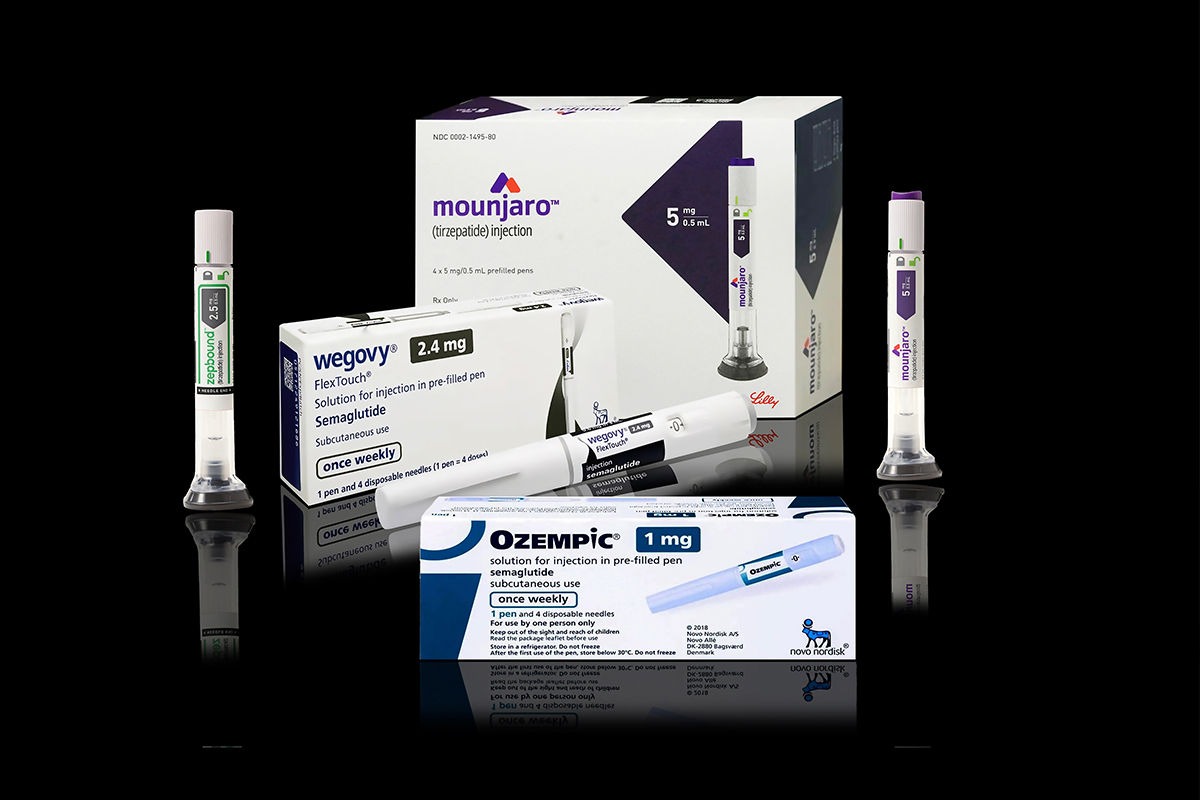
GLP-1 drugs help with weight and heart health, but a review finds they may not meaningfully lower the risk of cancers linked to obesity.
For the past few years, weight loss drugs like Ozempic and Zepbound have carried a quiet hope alongside their fame. Beyond weight loss, improved blood sugar and better heart health, many wondered if these medications could also blunt the rising tide of obesity-linked cancers.
It felt plausible: obesity fuels inflammation, hormones and metabolic stress, all known contributors to cancer. Reduce weight, reduce risk… or so the thinking went. A new analysis suggests the story is far more complicated.
Researchers reviewed data from 48 clinical trials involving 94,245 people with Type 2 diabetes who were overweight or living with obesity [1]. All participants were taking GLP-1 class drugs, the category that includes semaglutide (Ozempic) and tirzepatide (Zepbound).
These drugs appear to have “little or no effect” on the risk of developing cancers linked to obesity.
With what researchers call moderate certainty, the analysis found no meaningful reduction in the risk of breast, kidney, thyroid or pancreatic cancers. For other cancers – including liver, colorectal, ovarian, endometrial, esophageal cancers, meningioma and multiple myeloma – the evidence was even weaker, described as low certainty. When it came to stomach cancer, the data was simply too uncertain to draw conclusions.
In short, the numbers did not show a clear protective effect.
More than 100 million Americans are living with obesity, and deaths from 13 obesity-related cancers have tripled over the past two decades. Against that backdrop, expectations around GLP-1 drugs have grown fast.
Earlier, smaller studies hinted at benefits. A University of California San Diego study published in November found colon cancer patients on GLP-1 drugs were half as likely to die within five years compared to those not taking them [2]. The new review doesn’t erase these findings, but it reframes them.
The authors stress that their results do not mean GLP-1 drugs increase cancer risk.
“It’s not that GLP-1 does not reduce the risk of cancer; I don’t think we can make that conclusion from our study. I would say GLP-1 [drugs] probably do not increase the risk of cancer. It’s a little different,” Dr Cho-Hung Chiang, an internal medicine resident at Mount Auburn Hospital and an author of the study, said.
The distinction matters. The trials reviewed were not designed to track cancer outcomes in the first place, and most followed patients for relatively short periods. Cancer, by nature, develops slowly, often over decades.
GLP-1 drugs are undeniably effective at helping people lose weight, lower blood sugar and reduce harmful inflammation. All three are tied to cancer risk, but cancer biology is rarely linear.
For investors and longevity-focused companies, the findings serve as a reality check. GLP-1 drugs remain blockbuster therapies. Now more than ever, these drugs are reshaping diabetes care, weight management and cardiometabolic health. However, their value proposition may not extend as cleanly into oncology as once hoped.
This does not diminish their impact on quality of life or lifespan. It does, however, emphasize a broader lesson in longevity science: single interventions rarely solve complex, multi-factor diseases.
From a prevention standpoint, lifestyle, early screening, environmental exposures and genetics still matter – often more than any one medication.
Longer-term studies, designed specifically to track cancer outcomes, will be key. Until then, GLP-1 drugs should be seen for what they clearly are: powerful tools for metabolic health, but not the magic cure for cancer risk.
In the rush to embrace transformative therapies, this study teaches us the value of restraint, nuance and a reminder that biology resists simple narratives.
Photograph: oleschwander/Shutterstock
[1] https://www.acpjournals.org/doi/10.7326/ANNALS-25-02237
[2] https://www.tandfonline.com/doi/full/10.1080/07357907.2025.2585512
