

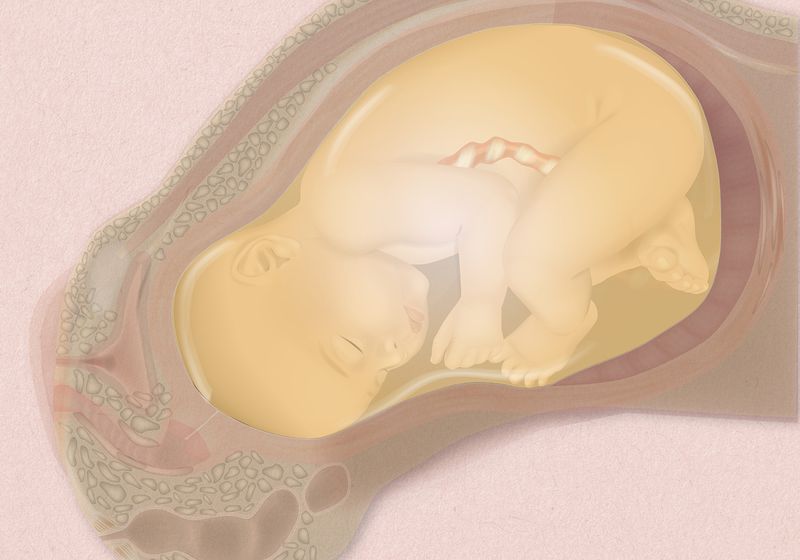
During pregnancy, a fetus grows inside of the uterus surrounded by a liquid called the amniotic fluid. This watery world provides the developing baby with a protective barrier against physical injury. However, this liquid also provides vital nutrition to the fetus as it grows.
Amniotic Fluid Composition
“Amniotic fluid is a pretty complex matrix,” said Brian Scottoline, a physician scientist and neonatologist at the Oregon Health and Science University (OHSU). He added that while the majority of this fluid is water, “There are over a thousand different—upwards of 2,000—proteins that are in amniotic fluid depending on what part of gestation you’re talking about.”
Additionally, this fluid includes metabolites, lipids, and sugars that all contribute to the development of the fetus. But as maternal fetal medicine specialist and OHSU physician scientist Jamie Lo said, “It’s not just this stagnant composition.”
Together, she and Scottoline dove into the contents of amniotic fluid across the course of gestation.1 “[In] every trimester of the pregnancy, this composition evolves to match the growing needs of the fetus, just like breast milk postnatally also changes to match the growing needs of the infant,” Lo said.
Dynamic Changes in the Amniotic Fluid
Over the course of gestation, the researchers saw enrichment in the amniotic fluid proteome for specific tissues. As pregnancy progressed, they saw that proteins involved in extracellular matrix processes decreased in abundance in this fluid; Scottoline said one explanation for this is that the epithelium begins to block this material from the amniotic fluid as the organs mature.
Meanwhile enzymatic proteins and those related to membrane formation and metabolism increase further in pregnancy. These changes possibly reflect how the fetus begins to prepare for life outside of the uterus. For example, the gastrointestinal tract matures to start breaking down macromolecules. “It’s pretty incredible how much it evolves over time,” Scottoline said.
Along with the contents of amniotic fluid changing throughout a pregnancy, the source of this material also shifts as the fetus develops.2 Initially, the placenta and yolk sac produce this fluid, after which the fetal lungs and skin contribute to its formation. Then, in the second trimester, Lo explained that the fetal kidneys pick up the majority of the responsibility for producing amniotic fluid.
Lo and Scottoline are continuing to study the composition of amniotic fluid and its evolving roles during gestation to improve pre- and postnatal care.
