
Close Menu
My Blog

    Subscribe to Updates

    Get the latest creative news from FooBar about art, design and business.

    What's Hot

    Nautilus debuts Voyager platform in push toward next-gen proteomics

    March 1, 2026

    First-in-Human Success for Prenatal Stem Cell Therapy in Spina Bifida

    February 28, 2026

    Pressure-Driven Pathway Links Liver Congestion to Fibrosis and Cancer

    February 28, 2026
    Facebook X (Twitter) Instagram
    X (Twitter) YouTube
    My BlogMy Blog
    Sunday, March 1
    • Home
    • About Us
    • Healthy Living
    • DNA & Genetics
    • Podcast
    • Shop
    My Blog
    Home»Microbiome»AI Can Predict Effectiveness of Cochlear Implants at Improving Speech
    Microbiome

    AI Can Predict Effectiveness of Cochlear Implants at Improving Speech

    adminBy adminJanuary 2, 2026No Comments3 Mins Read
    Facebook Twitter Pinterest LinkedIn Tumblr WhatsApp VKontakte Email
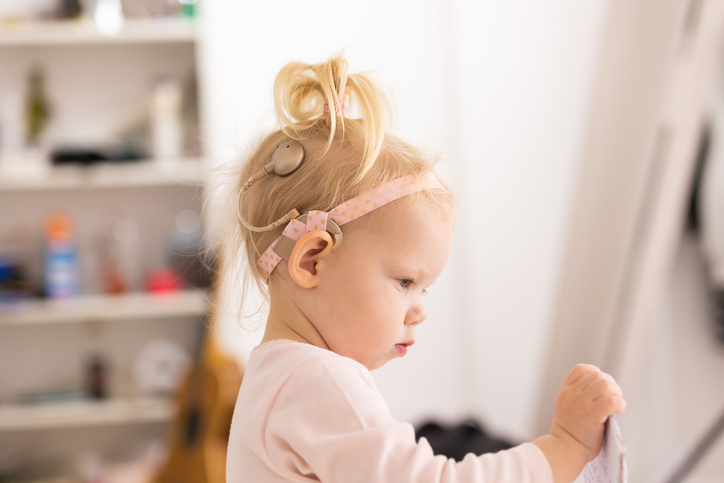
    Cochlear implant for baby. Deaf child with hearing aid. Health care and medicine technology and innovations
    Share
    Facebook Twitter LinkedIn Pinterest Email

    Credit: satura86/Getty Images

    A model using a complex form of artificial intelligence (AI) can accurately predict how effective cochlear implants are at improving spoken language in young deaf children.

    The deep transfer learning (DTL) model, which was developed by researchers at the Chinese University of Hong Kong and Ann & Robert H. Lurie Children’s Hospital of Chicago and published in JAMA Otolaryngology–Head & Neck Surgery, predicted language outcomes in young deaf children with an accuracy of 92.4%.

    More than 180,000 deaf adults and children in the U.S. have cochlear implants, but this is only a small proportion of those who could actually benefit from using these devices to improve their hearing.

    The implants, which first became more widely available in the 1980s, can improve the hearing of both adults and children. However, they are normally most effective when implanted in younger children, as they give the developing brain access to sound and spoken language during early life when auditory and language circuits are still being formed in the brain.

    Despite the increased potential for benefit in younger individuals, past research has shown great variability in spoken language outcomes among deaf children receiving cochlear implants. “This variability cannot be reliably predicted for individual children using age at implant or residual hearing,” write the researchers.

    To assess the potential of DTL, an advanced form of machine learning, for predicting outcomes after cochlear implantation, co-lead investigator Nancy Young, MD, medical director of audiology and cochlear implant programs at Ann & Robert H. Lurie Children’s Hospital of Chicago, and colleagues followed up 278 children who received cochlear implants in the U.S., Hong Kong, and Australia.

    The children participating in the study had pre-implantation brain magnetic resonance imaging (MRI) scans, and these were used by the AI to predict how well their speech would improve. The children had their implantations at around two years of age on average and their language ability was assessed before and after they had the implants for 1–3 years.

    The dataset analyzed by the AI model was complex as the children spoke three different languages—English, Cantonese, and Spanish—and the different centers involved in the study used different protocols for scanning the brain and for other outcomes.

    DTL uses a deep neural network that has already learned to recognize patterns in large image datasets and fine‑tunes it to work on a smaller, specific medical task like predicting outcomes for the children included in this study. The researchers theorized it might achieve better predictive accuracy in this study population than more standard machine learning.

    This proved to be the case and the DTL model achieved better results than standard machine learning. Overall, it achieved a predictive accuracy of 92.4%, a sensitivity of 91.2%, and specificity of 93.6%.

    “Our results support the feasibility of a single AI model as a robust prognostic tool for language outcomes of children served by cochlear implant programs worldwide. This is an exciting advance for the field,” said Young in a press statement.

    “This AI-powered tool allows a ‘predict-to-prescribe’ approach to optimize language development by determining which child may benefit from more intensive therapy.”

    Cochlear Effectiveness implants Improving Predict speech
    Share. Facebook Twitter Pinterest LinkedIn Tumblr WhatsApp Email
    Previous ArticleRare Inherited Genetic Variant Protects Against Blood Cancer, Reduces Leukemia Risk
    Next Article Longevity Revolution film set to spotlight aging science
    admin
    • Website

    Related Posts

    First-in-Human Success for Prenatal Stem Cell Therapy in Spina Bifida

    February 28, 2026

    Pressure-Driven Pathway Links Liver Congestion to Fibrosis and Cancer

    February 28, 2026

    Genetic Biomarkers to Predict Efficacy of GLP-1 Therapies Uncovered

    February 28, 2026

    Mapping the Cellular Architecture of Aging Across 21 Organs

    February 28, 2026
    Leave A Reply Cancel Reply

    Our Picks

    9 Time-Saving Kitchen Gadgets for Fall at Amazon

    September 5, 2025

    Why Exercise Is So Important For Heart Health, From An MD

    September 5, 2025

    An Engineered Protein Helps Phagocytes Gobble Up Diseased Cells

    September 5, 2025

    How To Get Rid Of Hangnails + Causes From Experts

    September 5, 2025
    • Facebook
    • Twitter
    • Pinterest
    • Instagram
    • YouTube
    • Vimeo
    Don't Miss
    Longevity

    Nautilus debuts Voyager platform in push toward next-gen proteomics

    By adminMarch 1, 20260

    Company’s new benchtop system promises a clearer view of proteins following validation at a leading…

    First-in-Human Success for Prenatal Stem Cell Therapy in Spina Bifida

    February 28, 2026

    Pressure-Driven Pathway Links Liver Congestion to Fibrosis and Cancer

    February 28, 2026

    A cellular atlas of aging comes into focus

    February 28, 2026

    Subscribe to Updates

    Get the latest creative news from SmartMag about art & design.

    About Us

    At FineGut, our mission is simple: to enhance your self-awareness when it comes to your gut health. We believe that a healthy gut is the foundation of overall well-being, and understanding the brain–gut connection can truly transform the way you live.

    Our Picks

    9 Time-Saving Kitchen Gadgets for Fall at Amazon

    September 5, 2025

    Why Exercise Is So Important For Heart Health, From An MD

    September 5, 2025

    An Engineered Protein Helps Phagocytes Gobble Up Diseased Cells

    September 5, 2025
    Gut Health

    Nautilus debuts Voyager platform in push toward next-gen proteomics

    March 1, 2026

    First-in-Human Success for Prenatal Stem Cell Therapy in Spina Bifida

    February 28, 2026

    Pressure-Driven Pathway Links Liver Congestion to Fibrosis and Cancer

    February 28, 2026
    X (Twitter) YouTube
    • Contact us
    • Privacy Policy
    • Disclaimer
    • Terms and Conditions
    © 2026 finegut.com. Designed by Pro.

    Type above and press Enter to search. Press Esc to cancel.