

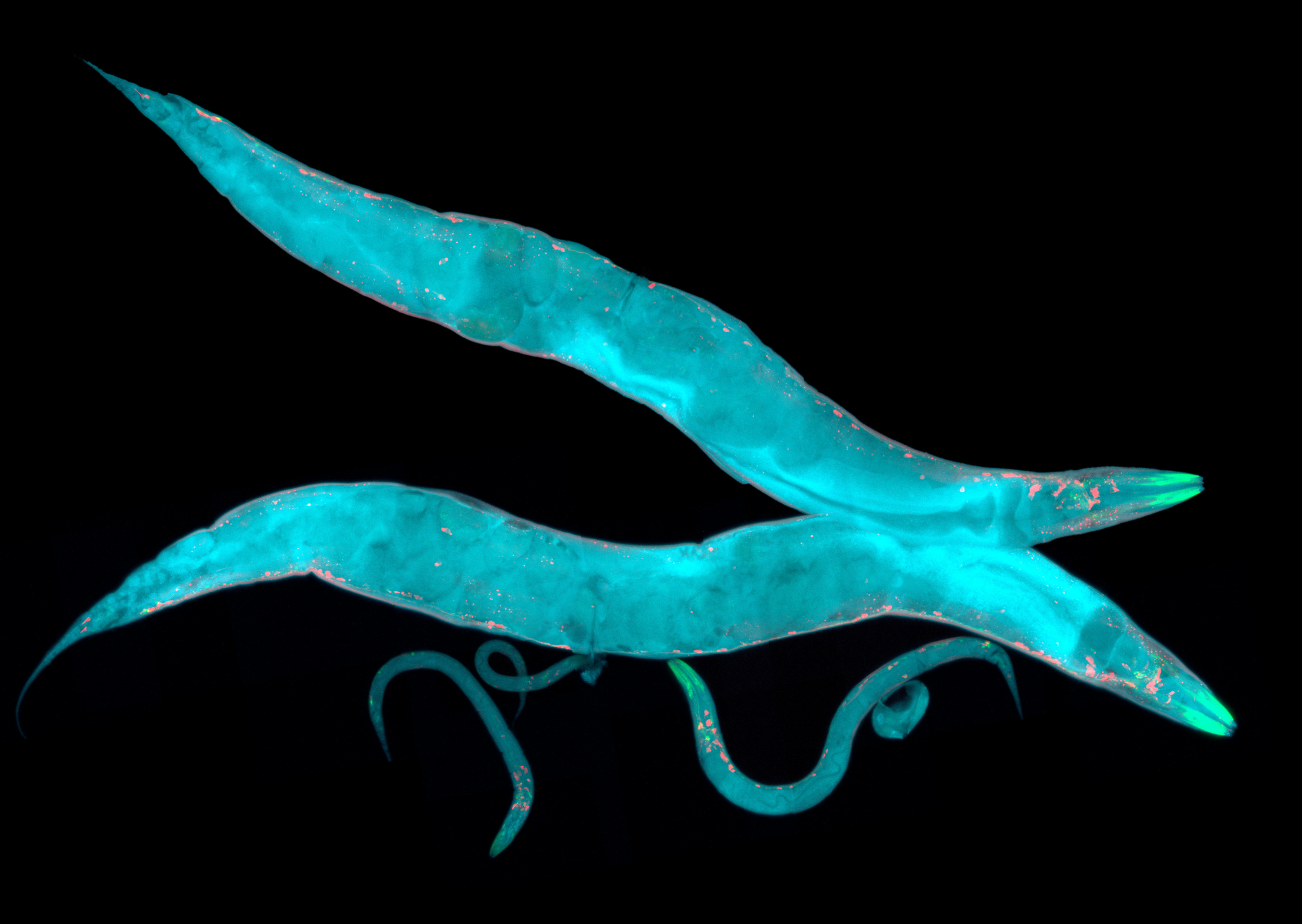
Researchers at The University of Texas MD Anderson Cancer Center have found a link between genes that regulate the biological clock and a biomarker of innate immunity that is activated during infections. In a study published in Science Advances, they showed that alterations in the circadian rhythm of C. elegans—which carry similar circadian clock genes to humans—can determine how susceptible their offspring is to bacterial infections.
“These findings reveal a circadian mechanism that can create significant differences in infection outcomes even when genetics and environment are similar,” said Alejandro Aballay, PhD, professor of genetics and dean of the UTHealth Houston Graduate School of Biomedical Sciences. “This circadian control may help explain why patients with comparable risk profiles often experience very different responses to infection.”
Circadian rhythms are found everywhere in nature, from bacteria and plants to fungi and humans. These 24-hour cycles are governed by a complex network of genes that has increasingly been found to influence a wide range of neurologic, metabolic and immune processes. In humans, for instance, the circadian clock has been reported to have significant effects on the outcomes of vaccinations as well as cancer treatment.
In the current study, Aballay and colleagues were interested in studying why immune responses are so diverse even among populations that are genetically identical and exposed to the same environment—a phenomenon known as phenotypic heterogeneity.
Previously, studies in twins have shed some light on the genetic and environmental factors that influence immunity in humans. However, twins can never experience the exact same environment to study other sources of phenotypic heterogeneity. To overcome these limitations, the researchers took to C. elegans to study what drives these differences.
Their findings showed that vulnerability to infections from Pseudomonas aeruginosa bacteria can be predicted by basal levels of the transcriptional infection response gene-5 (irg-5), which is known to be upregulated during bacterial infections as part of the innate immune response.
Further experiments showed that maternal circadian rhythms determined the likelihood of the offspring having naturally high levels of basal expression of irg-5, which correlated with longer survival in the presence of infection threats from P. aeruginosa. Inhibiting the natural circadian rhythm of C. elegans using RNA interference targeted to known clock genes removed these effects.
Based on these results, Aballay and colleagues propose that natural variations in immunity, driven by circadian rhythms, could be an evolutionary strategy designed to increase resilience against infections in populations that share a similar genetic background and environment. While further research will be required to confirm if similar mechanisms are present in humans, the study opens the door to the possibility that circadian rhythms shape our immune defenses against infections, which could have important implications for disease prevention and personalized medicine down the line.
