

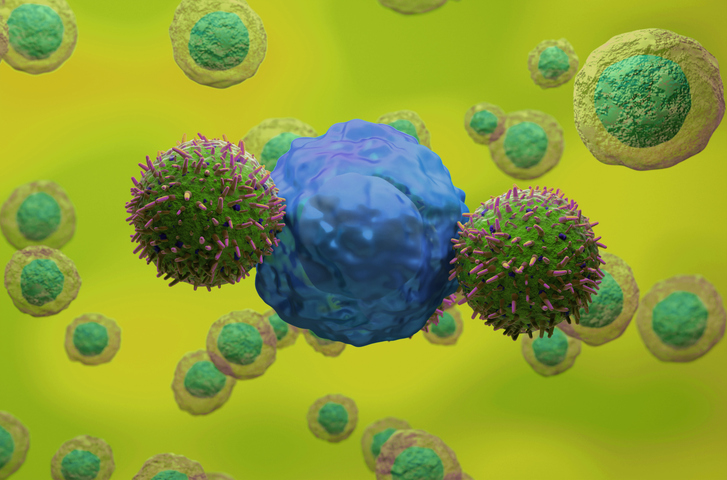
A person dear to me died last month from cancer. She was young and beautiful. She did science with all her heart until the final weeks of her life while she waited for a miracle. Having worked on cell-based therapies, she told me when she was first diagnosed that a CAR T cell therapy would save her life. She just had to hang on.
It didn’t. She died. And I am angry at science.
CAR T therapy was sold as a revolution. In 2015–2017, it really looked like one: children with otherwise fatal leukemias walked out of hospital in remission. Eight years later, we have seen real miracles, scary failures, and by all accounts glacial progress to save lives at the scale that is needed.
Real successes: Proof that the idea works
It is important to say at the outset that I do not think that CAR T is a failed concept. In B-cell leukemias and lymphomas, CD19 CAR Ts have rescued patients who have exhausted conventional therapies. In multiple myeloma, BCMA CAR Ts such as Abecma and Carvykti have turned “no options left” patients into long-term survivors.
Outside oncology, some exciting early data in lupus show that a single CAR T infusion can sometimes induce deep, drug-free remission. These are not marginal wins. The frustration is that we cannot yet replicate that level of success more broadly.
High-profile failures and safety shocks
The most visible drag on CAR T progress has been a series of clinical disappointments. Most notably, the monumental crash of solid-tumor programs has been disheartening. Among them, Tmunity’s armored PSMA CAR T in prostate cancer was abandoned after fatal neurotoxicity; Bellicum’s GoCAR-T programs (BPX601 and BPX603) for PSCA and HER2-positive solid tumors were shut down after serious cytokine release events and underwhelming efficacy; and Celyad’s CYAD-101 allogeneic CAR T for metastatic colorectal cancer was paused after patient deaths, hit with a clinical hold by the FDA and ultimately discontinued.
In 2023, a class-wide boxed warning was issued for secondary T-cell malignancies for all approved CD19 and BCMA CAR Ts, after rare cases of CAR-positive lymphomas emerged years after treatment. This year, a new boxed warning for immune effector cell–associated enterocolitis (IECEC) was issued for Carvykti, recognizing a dangerous late-onset inflammatory bowel toxicity.
The basic-science drag: Biology is harder than the hype
Beneath those clinical headlines sits a deeper layer of scientific and academic issues.
First, although hard to acknowledge, it is abundantly clear that the “magic” of CD19 and BCMA antigens is misleading. Those are unusually forgiving targets: mostly confined to B-cells or plasma cells, with manageable consequences if they are ablated. In many other cancers, clean tumor specific antigens are rare, shared with vital normal tissues, expressed at heterogeneous and dynamic levels, and under CAR T pressure, antigen-negative or low-antigen clones can take over (antigen escape).
Second, reading the language of T-cell fate, exhaustion and differentiation programs did not translate to a significantly improved ability to control them. We still largely cannot tune CAR affinity, signaling strength, and co-stimulation to avoid tonic signaling and exhaustion. And we are certainly far away from the ability to rewire metabolism so that CAR Ts stay functional in hypoxic, nutrient-poor tumor microenvironments.
But importantly, it seems like many studies anchor on the wrong models and problems of tumor microenvironments. Immunodeficient mice with human xenografts lack an intact immune system and a realistic stromal/vascular architecture. Many syngeneic mouse tumors are highly immunogenic or artificially engineered, not the cold, fibrotic, immunosuppressive masses seen in patients. A friend of mine used to say, “we have cured every cancer in mice ten times over. Yet humans are still dying.”
This is not unrelated to the fact that the clinicians administering these therapies manage toxicity mechanisms that no one fully understands. Why does one patient with a big tumor burden develop a modest cytokine release syndrome (CRS) while another crashes into multi-organ failure? What aspects of CAR construct design (scFv affinity, hinge, costimulatory domain) drive toxicity versus efficacy? How do host factors (endothelium, prior therapies, microbiome, baseline inflammation) modulate risk?
Finally, I would be amiss not to mention the drags imposed by an academic ecosystem that thrives on misaligned incentives and silos. Publication incentives favor novelty: a new antigen, a clever switch, a shiny circuit. Systematic optimization and negative results are harder to publish, so researchers keep rediscovering the same dead ends. Enshrined academic silos separate tumor immunologists, synthetic biologists, modelers, and clinicians.
Moreover, data fragmentation means that rich correlative datasets from trials are under-shared and under-harmonized, limiting the ability to build truly predictive models of response and toxicity. The safest way for a junior lab to succeed is often to build “one more CAR against one more antigen” in a NOD scid gamma (NSG) mouse, rather than spend years building better models or doing unglamorous optimization work that might not yield flashy publications. All of these problems are not ones that are solved in a single grant cycle or to be looked upon favorably for tenure in most academic settings.
Manufacturing and money: From euphoria to hangover
Being angry at science means that I will not spare blame. At the end, “it’s the money, stupid!” Cell and gene therapies had a bonanza during 2020–2021, with $20–23 billion per year in financing. By 2022–2023, investment dropped to roughly $11–13 billion, forcing many companies into down-rounds, layoffs, or program cuts.1
This effect is multi-factorial, including rising interest rates and a general biotech bear market, a cluster of high-profile clinical holds and trial failures in cell therapies, and growing awareness of manufacturing complexity and long timelines to investor payback. Commentary from inside the sector is blunt: earlystage cell and gene therapy can be “100% unfundable” unless there is a very clear path to derisking or platformlevel scale.2
To be fair, this is an area where science met reality rather abruptly. Autologous CAR T manufacturing proved to be slow, fragile, and expensive. Each product is a bespoke batch: vein-to-vein times measured in weeks, with real risk of manufacturing failure. Also, treatment requires specialized centers and highly trained teams, and the list price per infusion is in the hundreds of thousands of dollars.
It is no surprise that early-stage cell-therapy funding went through a boom-and-bust cycle: euphoric capital when the first CD19 data hit, followed by a sharp pullback once failures, holds, and boxed warnings accumulated. Big pharma did not walk away, but it got more selective, choosing to buy platforms with a high threshold to tackle these basic-science bottlenecks.
Now what?
The next decade of CAR T progress will depend less on one more “miracle responder” and more on fixing the pipeline problem, from basic science to the clinic, passing through academic institutions and alignment of incentives. I can write another editorial detailing those, but for now I will focus on one note of optimism coming from academic innovation and one required development.
Recently, we have seen the emergence of in vivo CAR T, where vectors are infused and reprogram T cells inside the patient.3 Gilead/Kite’s 2025 deal to acquire Interius BioTherapeutics for its in vivo platform—after more than $2 billion has flowed into that space—shows how strategic and promising the idea has become.
As to the needed development, so far, public funding has been excellent at inventing CAR T and paying for a limited number of patients, but slower to build the manufacturing and data backbone that would let the technology scale safely and cheaply. We need investment in the tactical details of the technology and how to deliver for patients more rapidly through robust, distributed manufacturing as well as early and harmonized clinical trial data sharing—all negative data, all molecular data, all patient data. That might mean that many of our loved ones, like my young friend who just died, would have a new fighting chance.
Hana El-Samad, PhD, is the Editor-in-Chief of GEN’s sister journal, GEN Biotechnology. This article was originally published as the editorial in the December 2025 issue of GEN Biotechnology.
References
- Pareras L. Future trends in cell and gene therapies (2026-2030): Crisis, opportunity, or both? In vivo Partners September 2025.
- Newsom B. CGT innovation under pressure. Cell & Gene Ther Rev July 23, 2025.
- Hunter TL, Bao Y, Zhang Y, et al. In vivo CAR T cell generation to treat cancer and autoimmune disease. Science 2025;388:1311-1317. DOI: 10.1126/science.ads84
