

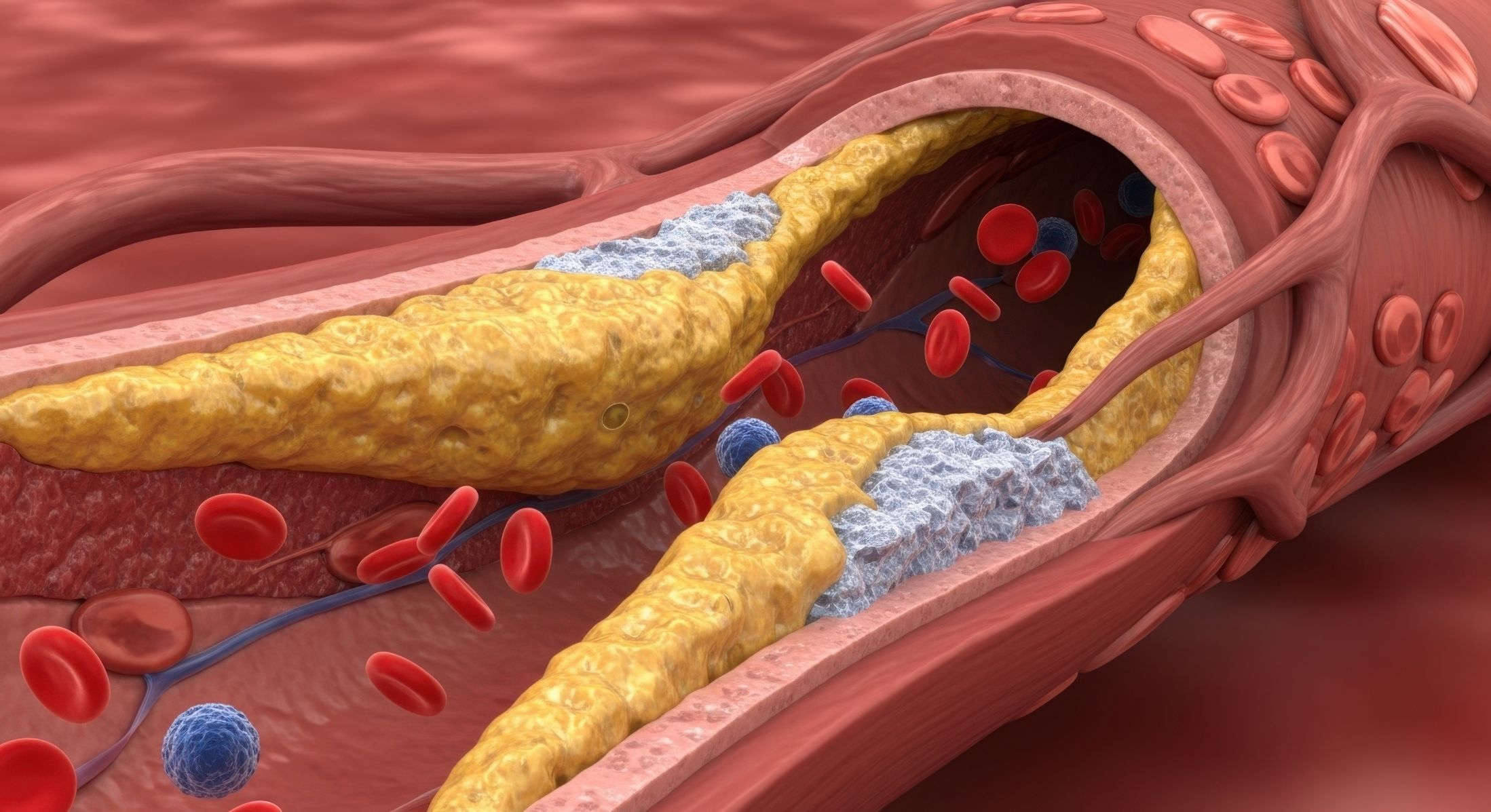
Cardiovascular diseases remain the leading cause of death worldwide. According to data from the World Health Organization, almost 20 million people died in 2022 from these conditions, accounting for about 32% of all deaths globally. Most of these diseases begin with the accumulation of fat in the arterial wall, gradually forming plaques that narrow and harden blood vessels—a process known as atherosclerosis.
Until now, cholesterol has been considered the main risk factor. However, Spanish researchers have discovered a new mechanism linked to gut bacteria.
There is growing evidence of the crucial role played by the gut microbiota in cardiovascular health. Now, researchers at the Spanish National Center for Cardiovascular Research Carlos III (CNIC) have discovered that a molecule produced by bacteria in our intestines induces atherosclerosis, a condition that can ultimately lead to stroke and heart attack.
The discovery, published in Nature, opens the door to, on the one hand, detecting this molecule in the blood for early diagnosis, and on the other, developing drugs capable of neutralizing it to prevent cardiovascular problems.
“This metabolite is produced exclusively by gut bacteria,” explains Annalaura Mastrangelo, CNIC researcher and first author of the study. “In this work, we found that its presence in blood is associated with the development of active atherosclerosis in apparently healthy individuals,” she adds.
“In active atherosclerosis, fat plaques tend to rupture more easily, leading to the clots that cause strokes and heart attacks,” David Sancho, head of the CNIC Immunobiology Laboratory and leader of the study, told Gut Microbiota for Health.
In experiments conducted on mice that were administered this molecule, the researchers observed that the animals developed plaques in their arteries and also showed increased systemic inflammation, which also contributes to the onset of atherosclerosis. “This is important because it opens up a new therapeutic avenue,” says Sancho.
Gut metabolites and cardiovascular health
This is not the first time a molecule produced by gut bacteria has been linked to cardiovascular health. Some metabolites, such as short-chain fatty acids —propionate, butyrate, acetate— have been shown to have beneficial effects, while others, such as TMAO, also contribute to atherosclerosis.
In this case, the CNIC scientists’ study stems from a project launched in 2017 that began following thousands of Banco Santander employees aged 40 to 55 —the PESA study— to find out when cardiovascular diseases begin. They found that six out of ten apparently healthy people already had signs of atherosclerosis. That is when Sancho and his team began investigating which factors were behind this accumulation of fat plaques in the arteries. They observed that most people with active atherosclerosis had elevated levels of this bacterial molecule in their blood.
The Mediterranean diet, a potential protector
“Our work shows that lower levels of imidazole propionate are associated with better cardiovascular health, and that people who follow a diet rich in fruits, vegetables, whole grains, fish, tea, and low-fat dairy products tend to have less of this metabolite in their blood,” explains Sancho. In contrast, they found that people who follow a Western diet, rich in fats, show elevated levels of imidazole propionate.
For now, researchers remain cautious about dietary recommendations. Although the Mediterranean diet has been associated with lower levels of this metabolite and better cardiovascular health, Sancho notes that “for the moment, it is unknown whether this molecule might have beneficial functions in other contexts, such as activating the immune system.”
The CNIC researchers also found that this molecule seems to promote atherosclerosis in mice even when cholesterol levels are normal. This could explain why some apparently healthy people, without conventional risk factors such as hypertension or high cholesterol, can still develop cardiovascular disease.
A research line with therapeutic potential
When the scientists blocked the receptor for this molecule with drugs, they were able to prevent the onset of atherosclerosis and reduce its progression in mice—opening the door to developing new treatments grounded in the relationship between gut bacteria and cardiovascular health.
Reference
Mastrangelo, A., Robles-Vera, I., Mañanes, D. et al. Imidazole propionate is a driver and therapeutic target in atherosclerosis. Nature (2025). https://doi.org/10.1038/s41586-025-09263-w
