
Close Menu
My Blog

    Subscribe to Updates

    Get the latest creative news from FooBar about art, design and business.

    What's Hot

    Nautilus debuts Voyager platform in push toward next-gen proteomics

    March 1, 2026

    First-in-Human Success for Prenatal Stem Cell Therapy in Spina Bifida

    February 28, 2026

    Pressure-Driven Pathway Links Liver Congestion to Fibrosis and Cancer

    February 28, 2026
    Facebook X (Twitter) Instagram
    X (Twitter) YouTube
    My BlogMy Blog
    Sunday, March 1
    • Home
    • About Us
    • Healthy Living
    • DNA & Genetics
    • Podcast
    • Shop
    My Blog
    Home»Microbiome»Precision Oncology Outlook 2026: Enhancing Chemo and Immunotherapy’s Effects
    Microbiome

    Precision Oncology Outlook 2026: Enhancing Chemo and Immunotherapy’s Effects

    adminBy adminJanuary 7, 2026No Comments3 Mins Read
    Facebook Twitter Pinterest LinkedIn Tumblr WhatsApp VKontakte Email
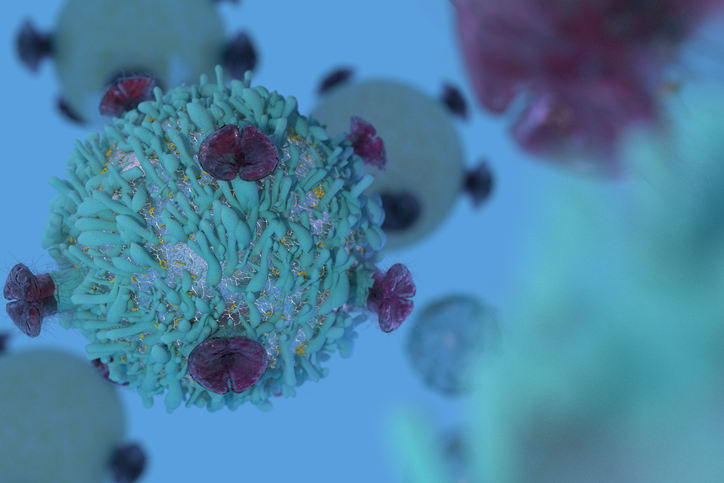
    cancer cell immunotherapy research
    Share
    Facebook Twitter LinkedIn Pinterest Email

    Credit: CIPhotos / iStock / Getty Images Plus

    “The most exciting thing in 2025 was new data and its correlation with chemotherapeutic and immunotherapy delivery,“ John Oertle, chief medical director at Envita Medical Centers, told Inside Precision Medicine. Such advances should help generate responses in more patients and find more effective combinations. Envita has been delivering personalized cancer care for approximately 25 years.

    Key milestones last year involved ways of making chemo and immunotherapy more powerful. That is sure to be a focus this year too.

    “Since tumors are usually heterogeneous, we’ve come to realize it is not enough to find the tumor’s key ‘driver,’ we need to hit it at as many spots in the pathway involved as possible,” Oertle says. A prime example is the recent Phase III trial finding from Cedars-Sinai Cancer researchers showing that a combination of enzalutamide with standard hormone therapy reduced the risk of death by 40% in patients with high-risk recurrent prostate cancer.

    While AI is stealing a lot of the limelight, Oertle says says spatial biology is also making good progress. ”I think that we’ll start to see more Phase I and II clinical trials using spatial biology for evaluation of combinations, such as immunotherapies with other chemotherapies.” Targeting these directly to the tumor, he adds, will also advance. “Even if you do high doses of chemotherapy by IV, only 5% of it actually reaches the tumor,” he says. 

    Another striking example of progress in 2025, which uses both these tools, is University of Cambridge researchers’ machine learning algorithm for spatial quantification of tumor tissue on digital pathology images, potentially enabling personalized treatment decisions guided by both what the tumor looks like and what its biology reveals.

    The tool, named SMMILe (Superpatch-based Measurable Multiple Instance Learning), not only matches or exceeds the performance of current state-of-the-art whole-slide image tissue classification tools for the detection of cancer cells in tumor biopsies and surgical sections, but also predicts where the tumor lesions are located and the proportion of regions with different levels of aggressiveness. 

    There is continued focus on how to extend the benefits of immunotherapies to more patients. One promising finding in that area was from scientists from the Olivia Newton-John Cancer Research Institute, in collaboration with the Walter and Eliza Hall Institute of Medical Research and La Trobe University. They discovered that the gene TAK1 acts as a molecular “safety switch” inside cancer cells. Its activation allows tumors to survive the powerful killing signals generated by CD8⁺ T cells, the immune system’s primary cancer-fighting force.

    Of course, beyond that there is the question of metastases, and how to hit them. “You still have to do systemic therapy,” Oertle says, and the best ways to do that are still being explored.  

    The recent cutbacks in federal funding of basic cancer research hang heavily over the field, but it is hard to be too pessimistic in light of the tremendous progress that has been made over the recent past. Looming challenges include the rise of “young cancers” and the challenges these raise for cost-effective screening, as well as the spread of advanced screening tools and treatments across healthcare systems, so that everyone can get the advantages of advanced personalized medicine.  

    Progress overall has been startling. The AACR says that between 1991 and 2023, the age-adjusted overall cancer mortality rate declined by 34%, which translates into more than 4.5 million deaths from cancer averted. 

    Chemo effects Enhancing Immunotherapys Oncology Outlook precision
    Share. Facebook Twitter Pinterest LinkedIn Tumblr WhatsApp Email
    Previous ArticleAdvances in Extracellular Vesicle Separation and Isolation
    Next Article The Ear as a Therapeutic Gateway to the Vagus Nerve
    admin
    • Website

    Related Posts

    First-in-Human Success for Prenatal Stem Cell Therapy in Spina Bifida

    February 28, 2026

    Pressure-Driven Pathway Links Liver Congestion to Fibrosis and Cancer

    February 28, 2026

    Genetic Biomarkers to Predict Efficacy of GLP-1 Therapies Uncovered

    February 28, 2026

    Mapping the Cellular Architecture of Aging Across 21 Organs

    February 28, 2026
    Leave A Reply Cancel Reply

    Our Picks

    9 Time-Saving Kitchen Gadgets for Fall at Amazon

    September 5, 2025

    Why Exercise Is So Important For Heart Health, From An MD

    September 5, 2025

    An Engineered Protein Helps Phagocytes Gobble Up Diseased Cells

    September 5, 2025

    How To Get Rid Of Hangnails + Causes From Experts

    September 5, 2025
    • Facebook
    • Twitter
    • Pinterest
    • Instagram
    • YouTube
    • Vimeo
    Don't Miss
    Longevity

    Nautilus debuts Voyager platform in push toward next-gen proteomics

    By adminMarch 1, 20260

    Company’s new benchtop system promises a clearer view of proteins following validation at a leading…

    First-in-Human Success for Prenatal Stem Cell Therapy in Spina Bifida

    February 28, 2026

    Pressure-Driven Pathway Links Liver Congestion to Fibrosis and Cancer

    February 28, 2026

    A cellular atlas of aging comes into focus

    February 28, 2026

    Subscribe to Updates

    Get the latest creative news from SmartMag about art & design.

    About Us

    At FineGut, our mission is simple: to enhance your self-awareness when it comes to your gut health. We believe that a healthy gut is the foundation of overall well-being, and understanding the brain–gut connection can truly transform the way you live.

    Our Picks

    9 Time-Saving Kitchen Gadgets for Fall at Amazon

    September 5, 2025

    Why Exercise Is So Important For Heart Health, From An MD

    September 5, 2025

    An Engineered Protein Helps Phagocytes Gobble Up Diseased Cells

    September 5, 2025
    Gut Health

    Nautilus debuts Voyager platform in push toward next-gen proteomics

    March 1, 2026

    First-in-Human Success for Prenatal Stem Cell Therapy in Spina Bifida

    February 28, 2026

    Pressure-Driven Pathway Links Liver Congestion to Fibrosis and Cancer

    February 28, 2026
    X (Twitter) YouTube
    • Contact us
    • Privacy Policy
    • Disclaimer
    • Terms and Conditions
    © 2026 finegut.com. Designed by Pro.

    Type above and press Enter to search. Press Esc to cancel.