

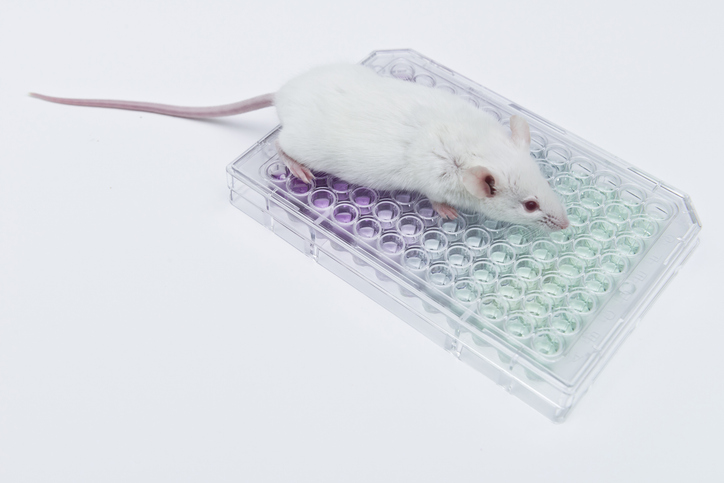
Drug development is in a preclinical testing predicament.
With advances in artificial intelligence (AI) and compute power, it has never been easier to mine human genetic data, predict a protein structure, or design drugs at scale. This acceleration in drug discovery has put the slog that is in vivo preclinical testing under the microscope while bringing ex vivo platforms like organoids to the spotlight.
In the U.S., regulators are pushing the field to move faster by deprioritizing animal testing. The NIH has announced that it will no longer fund preclinical programs that rely exclusively on animal models. The FDA has outlined a roadmap to reduce—and in some cases replace—animal testing with so-called New Approach Methodologies, arguing that human-relevant systems can speed therapeutic development and improve translation.
While the intent to accelerate drug development is commendable, many academic centers and biopharma companies in the industry aren’t abandoning animal models, and they aren’t necessarily just clinging to legacy mouse models—some are reinventing what in vivo experimentation looks like altogether.
Pharma giant Pfizer has entered a partnership with biotech startup Gordian Bio, proprietor of a large-scale in vivo mosaic screening platform, to accelerate obesity drug target discovery. Hundreds of gene targets will be tested inside mouse visceral adipose tissue, generating transcriptional readouts that allow obesity targets to be prioritized in a living, systemic context. The work is designed to compress years of slow, serial animal validation into a single, parallelized experimental effort—without stripping away the biology that chronic disease depends on.
“It’s getting easier to design a new molecule or binder, but without an actual interventional capacity at scale, the hypothesis testing part is the bottleneck,” Gordian Bio co-founder and CEO Martin Borch Jensen, PhD, told Inside Precision Medicine. “That’s something that our partners like Pfizer see, and we certainly believe in.”
Complex disease requires complex models
Gordian Bio co-founder and CEO Francisco LePort, PhD, describes the company as having been built around dissatisfaction with how chronic disease biology is typically explored. “The basic idea for us was we wanted to go after chronic diseases and understand the biology of chronic diseases in a different, more accelerated way than the traditional target discovery process,” LePort told Inside Precision Medicine.
Obesity, heart failure, chronic kidney disease, and osteoarthritis are not failures of single pathways. They are emergent states produced by endocrine signaling, immune tone, tissue-tissue communication, circadian rhythms, and long-term metabolic feedback. Pulling cells out of that environment—no matter how sophisticated the culture system—inevitably distorts the signal researchers are trying to measure. That approach, LePort argues, works when disease mechanisms are narrow or well defined. It breaks down when they are not.
Jensen explained the company’s philosophy against a broader backlash toward animal models that has gained traction in recent years. “There’s a big thing right now… where it’s like ‘all animal models are terrible—we should just never use them,’” Jensen told Inside Precision Medicine. “We know some people are like, ‘We should just use AI and we will get magical answers.’”
The motivation, Jensen acknowledges, is understandable. Too many animal studies have failed to translate into human efficacy. But Jensen sees a categorical error in the conclusion. “Mice are not humans,” Jensen said, “and cells in culture are not humans.”
In vitro systems, Jensen argues, lack the very features that define chronic disease biology: immune interactions, systemic metabolism, hormonal regulation, and feedback loops that operate across organs and over time. The issue, in his view, is not that animal models are intrinsically flawed, but that the wrong models are often used—and used too narrowly. “When we’re looking at metabolic diseases, we should have a bloodstream and a pancreas and all these things present,” Jensen said. “We can do that in animal models.”
This is where the Gordian–Pfizer collaboration intersects uncomfortably with current regulatory momentum. The NIH and FDA’s 2025 announcements are motivated by a desire to reduce animal use, modernize preclinical science, and accelerate patient access to therapies. But LePort and Jensen worry that enthusiasm for speed risks flattening biological complexity.
“It’s one thing to say, ‘Can we bring in non-animal systems for liver toxicity?’” said LePort. “But to say let’s toss out animal models for determining efficacy for curing complex diseases like obesity or osteoarthritis—that’s a whole different ballgame.”
Rather than treating “the mouse” as a universal proxy for human disease, Gordian approaches model selection as a disease-specific question. The company builds biological “avatars”—systems designed to approximate patients as closely as possible across physiological, anatomical, etiological, and molecular dimensions. In some cases, mice are the right choice, especially when genetic perturbations are involved. In other cases, mice are the wrong choice entirely.
For example, Gordian’s osteoarthritis program skips rodents during discovery and moves directly into horses. “We have an osteoarthritis program where we go directly into horses and skip the mouse models,” LePort said. “They spontaneously develop the disease, as opposed to you going in and surgically injuring the joint—your etiology is much more similar to the patients you’re trying to target.”
In vivo at scale and speed
This insistence on biological relevance extends to how Gordian evaluates models quantitatively, running transcriptomic comparisons across species and human tissues. What ultimately differentiates Gordian is not just its insistence on in vivo biology, but its ability to scale it. Traditional animal experiments force researchers into serial decision-making: one gene, one model, and one phenotype at a time. That reality collides with modern discovery pipelines that routinely generate hundreds or thousands of candidate targets. LePort said, “One of the core values that we can deliver to pharma partners… is that we can take what’s traditionally a very slow and laborious in vivo validation step and compress that into a very highly parallelized step instead.”
Pharma partners often arrive with long target lists derived from genetics, databases, and in vitro screens. The bottleneck is deciding which of those targets deserve the expense and time of in vivo testing. Gordian’s mosaic screening platform upends that constraint by allowing hundreds of perturbations to be tested simultaneously within a single animal, with transcriptional readouts providing quantitative measures of efficacy. “We can interrogate all of those genes… all at once,” LePort said. “In the time span that it would normally take to run one of those in vivo experiments.”
For Gordian, the danger is not innovation but overcorrection: replacing imperfect models with systems that are easier to scale but fundamentally incomplete. Chronic diseases do not fail in isolation, and therapies that look clean in reductionist systems can behave unpredictably once released into the full organism.
Looking ahead, Gordian’s ambition extends beyond obesity alone. LePort describes a long-term strategy of building overlapping in vivo datasets across heart, kidney, liver, and adipose tissue, allowing targets to be evaluated not just for efficacy but for cross-organ safety and synergy. “We can start looking at… targets that are synergistic,” LePort said, “and pursue what the next multimorbidity drug is.”
Jensen frames the value of this approach in contrast to passive data mining. “Everyone has access to the UK Biobank,” said Jensen. “But that does not tell you what the actual path from A to B is in the biological system.”
In an era when regulators are encouraging the field to move beyond animals, Gordian and Pfizer are making a bet that the in vivo context not only still matters but is necessary to capture the complexity of human biology.
Rather than sidestepping animal models, the Gordian and Pfizer partnership reflects a growing conviction among some drug developers that biology breaks when context is removed—and that no amount of computational elegance can substitute for testing interventions inside a functioning organism. As demand for obesity and cardiometabolic disease treatments reshapes the pharmaceutical landscape, the question is no longer whether discovery should be faster, but whether it can afford to become simpler.
The preclinical testing predicament being jostled in a tug of war between regulators and researchers brings to light an even bigger issue: how drugs should be discovered in an era where intelligence is abundant, data is cheap, and biological truth remains stubbornly expensive.
