

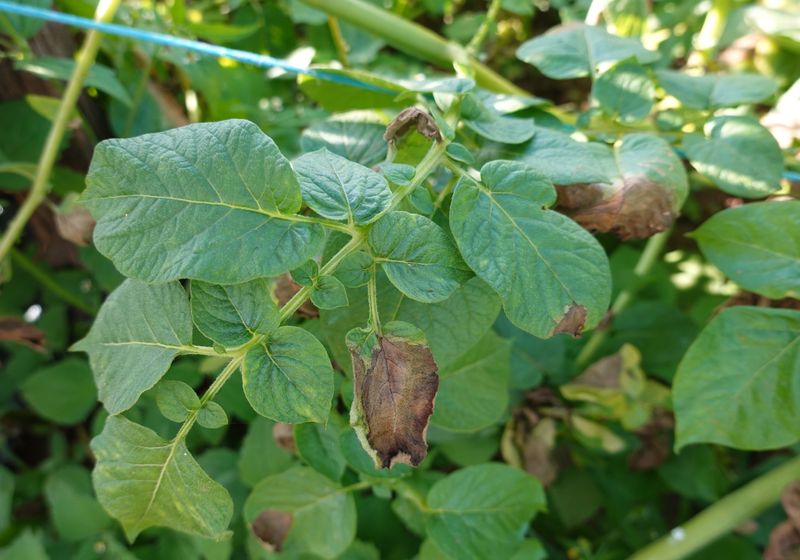
Plants use a group of metabolites during infection to initiate an early warning system to nearby and distant cells.
Rooted in place, plants have little ability to flee dangerous situations. Additionally, their lack of a dedicated immune system means that, to combat an infection, every cell needs to be able to mount a defense.
One way that plants protect themselves against pathogens is with a response system called systemic acquired resistance (SAR), in which cells in infected tissues signal to cells further away to protect themselves.1 Researchers knew that plant cells used molecules like salicylic acid to communicate these instructions, but the early signaling mechanisms and factors involved in initiating this response remained a mystery.
Now, researchers at the University of Warwick demonstrated that hormones called jasmonates, metabolites associated with wound signaling, trigger early warnings after infection and are vital to SAR.2 The findings, published in Nature Plants, provide insights into plant immunity and offer new strategies for developing crops more resistant to diseases.
“Whereas salicylic acid accumulation can take more than 24 hours, the jasmonate-dependent signal appeared within three to four hours of infection, moving rapidly through the plant’s epidermal and vascular tissues to the uninfected leaves. It is a fundamental shift in our understanding of how plant immunity works,” said Murray Grant, a plant biologist at the University of Warwick and study coauthor, in a press release.
Previously, the team studied the early events in SAR activation and saw that they resembled wound responses; additionally, infectious challenges increased the production of jasmonic acid and the expression of genes related to jasmonate production.3 To further explore the role of jasmonates in SAR as part of the present study, the team created a reporter by fusing a gene that’s expressed early in SAR to luciferase.
Using this reporter, the team confirmed that this gene is expressed three hours after they infected leaves with a plant pathogen. They observed that expression of this same gene turns on in nearby leaves four hours after the infection of the first leaf, supporting its early role in systemic responses.
To identify the molecule responsible for activating this gene, the team used their reporter in plants that lacked several known SAR mediators. None of these mutants prevented gene activation, suggesting that all of these SAR mediators act downstream of the gene.
The researchers then treated leaves expressing this reporter with jasmonic acid and saw that it activated luciferase, pointing to jasmonates as the inducers of this gene. They named the gene JASMONATE-INDUCED SYSTEMIC SIGNAL 1 (JISS1). Plants deficient in genes for jasmonate biosynthesis or signaling prevented JISS1activation, and jasmonate inhibitors had the same effect. These experiments also showed that in the absence of jasmonate and its signaling, plants were unable to elicit SAR responses.
Finally, because jasmonate signaling in wound responses involves calcium signaling, the team evaluated the role of these currents in jasmonate and JISS1 signaling in SAR. They showed that jasmonate signaling and JISS1 produced electrical potentials in infected leaves that travel to distant cells. The researchers observed that SAR depended on both jasmonate signaling and calcium signaling.
Grant said that these results could help researchers develop more environmentally-friendly crop mitigation strategies. “This work not only reshapes our understanding of systemic plant immunity but understanding common SAR signaling mechanisms gives us a unique lead to design strategies for bioengineering defense systems that provide broad spectrum, rather than pathogen specific crop resistance,” he said.
