

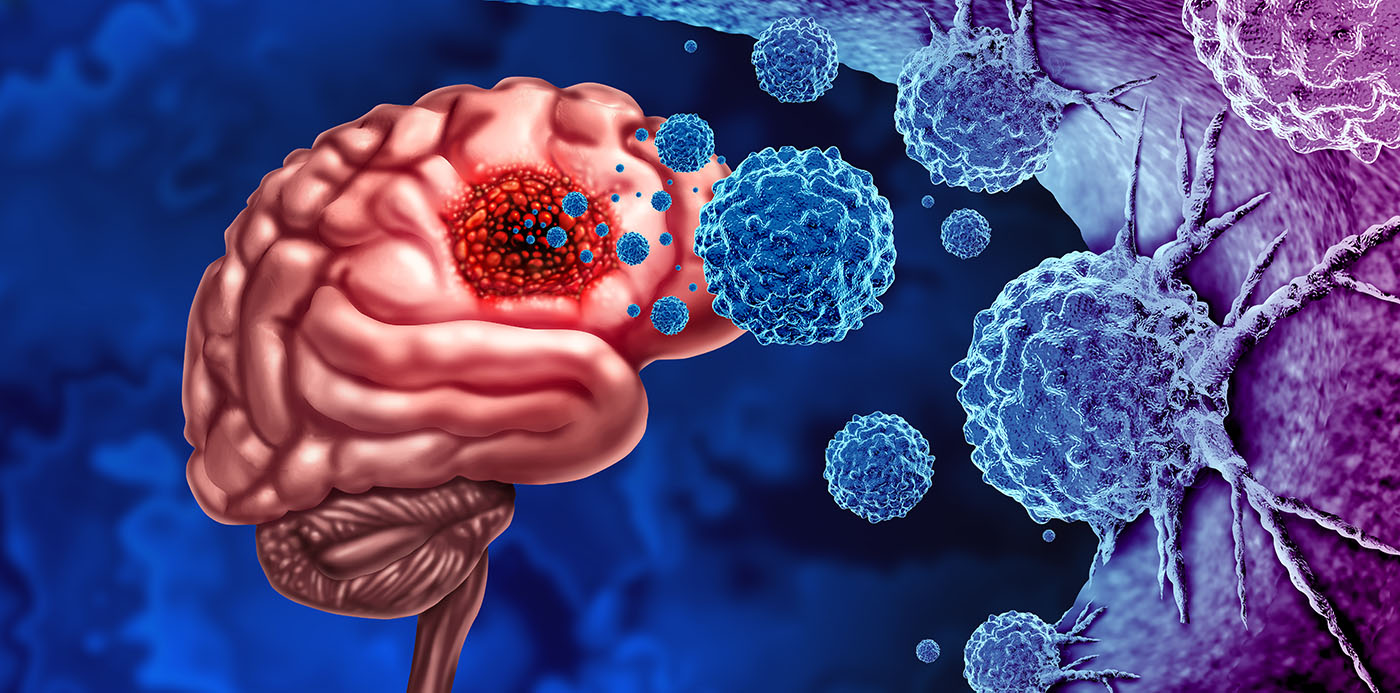
IDH-mutant glioma is the most common malignant brain tumor in adults under 50, yet it remains one of the most difficult to treat. Even after extensive surgery and therapy, recurrence is common. A new study from the Korea Advanced Institute of Science and Technology (KAIST) and Yonsei University Severance Hospital, published in Science, suggests a fundamental reason why: the cancer may already be widespread in the brain long before it can be seen.
Rather than emerging suddenly as a discrete tumor mass, the researchers show that IDH-mutant gliomas begin quietly, within normal-appearing brain tissue, and progress over many years. The findings redefine how—and when—this disease truly starts.
“Brain tumors may not start exactly where the tumor mass is visible,” said Seok-Gu Kang, MD, professor at Severance Hospital at Yonsei University College of Medicine and co-corresponding author of the study. “A target approach focused on the origin cells and the site of origin according to the brain tumor subtype will serve as a crucial clue to changing the paradigm of early diagnosis and recurrence suppression treatment.”
Finding cancer’s first footprint
The research team, led by Jeong-Ho Lee, MD, PhD, and Kang, analyzed tumor tissue obtained through extensive surgical resections, along with surrounding areas of the cerebral cortex that appeared normal under conventional imaging and pathology.
What they found was unexpected: cells carrying the defining IDH mutation were already present outside the tumor mass, embedded within brain tissue that showed no obvious signs of cancer.
“This result proves for the first time that malignant brain tumors do not emerge suddenly at a specific point in time,” the authors report, “but rather begin within a normal brain and progress slowly over a long period.”
To identify exactly what kind of cells were harboring these early mutations, the team turned to spatial transcriptomics, a technology that maps gene activity while preserving tissue location. This allowed them to pinpoint not just which genes were active, but where mutated cells resided within the brain.
The true cells of origin
Using this approach, the researchers demonstrated that the earliest IDH-mutant cells are glial progenitor cells (GPCs)—normal precursor cells in the brain that, under the right genetic conditions, can become malignant.
To confirm causality, the team introduced the same IDH driver mutation into GPCs in mice. The animals recapitulated the step-by-step development of IDH-mutant glioma, providing strong experimental evidence that these progenitor cells are indeed the cancer’s point of origin.
“This achievement was made possible by combining KAIST’s world-class basic science research capabilities with the clinical expertise of Yonsei Severance Hospital,” said Jung Won Park, neurosurgeon, postdoctoral researcher at KAIST Graduate School of Medical Science and Engineering and the study’s first author. “The question I kept asking while treating patients—‘Where does this tumor originate?’—was the starting point of this research.”
Not all brain cancers begin the same way
The findings also reinforce a central principle of precision medicine: tumors that look similar can arise through fundamentally different biological routes.
In earlier work published in 2018, the same research group showed that IDH-wildtype glioblastoma originates from neural stem cells in the subventricular zone, a deep brain region that generates new neurons. The current study demonstrates that IDH-mutant gliomas follow a completely different developmental path, arising from cortical glial progenitors instead.
This distinction is more than academic. It suggests that different brain tumor subtypes require different strategies for early detection, surgical planning, and long-term disease control.
Why recurrence has been so hard to prevent
Clinically, IDH-mutant gliomas are often treated by removing as much of the visible tumor as possible. But if mutated progenitor cells are already distributed throughout the cortex, surgery alone may leave behind the seeds of recurrence.
This may explain why even aggressive resections fail to provide durable cures.
“Until now, treatment has focused primarily on removing the visible tumor mass,” the authors note. “However, our findings indicate that the true disease burden extends far beyond what can be seen.”
Toward earlier diagnosis and interception
By identifying the earliest mutated cells and their anatomical distribution, the study opens the door to entirely new approaches. Instead of waiting for a tumor to form, clinicians may one day detect or target mutant progenitor cells before malignant transformation accelerates.
This concept, sometimes referred to as cancer interception, is gaining traction across oncology. IDH-mutant glioma, with its slow progression and consistent genetic driver, may be particularly well suited to this strategy.
Translational efforts are already underway. A KAIST faculty startup is developing RNA-based therapies designed to suppress the evolution and recurrence of IDH-mutant tumors, while Severance Hospital is pursuing early detection technologies through international R&D collaborations.
