

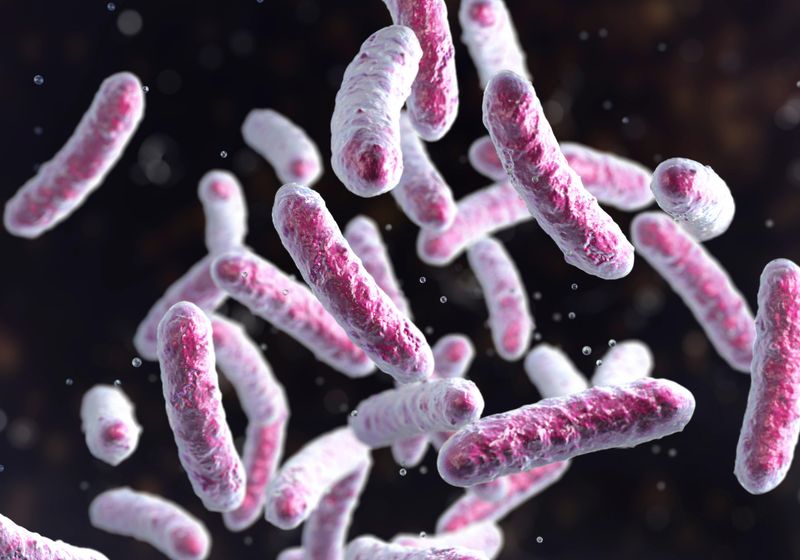
Because endotoxin from Gram-negative bacteria can provoke severe immune responses in patients, rigorous testing of medical products is essential.
©STOCK.ADOBE.COM, Dr_Microbe
Ensuring the safety of medical products, such as drugs, biologics, or devices, requires careful testing for contaminants. Bacterial endotoxins are a major concern for pharmaceutical manufacturers because these contaminants can trigger immune reactions in patients ranging from mild, transient fever to life-threatening systemic inflammation.1 Also known as lipopolysaccharides (LPS), these highly stable chemical compounds are present in the outer membrane of Gram-negative bacteria and vary in structure depending on the bacterial species and environmental conditions.
Historical Advances in Endotoxin Testing
Developed in the early 1910s and widely adopted by the 1940s, the rabbit pyrogen test was the first method that allowed manufacturers to test their products for endotoxins.2 Scientists performed the procedure by injecting rabbits with the compounds and monitoring them for fever. Although the test remained in use for decades, it was costly, as each evaluation required a new animal.
In the 1960s, researchers discovered a natural defense mechanism in horseshoe crabs, in which their blood coagulates upon exposure to LPS to trap Gram-negative bacteria.3 As uncovered decades later, this clotting reaction results from a proteolytic cascade involving three key proteins released by the crab’s amebocytes.4 In this series of enzymatic reactions, LPS activates Factor C, which in turn triggers Factor B. Activated Factor B then activates the proclotting enzyme, ultimately leading to blood clot formation. Inspired by this phenomenon, scientists developed a new endotoxin analysis method, known as the Limulus amebocyte lysate (LAL) test, which utilizes amebocyte extract isolated from live horseshoe crabs to detect LPS.2 In 1977, the US Food and Drug Administration recognized LAL-based tests as acceptable endotoxin detection procedures. However, it took many years for scientists to fully elucidate the clotting mechanism and manufacturers to validate their performance and adopt them as standard methods.
Moving Toward Animal-Free Endotoxin Testing
To reduce the reliance on animals for endotoxin testing, the pharmaceutical manufacturing industry is now exploring alternative methods that better align with the 3Rs for ethical animal use: replacement, reduction, and refinement.5 One promising approach involves scientists generating recombinant reagents that mimic specific components of the natural cascade in horseshoe crabs. In May 2025, the United States Pharmacopeia Microbiology Expert Committee approved a new guideline recognizing the use of recombinant reagents for endotoxin testing, marking an important regulatory milestone and paving the way for new animal-free solutions.

Endosafe® Trillium™ uses recombinant proteins that replicate the horseshoe crab enzymatic cascade to detect bacterial endotoxins without animal-derived materials.
Charles River Laboratories
The Endosafe® Trillium™ recombinant cascade reagent (rCR) cartridge from Charles River Laboratories is an animal-free alternative to traditional LAL-based testing and supports accurate detection and quantification of bacterial endotoxins in medical products. This robust kinetic chromogenic approach replicates the LAL enzymatic cascade using recombinant versions of Factor C, Factor B, and the proclotting enzyme, thereby supporting the 3Rs. With performance equivalent to established LAL-based methods, the Endosafe Trillium rCR assay enables reliable testing in accordance with good manufacturing practices. Charles River also assists companies interested in implementing this assay by providing data demonstrating its equivalence, robustness, accuracy, and precision. This reduces the resource-intensive and time-consuming validation testing that manufacturers must typically perform.
Designed for precision, efficiency, and sustainability, the cartridge format requires only four manual pipetting steps and allows analysts to automate the remainder of the assay using integrated instrumentation and software, providing real-time quantitative endotoxin analysis in approximately 15 minutes while minimizing reagent and consumable waste. This approach eliminates manual standard curve creation by using an archived standard curve, reducing variability and improving data integrity. The cartridges are also fully compatible with multiple Charles River instruments and their existing software.
Overall, the Endosafe Trillium rCR cartridge offers accurate, robust, and equivalent performance to traditional LAL-based methods, thus providing pharmaceutical manufacturers with an animal-free bacterial endotoxin testing solution.
- Su W, Ding X. Methods of endotoxin detection. SLAS Technol. 2015;20(4):354-364.
- Tindall B, et al. Recombinant bacterial endotoxin testing: A proven solution. BioTechniques. 2021;70(5):290-300.
- Levin J, Bang FB. The role of endotoxin in the extracellular coagulation of Limulus blood. Bull Johns Hopkins Hosp. 1964;115:265-274.
- Tamura H, et al. Outstanding contributions of LAL technology to pharmaceutical and medical science: Review of methods, progress, challenges, and future perspectives in early detection and management of bacterial infections and invasive fungal diseases. Biomedicines. 2021;9(5):536.
- Gorman R. Atlantic horseshoe crabs and endotoxin testing: Perspectives on alternatives, sustainablemethods, and the 3Rs (replacement, reduction, and refinement). Front Mar Sci. 2020;7.

