

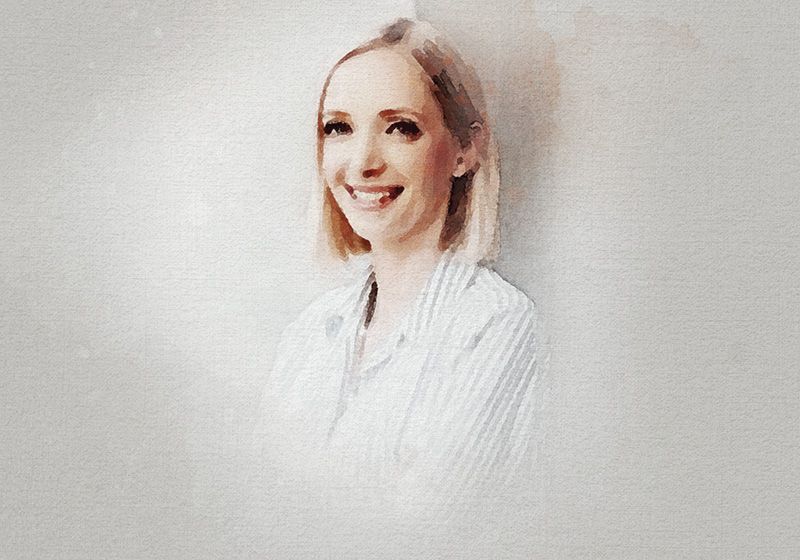
This postdoc blends behavioral biology and artificial intelligence to better understand animal emotion and welfare.
Q | What’s your research background?
My name is Annika Bremhorst, a behavioral biologist and postdoctoral researcher at the Vetsuisse Faculty of the University of Bern. I study how dogs and horses express pain and emotion, combining behavioral science, veterinary medicine, and AI. I also founded Dogs and Science, a platform translating canine research into accessible knowledge for professionals and owners.
Q | How did you first get interested in your field of research?
I first became fascinated by science through my love of animals and the puzzle of how they communicate. As a student, I was struck by how much of an animal’s inner life remains invisible to us—especially states like pain or fear. One moment that shaped me was realizing the disconnect between how much people assume we know about dogs’ expressions and how little science has actually proven. That gap made me aware of how much depends on our ability to read behavior accurately.
From there, I wanted to bridge disciplines—behavioral science, veterinary medicine, and now AI—to better understand what animals feel and how we can measure it reliably. My path has taken me from studying canine emotions to developing tools for objective pain assessment in dogs and horses, and now to exploring how AI can support this work. Along the way, I became equally fascinated by sharing what we discover as scientists with the wider world. This passion led me to build Dogs and Science, my own science communication platform that makes research accessible to dog professionals and owners alike.
Q | Tell us about your favorite research project you’re working on.
One of my favorite projects is our work with the Tech4Animals team led by Anna Zamansky, where we are developing AI-powered tools to analyze animal behavior. Together, we have already built systems that can help to advance automatic recognition of emotional expressions in dogs from video. What excites me most is that these tools are not locked away in a lab—they are freely available through an online platform, so other researchers and practitioners can use and build on them.
The potential goes far beyond research. By making these technologies more accessible and transparent, we can start to imagine practical applications for everyday life. For example, dog trainers, veterinarians, or even engaged dog owners could one day use AI-assisted behavior analysis to better understand how their animals are feeling. For me, this project combines cutting-edge methods with a real-world vision: advancing science while creating tools that can directly improve human–animal relationships.
Q | What has been the most exciting part of your scientific journey so far?
The most exciting part of my journey has been realizing that our research can move beyond academic papers and start shaping how people actually interact with animals. Early in my career, I focused on mapping the tiny details of canine facial expressions. At first it felt like “pure science,” but when veterinarians and trainers told me they could use our findings to recognize subtle signs of pain or emotion in their daily work, the impact became real.
Another highlight has been working across disciplines—bringing together veterinarians, behavior scientists, ethicists, and AI experts. Collaborations with the Tech4Animals team, for example, showed me how behavioral science can combine with AI to create tools that anyone can use.
Finally, building Dogs and Science has been thrilling in its own right. Sharing discoveries with a wider audience and seeing professionals and owners use them to improve welfare makes me feel that science doesn’t just stay in journals—it lives in practice. An equally meaningful moment was when colleagues approached me wanting to join our team because they believed in our mission and vision—this in itself felt like a huge milestone.
Q | If you could be a laboratory instrument, which one would you be and why?
If I could be a laboratory instrument, I would be a camera—maybe even an AI-powered one. Cameras capture what might slip past the human eye: a tiny flick of an ear, the twitch of a muscle, or the way a dog’s expression softens for just a second. Those fleeting details are exactly what fascinate me as a researcher.
But I’d also want the AI’s ability to step back and weave all those little snapshots into a bigger story. That’s what my work is really about: seeing both the fine-grained details of behavior and the broader patterns that tell us how animals experience pain or emotion.
In many ways, I already try to be both—part careful observer, part integrator—helping transform hidden signals into knowledge that improves welfare and strengthens the bond between people and animals.
Are you a researcher who would like to be featured in the “Postdoc Portraits” series? Send in your application here.
