

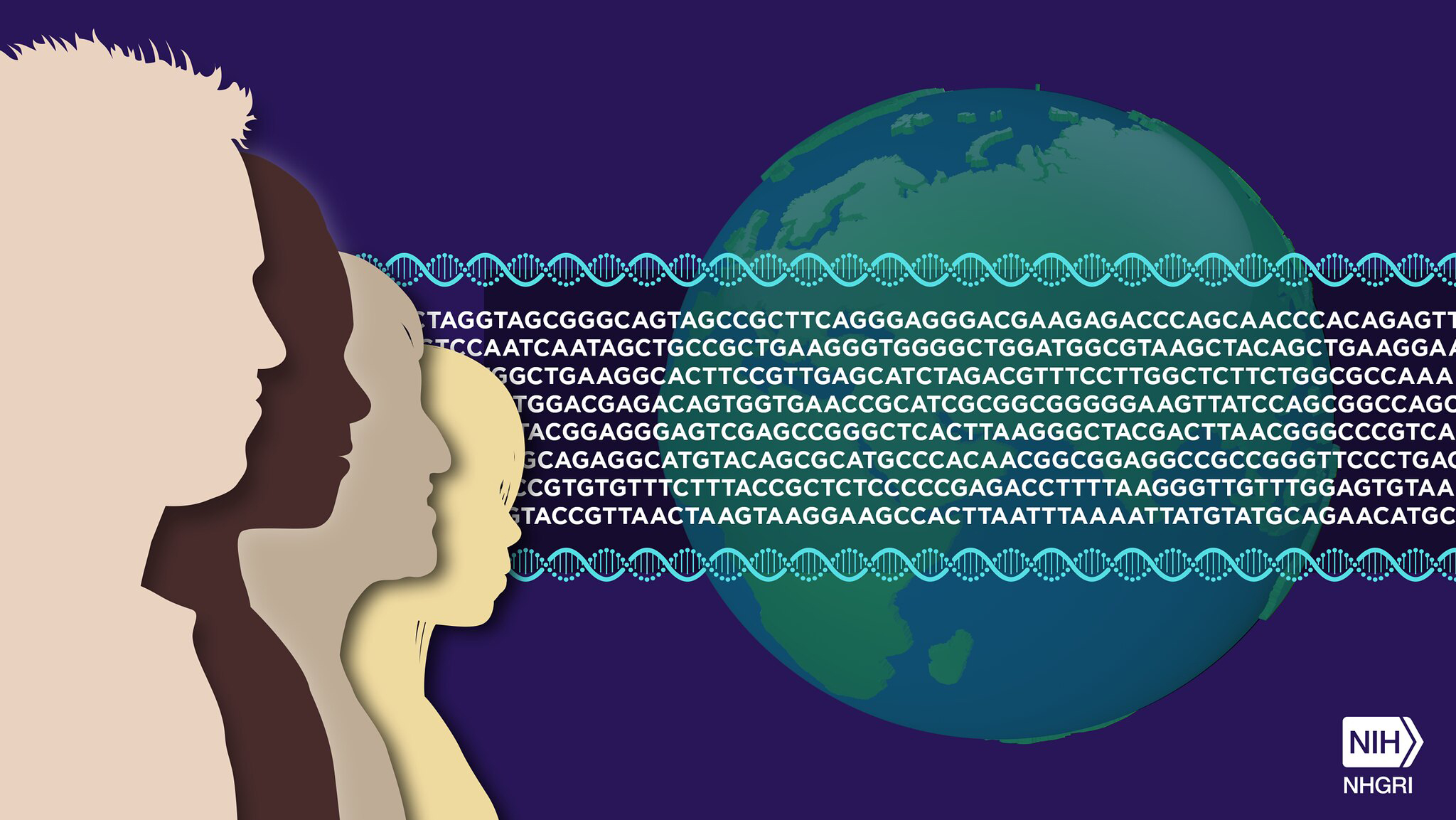
Learning to read and write is the beginning of literacy, a progression now mirrored in modern genomics. Scientists first read the human genome, a three-billion-letter biological book, in April 2003. Since then, researchers have steadily advanced the ability to write DNA, moving far beyond single-gene construction. New technologies enable the synthesis of viral, bacterial, and yeast genomes. Now, cutting-edge projects are building the tools needed for large-scale chromosome engineering, with the long-term goal of constructing the first human genome from scratch.
In the U.K., a Wellcome-funded five-year proof-of-concept project, Synthetic Human Genome (SynHG), is taking aim at developing the foundational and scalable technologies to achieve reliable genome construction. The £10 million (~$13 million in U.S.) project established a consortium consisting of five university teams from Cambridge, Kent, Oxford, Manchester, and Imperial. Embedded within the ambitious scientific undertaking is also a research wing designed to address socio-ethical implications. According to Wellcome, “Achieving reliable genome design and synthesis–i.e., engineering cells to have specific functions—will be a major milestone in modern biology.”
Yet the sheer scale of the challenge is staggering. Even the smallest of the 23 pairs of human chromosomes (Chromosome 21) contains about 47 million base pairs and 200–300 genes. At the other extreme, Chromosome 1 spans nearly 249 million base pairs and houses more than 2,000 genes. These stark differences in size, gene content, regulatory elements, and much more underscore the formidable scientific hurdles facing researchers attempting to design and build synthetic human chromosomes.
Moonshot in a test tube
One of the first and most fundamental questions is why creating a synthetic human genome is valuable. Andrew Hessel, co-founder and chairman of the U.S.-based international Human Genome Project-write (HGP-write), weighs in, “While I am speaking strictly from my own positions and thoughts, I believe that being able to write synthetic genomes is important—and here I mean every genome, from the smallest virus particle to the largest plant genomes. This capability allows for the precision engineering of single cells to tissues, to whole organisms. It renders physical editing of the DNA molecule with tools like CRISPR obsolete while making even complex changes, such as recoding, easy.”
Co-founder and Chairman
Human Genome Project
However, Hessel says that while the venture is meritorious, it also comes with major challenges. “I can think of at least three reasons why this is worth pursuing. It’s a genuinely hard problem–a true moonshot–and that’s exactly why it’s worth doing. First, projects at this scale pull people in—they create excitement, attract talent, and drive investment. They force the development of new computational methods, synthesis approaches, and lab protocols. Remember, the Human Genome Project was launched before anyone had even sequenced a single bacterium. Writing the human genome follows the same logic: Don’t aim small. Big visions lift the entire field, and the rising tide ends up lifting every ship.
“Second, it gives us a clean, modular piece of genomic real estate. Our chromosomes are spaghetti code, carrying a lot of baggage—duplicated segments, ancient viruses, odd regulatory knots, etc. It works, but it’s messy. If we want biology to be as programmable as computing, we need to be able to write clean, safe, and predictable genetic code.
“Third, it will unlock understanding and new capabilities. A synthetic chromosome is a sandbox—a test bed where we can explore new capabilities or repair broken systems without disturbing anything essential.”
Even aside from some of the theoretical considerations, the nuts and bolts and day-to-day operation for a project of this magnitude remain daunting. It will require timely, significant technical advances at every stage. Hessel notes, “I’m not a specialist here, but I understand that building a human chromosome poses significant technical hurdles. We need much better DNA synthesis—pieces that are hundreds of kilobases long, error-free, and affordable. We need more reliable ways to assemble those pieces into megabase-scale constructs. Chromosomes also require specialized architecture: centromeres, telomeres, 3D folding patterns, and chemical modifications such as methylation, for everything to function properly in the cell. We’re still learning how to design and build these elements so the chromosome is stable, is expressed correctly, and segregates cleanly during cell division. Finally, we need improved methods for introducing large DNA constructs into cells and verifying that they function as intended. All of this is solvable, but it’s exactly why this is a moonshot.”
But how long might it take for such challenges to be solved for real-life benefits? Hessel says it’s not that far off and points out the dramatic progress of the Synthetic Yeast (Sc2.0) Project. This international collaboration recently designed and built the world’s first fully synthetic eukaryotic genome: the redesigned Saccharomyces cerevisiae (baker’s yeast) genome. “We’re closer than most people recognize, but we’re not quite in the home stretch. We can already design chromosomes on a computer, synthesize large DNA fragments, and assemble megabase-scale constructs in yeast. The Sc2.0 consortium, led by Jef Boeke, PhD, has shown that eukaryotic genome engineering is possible. They’ve shown how to assemble megabase-scale DNA reliably, how to debug an engineered chromosome inside a living cell, and how to use synthetic design to make genomes more modular and evolvable. What’s missing is the ability to do all of this at the scale, accuracy, and cost required for a full human chromosome–and to make sure it behaves correctly in a human cell. None of this is science fiction. It’s an engineering project waiting for the right push.”
Ethical concerns and public input
Aside from the many potential benefits of creating synthetic human chromosomes, there also are numerous concerns about safety, unforeseen biological effects, and the possibility of passing engineered DNA to future generations without their consent. Further, ethicists worry about the slippery slope of medical research into reproductive uses that could create “designer babies” or traits.

To begin exploring these and other such issues, Joy Y. Zhang, PhD, professor of Sociology, Centre for Global Science and Epistemic Justice, University of Kent, has created a social science program called “Care-full Synthesis” as part of the SynHG project. She reports, “Since this project will change how we view genetic technology itself, I emphasize more the discussion related to ‘large genomes’ and not just human genomes because this emerging synthetic technology will also involve plants and animals, for example.”
Zhang says that scientists want society to embrace their work and that society wants to understand the scientific and social potential of these advances. “It is important to have this dialog globally because the future will unlock lots of potential and resources, as in, for example, eco-conservation and much more. After all, wouldn’t it be nice to have a world where science can broaden our life choices, not narrow them?”
According to Zhang, once people better understand each other, solutions can be reached much more easily. “For writing the genome, we need to re-create an environment where the public sector, as well as investors, scientists, and regulators, have confidence that it is possible to have diverse points of view yet still find a way for different opinions on the technology to co-exist. One of the real purposes of my center is that we discuss all viewpoints, including those with opposite viewpoints. I’m leading that effort but not shaping it. Rather, in the next five years, we will be only at the proof-of-concept stage. That’s why focusing on the social aspect is so important now.”

Professor of Sociology, Centre for Global Science and Epistemic Justice
University of Kent
Zhang and team will employ a mixture of qualitative and quantitative methods, including interviewing 100 global experts on the subject. “These will include researchers and ethicists involved in large genome synthesis. We also will have current and fresh discussions, focus groups, and workshops with diverse publics and civil societies around the world.”
Moving towards that direction, she and colleagues have already etched a template for achieving a platform for mutual recognition, trust-building, and the careful coordination of differences. The O.D.E.SS.I. framework for public engagement centers around five principles: Open, Deliberative, Enabling, Sensible and Sensitive, and Innovative.
Zhang philosophizes, “We really think there’s a long adventure ahead for us. We want to rewind the public dialogue and equip it with an informed diplomatic capacity to bring about mutual understandings among world societies. I’m deeply concerned with how divided and unequal the world has become, and I think human genome research is such a fundamental tool to shape our health, environment, food systems, raw materials, and much more. It will have such a profound effect on everyone’s future. Thus, I want to have a concurrent global dialog. I want the people to be interested and engaged in this discussion. It is an obligation of our scientific citizenship to know about this new science. It is up to us to shape it as world citizens. We also have the responsibility to have the courage to be hopeful.”
Far-reaching implications
As this new frontier begins to accelerate, significant impacts can be expected. Hessel believes it’s full speed ahead for SynHG, HGP-write, and other programs. “The ability to engineer biology will reshape almost every industry, far beyond health, medicine, or agriculture. And by keeping our focus on the human genome–arguably the most important and historically sensitive genome to work on–we’ll ensure the field stays ambitious, responsible, and aimed at solving the problems that matter most to us. And it doesn’t matter which group crosses the line first. Humanity is the winner.”
