


Commercial astronauts showed rapid DNA methylation changes that mostly reversed on return – a stress test for immunity and resilience.
A brief trip to the International Space Station may be enough to nudge biological age markers upward – and then, rather intriguingly, back down again. In a new Aging Cell short communication, researchers report that astronauts on the nine-day Axiom-2 mission showed measurable shifts in multiple DNA methylation-based “epigenetic clocks” while in orbit, followed by partial or complete reversibility after landing [1]. The work, led by scientists at the Buck Institute for Research on Aging, adds fresh texture to a long-running question in geroscience: when biology responds to stress, are we watching aging accelerate, or adaptation take the wheel?
The study is small – four astronauts, tight sampling windows, plenty of confounders – but it lands in a timely place. Commercial spaceflight is expanding access to human biosampling in an environment that concentrates physiological strain into a short, intense arc: microgravity, altered circadian cues, confinement, radiation and a carefully engineered daily routine. It is not daily life, but it is a useful provocation.
Longevity.Technology: Spaceflight is often treated as a cartoonishly accelerated version of aging, but this small Axiom-2 dataset hints at something more interesting than a one-way slide into decrepitude: epigenetic age signals can lurch upward after just nine days in orbit and then, at least in younger astronauts, rebound to baseline or even below it once back on Earth. That is either a tantalizing glimpse of biological plasticity or a sharp reminder that many DNA methylation “clocks” are exquisitely sensitive to context – especially immune cell dynamics – and if regulatory T cells and naïve CD4 shifts are doing a meaningful share of the explanatory work, then what we are watching may be stress physiology dressed up as “aging” rather than damage unspooling in real time. The temptation is to call this “rejuvenation” and move on; the grown-up interpretation is that rebound is the headline, but mechanism is the story – is this repair, redistribution, rehydration, circadian normalization, or simply the biomarker equivalent of a mood ring reacting to a dramatic change in environment?
Still, the provocative implication holds: if parts of what we operationalize as biological age can move quickly, then resilience may be the tractable target and clocks may be most honest when framed as state readouts, not destiny meters. And with commercial missions turning the ISS into a repeatable human stress-test platform, the longevity field suddenly has an unusual laboratory for observing stress – adaptation – recovery loops in vivo; the challenge now is to scale beyond four people, layer in direct immunophenotyping and functional outcomes, and resist the urge to sell a passport stamp as a fountain of youth.
A clockwork of many clocks
Led by Buck postdoc and bioinformatician Matias Fuentealba, PhD, first author of the paper, the Buck Institute team applied 32 different epigenetic clocks to blood samples collected at five points: 45 days before lift off, during the mission on days 4 and 7, and one day and seven days after return [1]. Rather than focusing on a single metric, the authors grouped clocks into categories with different conceptual baggage – chronological-age predictors, mortality-linked models, organ system estimators and “intrinsic” measures that aim to reduce the influence of immune cell composition.
That approach matters, because these tools do not behave identically; some are engineered to track time, others to track risk. In practice, they can also track more mundane things, such as shifts in immune cell proportions and stress-driven remodeling. In orbit, the majority of clocks indicated accelerated aging in the blood. Post-flight, the correction was near-instant. Within 24 hours of landing, the two younger astronauts exhibited epigenetic ages lower than their pre-launch levels – a display of biological elasticity that remained evident seven days later. This high-velocity snapback suggests we are watching a reactive physiological dashboard rather than a slow-burn biological ledger.
A week is not long in the life of a methylation landscape, which is precisely why this is so provocative. If short-lived environmental stressors can produce clock movement on this timescale, then clocks are not merely historical ledgers – they may also be responsive dashboards.
Immune system is both confounder and clue
Blood-based clocks are deeply entangled with immunity. The authors note that much of the in-flight acceleration could be statistically accounted for by predicted changes in immune cell composition, with regulatory T cells and naïve CD4 T cells contributing strongly to the signal [1]. Neutrophils, meanwhile, tended to move in the opposite direction. This has a familiar geroscience flavor: immune remodeling is both a hallmark of aging and one of the most agile systems in the body, capable of rapid recalibration when the environment changes.
It is also a quiet warning label. If immune cell redistribution can drag clocks around, then clock “age” may sometimes be telling you more about acute physiology than slow-burn aging biology. Still, those immune shifts are not irrelevant; immunosenescence and inflammaging are central to disease risk with age, and a platform that perturbs immune dynamics on demand is scientifically useful – even if it complicates interpretation.
The study design does not allow the authors to claim causality, only association, and they are frank about the constraints: small numbers, mission specificity and the challenge of isolating spaceflight effects from a tightly choreographed cascade of sleep changes, altered diet, exercise regimens and psychological load.
Resilience, not romance
The reversibility indicated by the study might reflect repair pathways, but it could equally reflect rehydration, a return to normal circadian cues, post-mission recovery routines, or the immune system shifting back into its familiar grooves once gravity returns to its usual role as an uninvited constant.
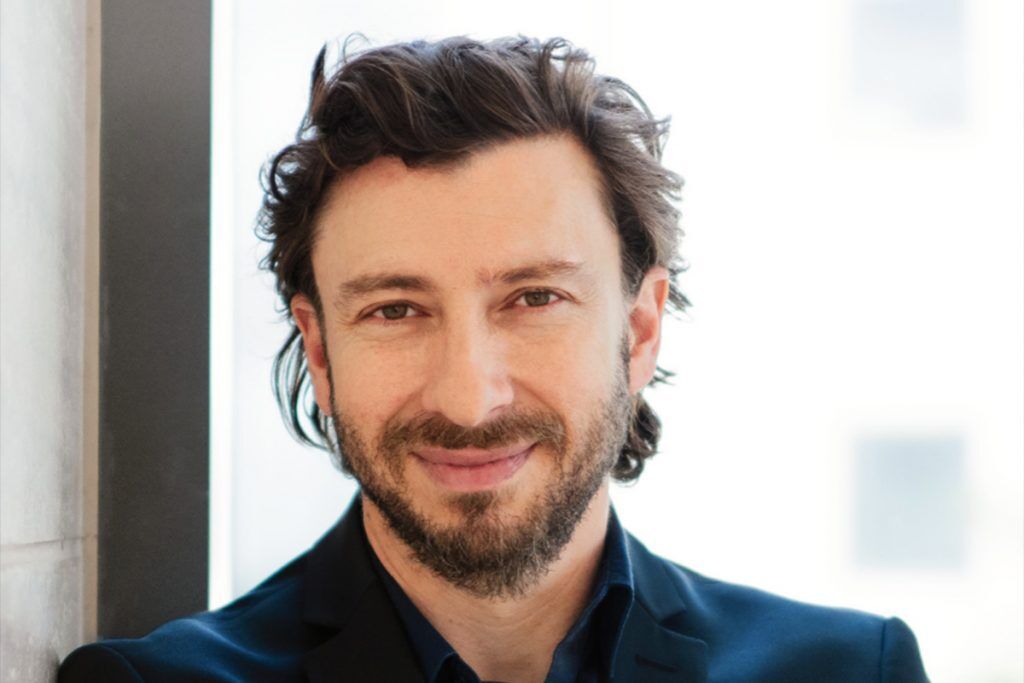
David Furman, senior author and associate professor at the Buck Institute, frames the work as a door into mechanisms rather than a tidy storybook arc.
“The findings suggest that spaceflight induces rapid, yet reversible, epigenetic changes that are partially distinct from cell shifts,” he said. “This positions spaceflight as a platform to study aging mechanisms and test geroprotective interventions.”
The authors clearly position spaceflight as a “human aging model”, not because it neatly mirrors life on Earth, but because it compresses a set of stressors into a tractable window for measurement [1].
That is an appealing inversion. Aging research often struggles with time horizons; interventions take years to prove their worth. A short mission cannot substitute for decades, but it may reveal how quickly certain biological systems shift when challenged, and how quickly they can re-stabilize.
A commercial platform with scientific gravity
Axiom-2 is not a government astronaut cohort with decades of standardized protocols; it is part of the new commercial space era, which has implications for research access, data governance and scalability. The authors argue that commercial missions could accelerate biomarker discovery and countermeasure testing; with repeated flights, sampling could become more systematic and longitudinal cohorts more feasible [1].
Furman, whose lab has the ability to recapitulate the effects of microgravity in cells and organoids, pointed to a translational loop between astronaut health and everyday aging.
“These results point to the exciting possibility that humans have intrinsic rejuvenation factors that can counter these age-accelerating stressors,” he said. “Using spaceflight as a platform to study aging mechanisms gives us a working model that will allow us to move toward the ultimate goal of identifying and boosting these rejuvenating factors both in astronauts and in those of us planning on aging in a more conventional manner.”
It is an attractive proposition – not because most people will float above the planet, but because space offers a controlled stress laboratory where adaptation can be watched in near real time.
The paper hints at future directions: pairing methylation readouts with direct immunophenotyping, integrating physiological endpoints that matter for function, and comparing different missions, durations and countermeasure regimens [1]. A nine-day exposure is one thing; months-long stays, repeated flights, or deep-space profiles are another, and the biology is unlikely to scale linearly.
Keeping it grounded
For geroscience, the larger question is not whether space “ages you”, but what kind of age signal these clocks are capturing. If a substantial portion reflects immune dynamics, then resilience biology becomes harder to ignore; the ability to bend and recover may matter as much as the baseline state. Not destiny. Not doom. Modulation.
A larger cohort would help, but so would greater conceptual clarity about what we want clocks to do in the first place: predict risk, track mechanism, measure intervention response, or act as a composite proxy for system stability. The answer may be all of the above, depending on the clock, the tissue, the context – and the question.
Space will keep being a stress test, a spectacle and a commercial frontier. For longevity science, its most valuable contribution may be simpler: a repeatable way to watch human biology wobble, compensate and sometimes return to form, with enough measurement density to make the wobble legible.
Photographs courtesy of The Buck Institute
[1] https://onlinelibrary.wiley.com/doi/epdf/10.1111/acel.70360
