

Vaccination against shingles could offer extra benefits beyond simply preventing the disease itself, with research suggesting it lowers several key measures biological decline.
The study, in The Journals of Gerontology: Series A, provides further evidence that adult vaccines could play a role in promoting healthy aging beyond the prevention of infection.
Vaccination against shingles, which is also known as herpes zoster, slowed two genetic signs of aging.
It also reduced levels of inflammation, which at chronic, low levels has been linked with age-related conditions such as heart disease, frailty, and cognitive decline through a phenomenon dubbed “inflammaging,” the investigators reported.
“By helping to reduce this background inflammation—possibly by preventing reactivation of the virus that causes shingles, the vaccine may play a role in supporting healthier aging,” explained researcher Jung Ki Kim, PhD, from the University of Southern California.
“While the exact biological mechanisms remain to be understood, the potential for vaccination to reduce inflammation makes it a promising addition to broader strategies aimed at promoting resilience and slowing age-related decline.”
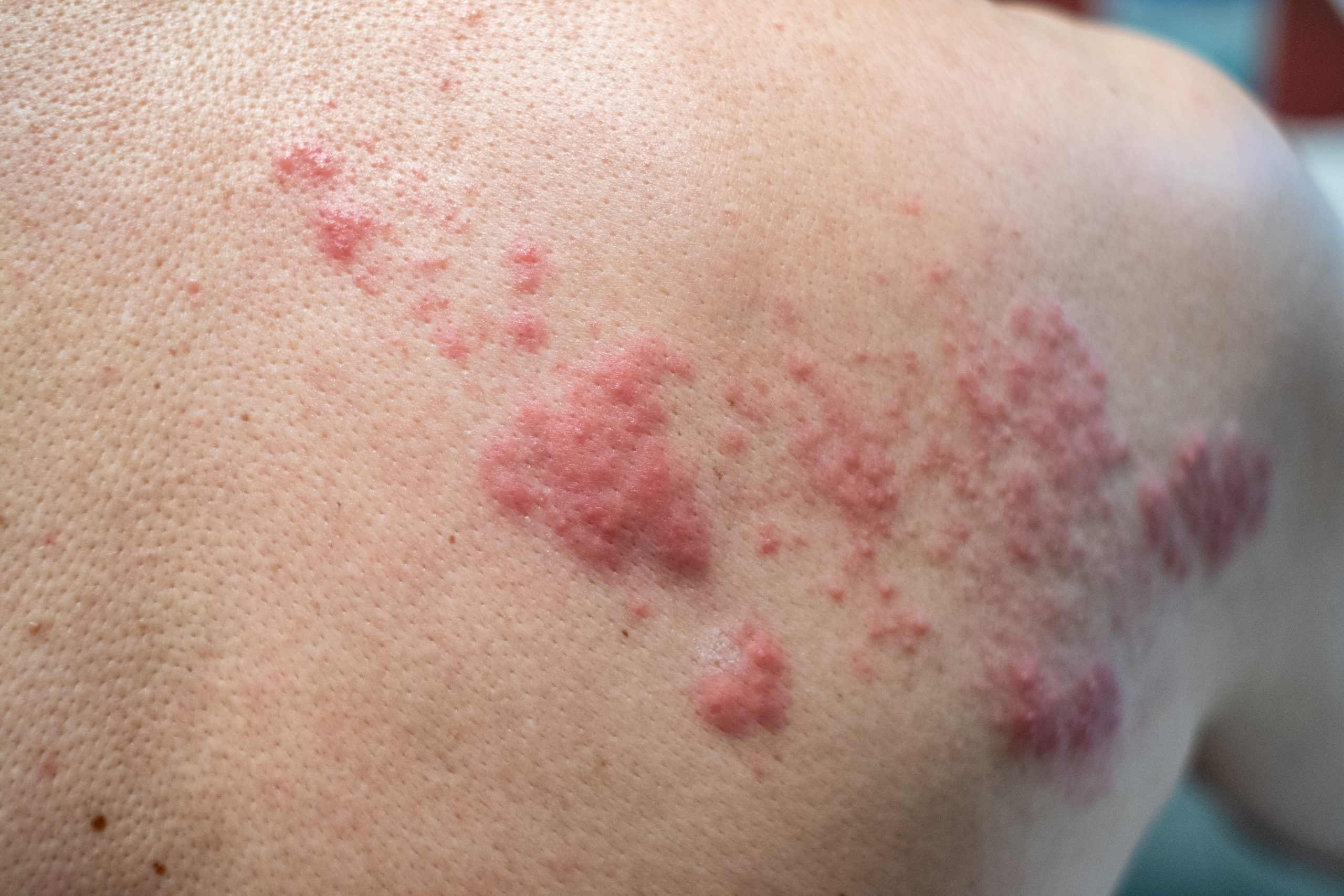
Shingles causes a painful rash due to reactivation of the dormant varicella-zoster virus that also causes chickenpox.
Kim and her USC colleague Eileen Crimmins, PhD, investigated suggestions that supressing reactivation of this virus might reduce chronic inflammation and immune dysregulation triggered by latent viral reactivation, thereby slowing biological decline.
They examined how vaccination against shingles was linked with biological aging in 3,884 adults, who were at least 70 years of age, who were taking part in the U.S. Health and Retirement Study. Just under half the group had been vaccinated.
Seven measures of biological aging were studied: inflammation; innate and adaptive immunity; cardiovascular hemodynamics; neurodegeneration; epigenetic and transcriptomic aging; and a composite biological aging score.
The team found that vaccinated individuals had significantly lower levels of systemic inflammation as well as slower epigenetic aging, reflecting the activation of genes.
Vaccination was also associated with lower transcriptomic aging, which is a measure of how genes are transcribed into RNA during the creation of proteins.
This suggested that vaccine-related effects might extend to gene expression programs that govern broader physiological regulation and it supported the idea that immune training or dampening chronic of subclinical reactivation could result in lasting transcriptional recalibration.
Vaccination was also associated with a lower score on a composite biological aging measure, which integrated signals across diverse biological systems.
Benefits from vaccination persisted, with people who were vaccinated four or more years prior to blood sampling still showing lower epigenetic, transcriptomic, and overall biological aging than unvaccinated individuals.
“While the exact biological mechanisms remain to be understood, the potential for vaccination to reduce inflammation makes it a promising addition to broader strategies aimed at promoting resilience and slowing age-related decline,” the authors noted.
They added: “Our study adds to a growing body of work suggesting that vaccines may play a role in healthy aging strategies.
“For policymakers and aging researchers, this expands the conversation around vaccines beyond infectious disease control, positioning them as potentially important tools for reducing age-related decline and promoting healthy aging.”
