

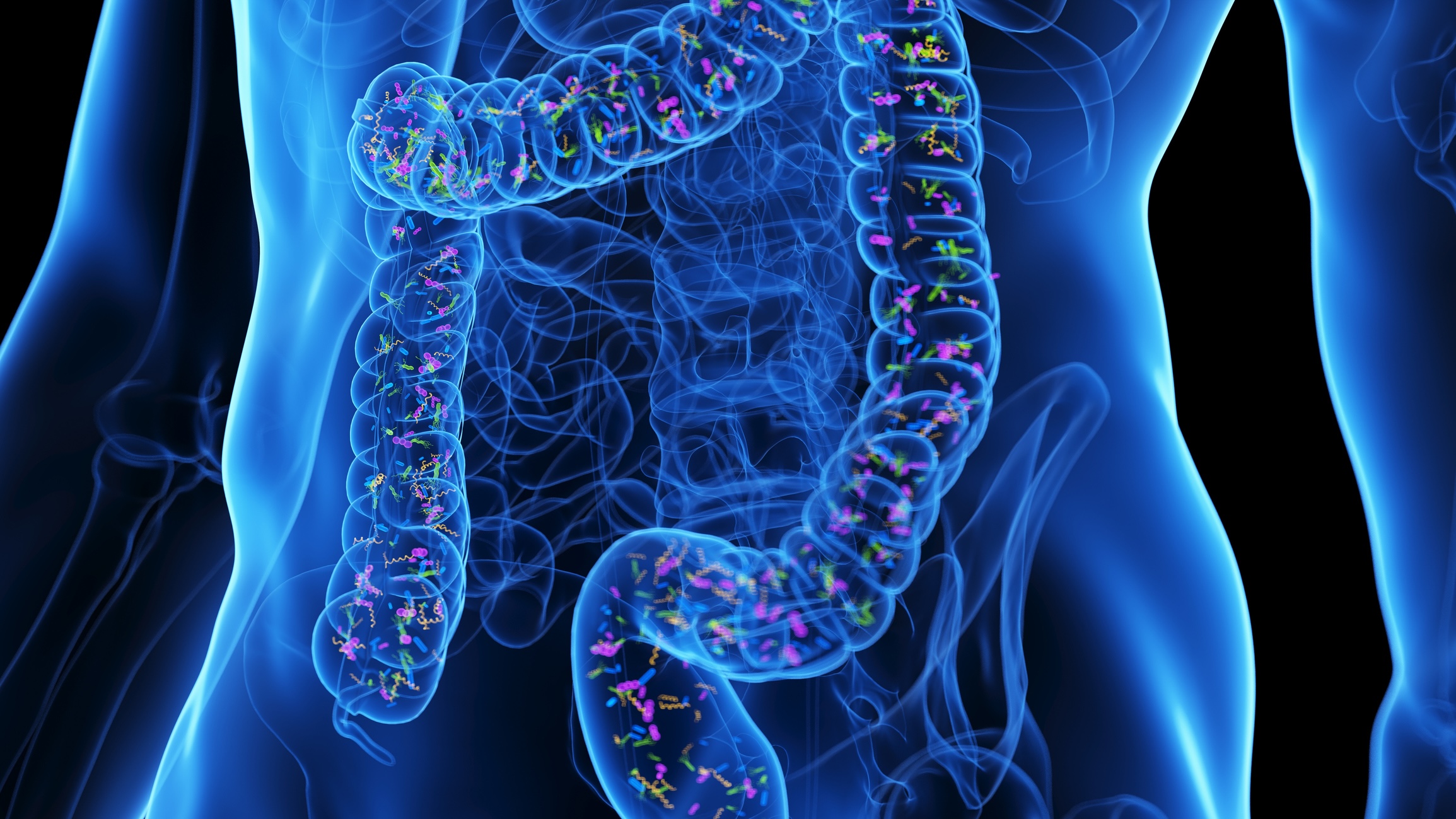
The human gut is one of the body’s fastest-renewing organs, constantly replacing its lining to support digestion, nutrient absorption, and recovery from injury. This remarkable turnover depends on intestinal stem cells (ISCs). But as we age, these stem cells lose their regenerative power, contributing to digestive problems, inflammation, and a reduced ability to heal.
A new peer-reviewed study published in Stem Cell Reports reveals that this decline may not be inevitable. Instead, researchers show that age-related changes in the gut microbiota—the trillions of microbes living in the intestine—directly impair stem cell function, and that restoring a youthful microbial environment can reverse key aspects of intestinal aging.
Aging, stem cells, and the microbiome connection
The study, led by Hartmut Geiger, PhD, at the University of Ulm and Yi Zheng, PhD, and Kodandaramireddy Nalapareddy, PhD, at Cincinnati Children’s Hospital Medical Center, focused on how aging alters the communication between gut microbes and intestinal stem cells.
In older mice, intestinal stem cells were significantly less active than in young animals. This translated into slower renewal of the intestinal lining and poorer recovery after injury, hallmarks of an aging gut. When researchers compared the gut microbiota of young and aged mice, they found striking differences in microbial composition that closely tracked with stem cell performance.
These findings suggest that intestinal aging is not driven solely by irreversible changes inside stem cells themselves. Instead, it is strongly shaped by signals coming from the surrounding microbial environment.
Rewinding the clock with a youthful microbiome
To test whether microbes were a cause rather than a consequence of stem cell decline, the researchers transferred gut microbiota from young mice into aged mice. The results were striking.
After receiving a youthful microbial community, older mice showed a revival of intestinal stem cell activity. Their guts regenerated more effectively after injury, and stem cells resumed behaviors typically seen in much younger animals. In contrast, transferring aged microbiota into young mice had only modest negative effects, suggesting that aging tissues may be especially sensitive to microbial changes.
This asymmetry highlights an important concept for precision medicine: older tissues may be uniquely responsive to targeted environmental interventions.
A specific microbial brake on regeneration
The study went further by identifying a bacterial species enriched in aged mice that appeared to suppress stem cell function. Elevated levels of Akkermansia muciniphila—often considered beneficial in other contexts—were shown to dampen key regenerative signaling pathways in aged intestinal stem cells.
Rather than labeling individual microbes as “good” or “bad,” the findings highlight a more nuanced reality: the impact of specific bacteria depends on context, age, and balance within the broader microbial ecosystem.
Implications for personalized aging interventions
While the work was conducted in mice and is not yet ready for clinical application, it lays critical groundwork for precision approaches to healthy aging. Instead of treating age-related intestinal decline after symptoms appear, future therapies might aim to maintain a stem cell–supportive microbiome earlier in life, or restore it later on.
The study also reinforces a broader shift in biomedical research: aging is increasingly understood as a dynamic, partially reversible process shaped by interactions between cells, tissues, and their environments.
By directly linking gut microbes to stem cell function, the research highlights host–microbe interactions as a promising target for interventions designed to maintain tissue regeneration, reduce inflammation, and support healthy aging. It suggests that restoring balance in the microbiome could help preserve one of the body’s most essential renewal systems—well into later life.
