


Hundred Health founder on why building the ‘decision layer’ is the key to ensuring consumer health data delivers on its potential.
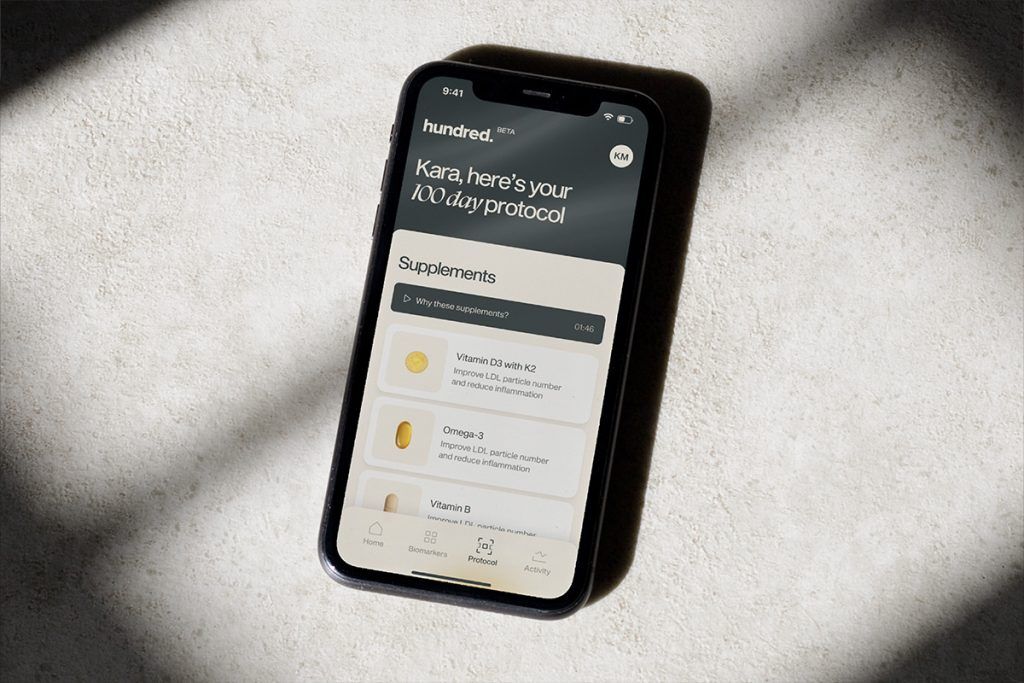
The booming biomarker-driven consumer health market was further bolstered by last month’s launch of Hundred Health and its $499-a-year offering that aims to turn endless streams of health data into something more actionable. The company’s personalized 100-day protocols combine twice-yearly blood tests with medical records and wearable data to provide users with clear guidance on proactive ways to improve their health trajectory.
Hundred claims its approach can help users drive achievable health improvements compounded over time via highly personalized AI-powered guidance. But how does one really go about turning an increasingly growing stack of diverse data into genuinely helpful insights and personalized guidance on what to do next?
Longevity.Technology: While wearables, lab testing, and digital health records have become increasingly accessible, Hundred claims that the increase in data collection has not been matched by progress in interpretation and guidance on what actions to take. The company is betting that addressing this missing “decision layer” is where meaningful progress will be made. To learn more about the detail behind its approach, we sat down with founder and CEO Tyler Smith.
A serial investor and entrepreneur, Smith turned his attention to consumer health after a successful exit from his first venture, real estate tech firm SkySlope.
“We’re at the very beginning of a major shift,” he says. “If you look at healthcare over decades, it’s been a story of world-class science and terrible usability. The problem isn’t discovery – it’s translation.”
‘The hard part is translation’
According to Smith, it’s factors like personalization and context, rather than more data, that will define the next phase of healthtech.
“We don’t have a data problem anymore,” he says. “We have wearables, blood work, and tons of information. The hard part is translation: what to do with that data. What are the next steps? You see a lot of people uploading data into LLMs and asking questions, and that can work up to a point, but there’s a lot of missing context.”
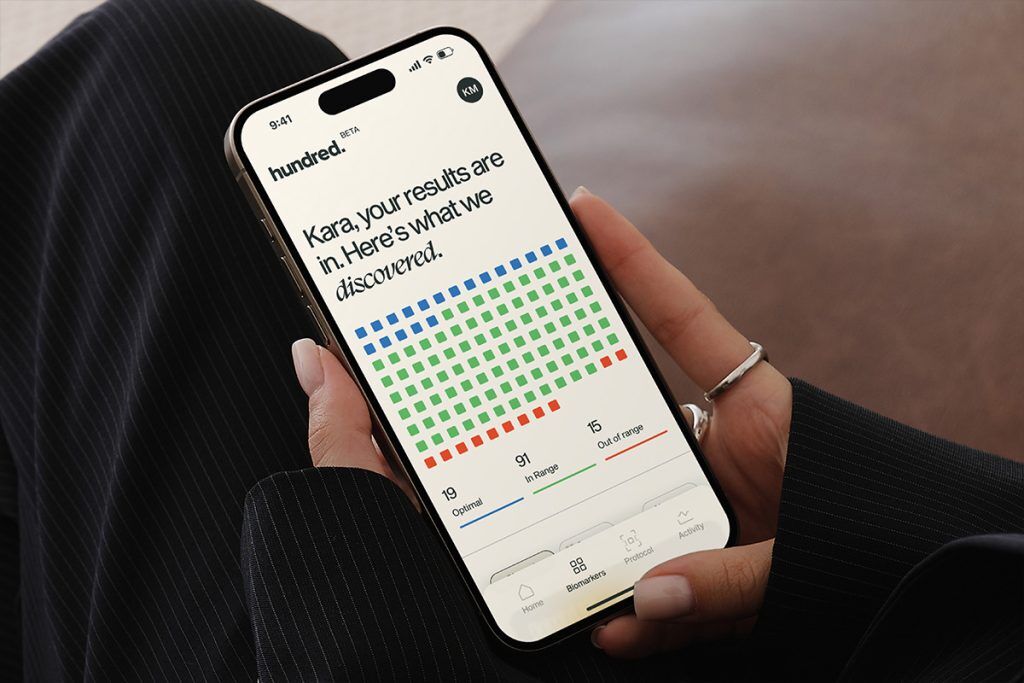
In order to ensure the guidance provided by its platform is backed up with real science, Hundred acquired personalized health provider BellSant last year to access a wealth of longevity research from institutions including Johns Hopkins, Harvard, Columbia and Stanford. The acquisition provided the company with validated biomarker models, optimal health ranges and demographic personalization logic, all of which have been integrated into its AI engine.
“For us, everything is grounded in evidence, that’s why we acquired BellSant,” says Smith. “It gave us what we call ‘ingredients’ in our evidence repository – we now have a pool of scored, high-quality human trial evidence that’s continuously updated. As far as I know, no one else is doing this in quite the same way.”
Building a protocol for adherence
On top of its evidence base, Hundred gathers comprehensive inputs from its users: medical records, wearables, blood work, lifestyle goals, supplement habits, adherence patterns, and even things like cost sensitivity.
“If cost or complexity becomes a barrier, people simply won’t follow the plan,” says Smith. “So we pull everything together and co-build the protocol with the user. At the end, there’s a moment of commitment: are you willing to follow this for the next 100 days? From there, we track habits, wearables, exercise, food photos, check-ins – all to understand adherence and adjust. We think this is a much deeper, more honest way to work toward each person’s version of optimal health.”
As the lines between wellness and medicine become increasingly blurred, Smith says his company remains fully focused on the former.
“That said, the line is disappearing – and that’s a good thing,” he adds. “Wellness used to mean vague advice, and medicine meant crisis response – but the future is continuous care. We’re not replacing doctors. We’re extending their reach into daily life, using medical-grade data to guide everyday decisions before problems become diagnoses.”
Making data personal
With OpenAI recently launching ChatGPT Health, does Smith see the big LLMs as a threat to what companies like Hundred are trying to achieve?
“It’s good for the space – it validates how important this is,” he says. “But what the big players are building is general intelligence applied to health. What we’re building is health intelligence applied to you. It’s all about data and context. Our AI isn’t pretending to be a doctor – it’s an interpreter. When you consolidate full medical histories – visits, prescriptions, imaging, missed medications – you unlock incredible context. That builds trust and usefulness.”
Looking ahead, Smith says the next phase for Hundred is to scale – and demonstrate that its approach works beyond the early adopters.
“We’ll deepen our integrations with hospitals, labs, wearables, and expand our evidence repository,” he says. “Real progress isn’t about collecting more data. It’s about making existing data usable and personal.”
“The goal is simple: every person should have a continuously updating health plan that fits their life. That’s why we focus on being the decision layer – not just biomarkers, not just wearables – but helping people understand what to do next. That’s where real change happens.”
Photographs courtesy of Hundred Health.
