

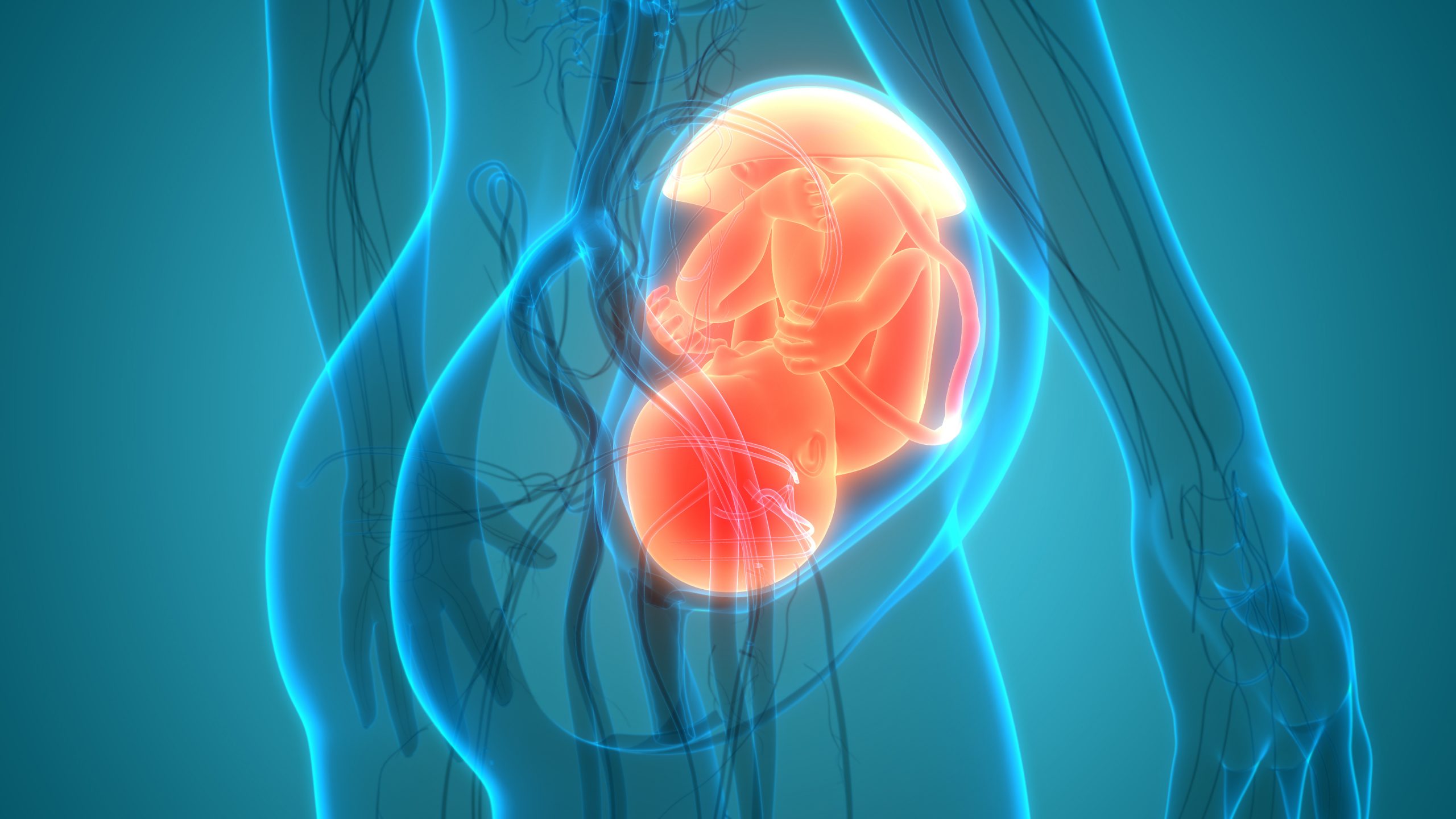
For decades, fetal surgery has advanced faster than the tools used to monitor fetal health during these delicate procedures. While surgeons can now correct certain life-altering conditions before birth, their ability to continuously assess how a fetus is tolerating surgery has remained limited.
Reporting in Nature Biomedical Engineering, researchers at Northwestern University have now developed the first device capable of continuous, real-time monitoring of fetal vital signs inside the uterus, a technological breakthrough that could significantly improve safety during fetal surgery.
A long-standing blind spot in fetal surgery
Fetal surgery is used in rare but serious conditions such as spina bifida, congenital diaphragmatic hernia, urinary tract obstruction, tumors, and twin-to-twin transfusion syndrome. These procedures are often performed as early as 15 weeks of gestation.
Despite major advances in minimally invasive fetoscopic techniques, fetal monitoring has remained largely unchanged for decades. Surgeons typically rely on intermittent ultrasound measurements of fetal heart rate, obtained from outside the pregnant person’s body. This approach offers only snapshots of fetal status and may miss early signs of distress.
As fetal surgeon Aimen Shaaban, MD, explains: “Our ability to monitor the fetus hasn’t changed in 40 years. The tools just haven’t been there.”
A probe no thicker than a human hair
To address this gap, the Northwestern team engineered a soft, flexible, robotic probe measuring just three times the width of a single human hair. The device can be inserted through the same narrow surgical port already used in fetoscopic procedures, avoiding any additional invasion or disruption of delicate tissues.
Once inside the uterus, the probe maintains gentle but stable contact with the fetus and continuously measures heart rate, heart rate variability, blood oxygen saturation, and temperature. In large-animal fetal surgery models, the device delivered clinical-grade measurements, even as the fetus and uterus moved during surgery.
“Our flexible hair-like probe enters a port already used in minimally invasive fetal procedures and provides continuous, comprehensive monitoring without adding risk,” said John A. Rogers, PhD, who led the device development.
Soft robotics meets precision monitoring
A key innovation lies in how the probe interacts with fetal tissue. Soft robotic actuators allow surgeons to precisely guide and position the filament, while a miniature, inflatable cushion gently expands to stabilize contact.
“The device needs to gently press onto the tissue to form the kind of coupling needed to measure vital signs,” Rogers said. “Miniaturized balloons integrated onto the probe enable this coupling in a soft, minimally invasive manner.”
The system wirelessly transmits data to monitors outside the body, giving surgeons immediate insight into fetal physiology throughout the procedure.
Detecting distress earlier, acting faster
In preclinical studies, the probe successfully detected fetal bradycardia, hypoxia, and hypothermia—signals that may precede serious complications. By capturing multiple physiological parameters simultaneously, the technology provides a more complete picture of fetal well-being than heart rate alone.
“Sometimes, the fetal heart rate drops during this procedure signaling low oxygen levels or a low blood pH,” Shaaban noted. “A slow fetal heart rate can develop abruptly and can even present with a full cardiac arrest for the fetus.”
Continuous monitoring could allow surgeons to intervene earlier, pause procedures, or adjust surgical strategies before instability escalates.
A precision medicine step forward for fetal care
Beyond improving surgical safety, the technology reflects a broader shift toward precision monitoring in vulnerable patients. Similar to how continuous multiparameter monitoring transformed neonatal intensive care, this probe brings fetal surgery closer to the same standard of individualized, real-time physiological assessment.
“If we could give [patients] more confidence that their baby will do well, that’s better for everybody,” Shaaban said. “Anything we can do to make operations safer for mom and safer for the baby is a huge win.”
