

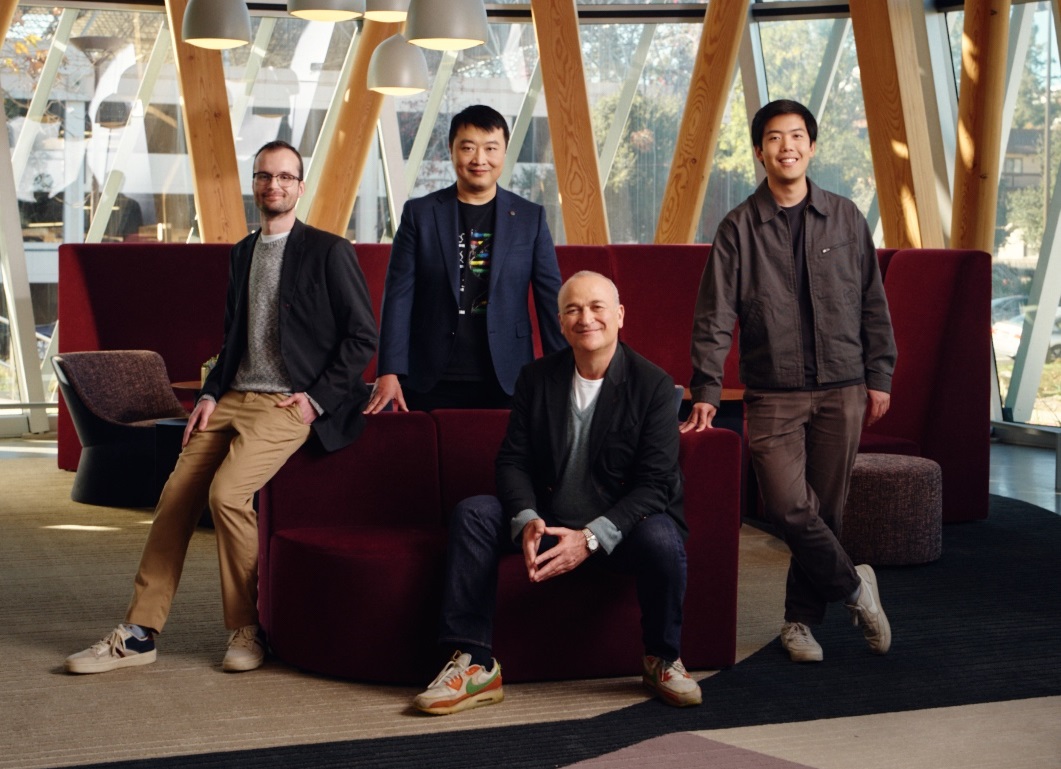
Adrian Woolfson, PhD, says biology is becoming a general design and manufacturing platform poised to unlock a multi-trillion-dollar bioeconomy. Key to this transition will be the ability to write new DNA sequences with engineerable outcomes across manufacturing, medicine, agriculture, materials, water purification and more.
“Cells become platforms that you deploy, not organisms that you merely observe,” he told GEN Edge. A longstanding biotech executive, Woolfson formerly served as president and founder of genome writing company, Replay, after years of experience across Bristol Myers Squibb, Pfizer, and Sangamo Therapeutics.
Woolfson’s latest synthetic biology enterprise, Genyro, which he leads as CEO, is on a mission to make biology programmable using AI-driven genome design. The San Diego-based biotech has recently licensed a DNA assembly technology, called Sidewinder, from the California Institute of Technology (Caltech) to construct complex DNA sequences from scratch.
Frances Arnold, PhD, Nobel laureate, professor of chemical engineering, bioengineering and biochemistry, and a member of Genyro’s scientific advisory board, describes Sidewinder as an innovative solution to an important problem, assembling DNA fragments into genes, and even genomes, for new function.
“In this exciting era of composing new biology, Sidewinder helps us make the translation from AI prediction into reality, from notes into sound so to speak,” she told GEN Edge.
The platform, which was recently published in Nature, enables generation of long sequences at a low one in 1,000,000 misconnection rate, a 10,000-fold improvement over current standards. This high accuracy bypasses the time consuming and laborious clonal screenings traditionally needed to address high error rates, enabling DNA writing at newfound scale and significantly lower cost.
Woolfson asserts that a key focus at Genyro is to ensure that these technologies are used safely, responsibly, ethically, and in a manner that benefits society.
“Safety is at the heart of what we do,” he told GEN Edge. He states that all constructed sequences are screened for potential pathogenicity using next-generation screening methods.
Woolfson co-founded Genyro in October 2024 with Brian Hie, PhD, core investigator at Arc Institute, and a lead researcher for the Evo series of genome foundation models and first AI-designed bacteriophage genome, and Kaihang Wang, PhD, assistant professor of biology and biological engineering at Caltech, and corresponding author of the Sidewinder study. Noah Robinson, PhD, a graduate from the Wang lab and Sidewinder’s first author, is Genyro’s CTO.
The DNA writing biotech is additionally backed by Nobel laureate, Roger Kornberg, PhD, and Moderna co-founder, Bob Langer, PhD, who are members of the scientific advisory board.
DNA page numbers
Today’s technology restricts oligonucleotide length to a few hundred nucleotides, which is insufficient for writing most genes (kilobase range) and orders of magnitudes too small for genomes (megabase to gigabase range). Assembling oligos in the correct order remains the rate limiting step.
To achieve high-scale assembly, Sidewinder uses a three-way junction technique that labels each oligo with molecular tags that match fragments with the correct neighbors in the final sequence. Once construction is complete, the tags are removed in a seamless, single step, resulting in a new, accurate, and uninterrupted DNA double helix.
By separating the assembly instructions from the information encoded in the final DNA construct, Sidewinder can build DNA at high degrees of complexity, including sequences with repetitive and GC rich content similar to 50% of the human genome and 85% of the plant genome.
Wang explains that writing DNA conceptually mirrors the assembly of a book.
“In 1441, Johannes Gutenberg invented the movable-type printing press for individual pages. Books were painstakingly assembled by aligning the contexts at the beginning and end of each page, for hundreds of pages,” Wang told GEN Edge. He highlights that the eventual invention of page numbers decades later was a revolutionary moment in the publishing industry.
“Now is the time to invent DNA ‘page numbers’ to write genomic books of life,” Wang said.
As a whole, Woolfson reflects that traditional biology was artisanal and observational where organisms were tweaked cautiously through recombinant biology and gene editing. Learning the underlying grammar of biology for genome design will have a newfound impact on humankind.
“Biology will stop being something that we study,” he says, “and will convert into material that we can use to build the infrastructure of the world around us.”
The writing of that story has only just begun.
