

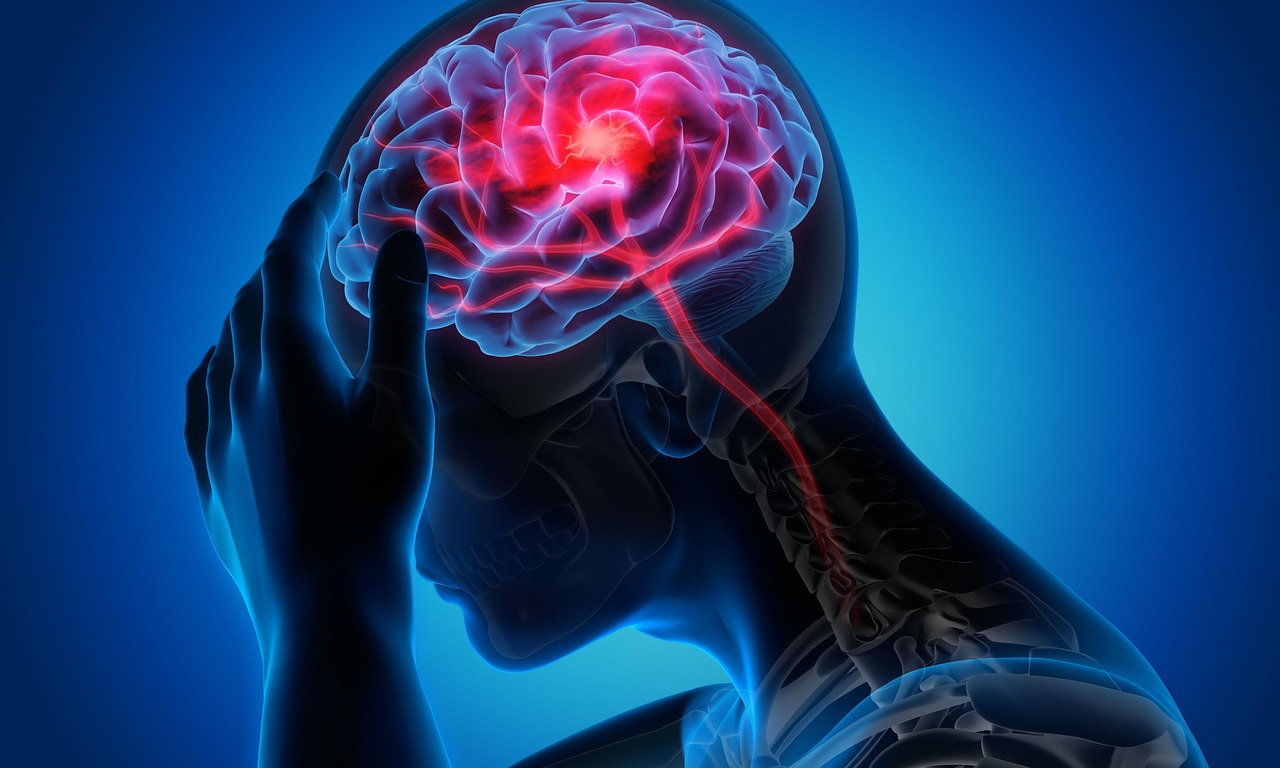
Migraine is a primary headache disorder affecting approximately 14% of the global population. For individuals affected, however, labeling migraine as a headache minimizes its intensity, much like calling a wildfire a campfire. Often unrelenting, migraine continues to be one of the leading causes of disability, particularly among women aged 15–49.
Among the recent research reshaping understanding of the disorder, studies have focused on the role of the microbiome in migraine management and pathogenesis.
This IPA blog describes research on the links between migraine and the microbiome, as well as trials testing whether biotic supplements may mitigate symptoms.
Migraine, in brief
Once considered primarily a vascular headache, migraine is now understood to be a complex disorder of nervous system function. It develops through several interacting processes, including an over-responsive pain system, poor adaptation to repeated sensory input, and abnormal signaling in brain regions that regulate pain, sensation, and stress. Chemical messengers in the nervous system (neuropeptides) further amplify pain signals and shape how the brain interprets them, contributing to the intensity and persistence of migraine symptoms.
According to the 3rd edition of The International Classification of Headache Disorders, migraine is usually divided into three main types: migraine with aura (focal neurological symptoms preceding the headache), migraine without aura, and chronic migraine.
A unifying feature of migraine biology is central sensitization, a state in which pain pathways in the brain and nervous system become overly excitable, amplifying pain and prolonging symptoms. This sensitivity can develop with repeated migraine attacks or with overuse of pain medications. Although it may persist over time, it is reversible and occurs across many chronic pain conditions.
As migraine research has advanced through genetics and neuroimaging, attention has expanded beyond the brain to include systemic influences such as the gut microbiome.
Migraine and the microbiome
The gut microbiota serves as a central interface connecting immune, hormonal, and neural signaling within the gut-brain axis, and, in turn, shaping pain states such as migraine.
Gut-derived microbial signals, including metabolites and neurotransmitter-like molecules, influence chronic pain by shaping peripheral and central pain sensitization by targeting the corresponding receptors.
Microbiome diversity and migraine
Researchers increasingly link migraine to alterations in gut microbiome diversity, with most studies reporting reduced α and β diversity—reflecting microbial richness, evenness, and variation. Whether these changes drive migraine, result from it, or represent a bidirectional relationship remains unclear.
Pediatric studies have consistently reported reduced microbial diversity in children with migraine, along with study-specific alterations in bacterial composition, including increases in genera associated with inflammatory pathways and evidence of intestinal dysbiosis compared with healthy controls.
However, research in adults shows mixed results: one study reported reduced α-diversity and distinct functional changes in gut–brain metabolic pathways, whereas another study found no diversity differences despite shifts in specific bacterial genera.
Microbiome and migraine in preclinical studies
Preclinical studies show that gut microbiome alterations influence migraine-related pain and inflammation. Migraine models in mice and rats exhibit shifts in microbial composition, with germ-free or antibiotic-treated mice experiencing prolonged pain. Since antibiotics can disrupt the gut microbiome, these findings suggest the potential of a healthy microbial balance in reducing migraine-related pain and inflammation.
Microbiome and migraine presentation
Several studies suggest that how migraines affect people—their severity, frequency, and impact—may be linked to changes in gut bacteria and how these interact with the condition.
- Specific alterations in gut microbiota have been linked to migraine pain severity, attack frequency, disability, and mood.
- Distinct microbiome profiles have been observed in patients with irritable bowel syndrome who also experience migraine, a common comorbidity.
- Intestinal dysbiosis in women with migraine without aura has been associated with greater migraine severity, increased inflammatory markers, and subclinical atherosclerosis.
Biotics and migraine
The emerging links between the microbiome and migraine raises the possibility of using probiotics or synbiotics therapeutically.
A clinical review and meta-analysis cited two randomized controlled trials that examined the effects of probiotics on migraine in adults. Both studies assessed migraine severity, frequency, and attack duration, but reported mixed results.
In a 12-week trial of 69 women, synbiotic supplementation (multi-strain probiotics + fructooligosaccharides prebiotic) significantly reduced migraine frequency but had no significant effect on severity or attack duration compared to placebo.
In a second study including 40 episodic and 39 chronic migraine patients, 10 weeks of multi-strain probiotic supplementation significantly reduced migraine frequency and severity in both groups and significantly decreased attack duration in chronic migraine patients, with no significant changes in the placebo groups.
Takeaway
Migraine is far more than a typical headache—it is a complex nervous system disorder driven by central sensitization, which amplifies pain and prolongs attacks. Research increasingly links migraine to reduced gut microbiome diversity, with shifts in bacterial composition influencing severity, frequency, and systemic inflammation. Preclinical and clinical studies suggest that supporting a healthy microbial balance may help mitigate migraine-related pain, and early trials indicate that probiotics or synbiotics can modestly reduce attack frequency and severity, though further research is needed.
Image by u_if8o5n0ioo from Pixabay
Key references
Bai, Jinbing et al. “Associations between the Gut Microbiome and Migraines in Children Aged 7-18 Years: An Analysis of the American Gut Project Cohort.” Pain management nursing : official journal of the American Society of Pain Management Nurses vol. 24,1 (2023): 35-43. doi:10.1016/j.pmn.2022.06.002
Charles, Andrew. “The pathophysiology of migraine: implications for clinical management.” The Lancet. Neurology vol. 17,2 (2018): 174-182. doi:10.1016/S1474-4422(17)30435-0
Chen, Juanjuan et al. “Structural and Functional Characterization of the Gut Microbiota in Elderly Women With Migraine.” Frontiers in cellular and infection microbiology vol. 9 470. 29 Jan. 2020, doi:10.3389/fcimb.2019.00470
Georgescu, Doina et al. “Migraine without Aura and Subclinical Atherosclerosis in Young Females: Is Gut Microbiota to Blame?.” Medicina (Kaunas, Lithuania) vol. 55,12 786. 16 Dec. 2019, doi:10.3390/medicina55120786
Ghavami, Abed et al. “Effect of synbiotic supplementation on migraine characteristics and inflammatory biomarkers in women with migraine: Results of a randomized controlled trial.” Pharmacological research vol. 169 (2021): 105668. doi:10.1016/j.phrs.2021.105668
Grodzka, Olga, and Izabela Domitrz. “Gut microbiota, probiotics, and migraine: a clinical review and meta-analysis.” Journal of oral & facial pain and headache vol. 39,3 (2025): 13-26. doi:10.22514/jofph.2025.043
International Headache Society. International Classification of Headache Disorders, 3rd edition (ICHD-3). ICHD-3, International Headache Society, 2018, https://ichd-3.org/.
Kopchak, Oksana O et al. “Peculiarities Of The Gut Microbiota In Patients With Migraine Comparing To Healthy Individuals.” Wiadomosci lekarskie (Warsaw, Poland : 1960) vol. 75,9 pt 2 (2022): 2218-2221. doi:10.36740/WLek202209207
Krause, Diana N et al. “Hormonal influences in migraine – interactions of oestrogen, oxytocin and CGRP.” Nature reviews. Neurology vol. 17,10 (2021): 621-633. doi:10.1038/s41582-021-00544-2
Lanza, Marika et al. “Supplementation with SCFAs Re-Establishes Microbiota Composition and Attenuates Hyperalgesia and Pain in a Mouse Model of NTG-Induced Migraine.” International journal of molecular sciences vol. 23,9 4847. 27 Apr. 2022, doi:10.3390/ijms23094847
Liu, Jieqiong et al. “Alteration of gut microbiota in migraine patients with irritable bowel syndrome in a Chinese Han population.” Frontiers in neurology vol. 13 899056. 16 Nov. 2022, doi:10.3389/fneur.2022.899056
Liu, Junhui et al. “Tryptophan metabolites and gut microbiota play an important role in pediatric migraine diagnosis.” The journal of headache and pain vol. 25,1 2. 5 Jan. 2024, doi:10.1186/s10194-023-01708-9
Liu, Liping et al. “Gut microbiota in chronic pain: Novel insights into mechanisms and promising therapeutic strategies.” International immunopharmacology vol. 115 (2023): 109685. doi:10.1016/j.intimp.2023.109685
Martami, Fahimeh et al. “The effects of a multispecies probiotic supplement on inflammatory markers and episodic and chronic migraine characteristics: A randomized double-blind controlled trial.” Cephalalgia : an international journal of headache vol. 39,7 (2019): 841-853. doi:10.1177/0333102418820102
Miao, Shuai et al. “Repeated inflammatory dural stimulation-induced cephalic allodynia causes alteration of gut microbial composition in rats.” The journal of headache and pain vol. 23,1 71. 25 Jun. 2022, doi:10.1186/s10194-022-01441-9
Mugo, Caroline W et al. “Unravelling the gut-brain connection: a systematic review of migraine and the gut microbiome.” The journal of headache and pain vol. 26,1 125. 21 May. 2025, doi:10.1186/s10194-025-02039-7.
Stovner, Lars Jacob et al. “The global prevalence of headache: an update, with analysis of the influences of methodological factors on prevalence estimates.” The journal of headache and pain vol. 23,1 34. 12 Apr. 2022, doi:10.1186/s10194-022-01402-2
Sun, Songtang et al. “Microglia TREM1-mediated neuroinflammation contributes to central sensitization via the NF-κB pathway in a chronic migraine model.” The journal of headache and pain vol. 25,1 3. 5 Jan. 2024, doi:10.1186/s10194-023-01707-w
Tang, Yuanyuan et al. “Gut Microbiota Dysbiosis Enhances Migraine-Like Pain Via TNFα Upregulation.” Molecular neurobiology vol. 57,1 (2020): 461-468. doi:10.1007/s12035-019-01721-7
