

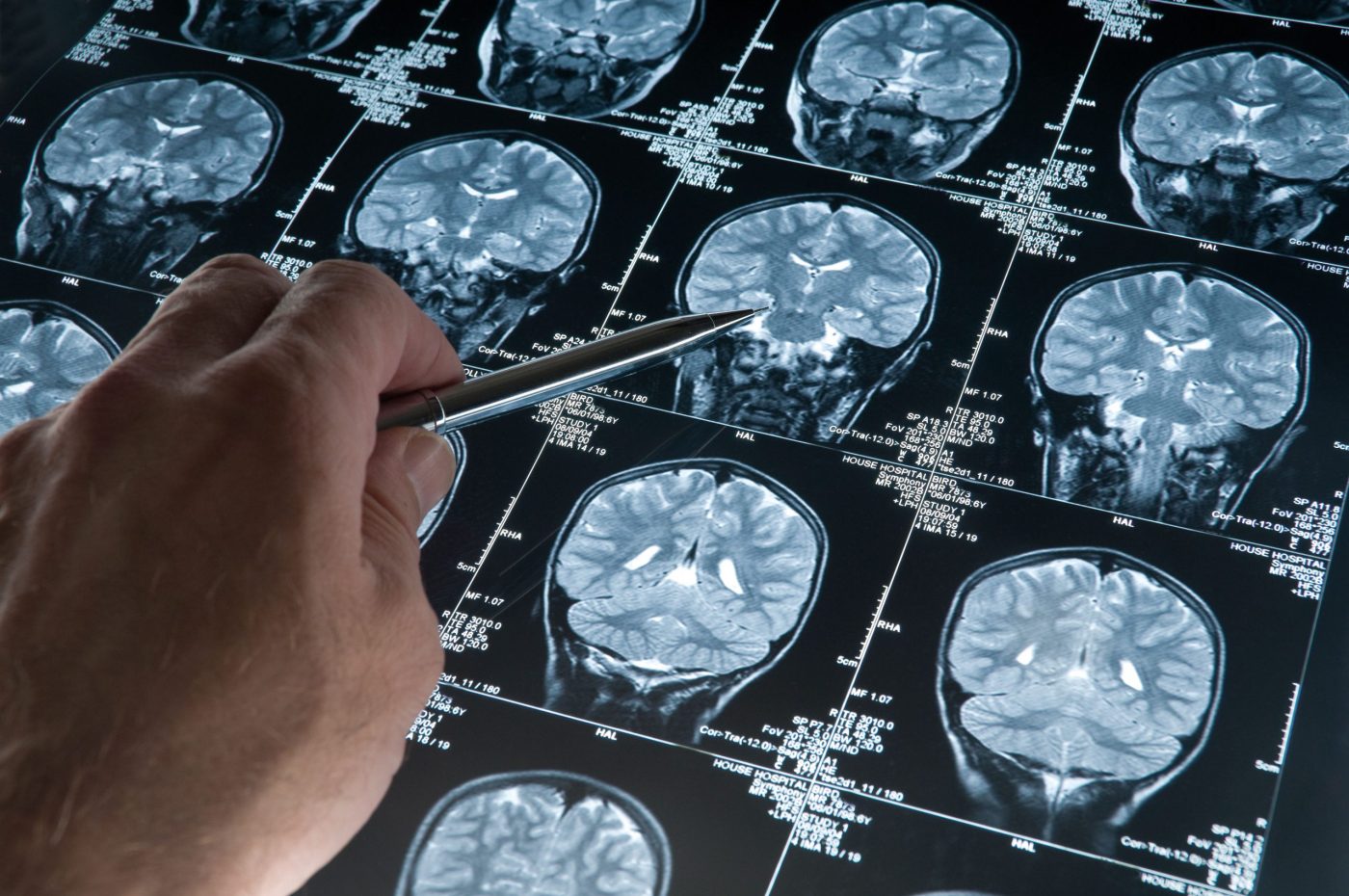
For decades, brain MRI has been one of medicine’s most powerful diagnostic tools—and one of its most resource-intensive. Demand continues to rise, while neuroradiology services struggle to keep pace, leading to delayed diagnoses, workflow bottlenecks, and widening disparities in access to care. A new study from the University of Michigan suggests artificial intelligence may help close that gap.
Reporting in Nature Biomedical Engineering, researchers describe Prima, an AI model capable of reading a complete brain MRI and generating clinically meaningful diagnoses in seconds. Trained on health system-scale data rather than narrow, hand-curated datasets, Prima represents a shift toward foundation models designed to function in real clinical environments.
“As the global demand for MRI rises and places significant strain on our physicians and health systems, our AI model has potential to reduce burden by improving diagnosis and treatment with fast, accurate information,” said senior author Todd Hollon, MD, a neurosurgeon at University of Michigan Health.
From narrow tools to system-scale intelligence
Most existing AI tools in neuroimaging are task-specific, trained to detect a single abnormality or predict a single outcome. Prima takes a fundamentally different approach. The model was trained on more than 220,000 MRI studies, representing 5.6 million imaging sequences, alongside clinical histories and physician imaging indications drawn from decades of routine care at University of Michigan Health.
“Prima works like a radiologist by integrating information regarding the patient’s medical history and imaging data to produce a comprehensive understanding of their health,” said co-first author Samir Harake, a data scientist in Hollon’s Machine Learning in Neurosurgery Lab.
This multimodal design reflects how clinicians actually practice: interpreting images in context rather than in isolation. Technically, Prima is a vision language model, capable of processing imaging data and clinical text simultaneously to produce differential diagnoses, referral recommendations, and prioritization cues.
Accuracy at speed, and clinical triage built in
In a year-long, health system-wide evaluation involving nearly 30,000 MRI studies, Prima demonstrated strong diagnostic performance across 52 neurological diagnoses, achieving a mean area under the curve of 92%. In some categories, accuracy reached 97.5%, outperforming other state-of-the-art medical AI systems.
But accuracy alone was not the goal. Prima was also able to determine how urgently a case required attention. Conditions such as stroke or intracranial hemorrhage demand immediate intervention, and delays of even minutes can affect outcomes.
“Accuracy is paramount when reading a brain MRI, but quick turnaround times are critical for timely diagnosis and improved outcomes,” said Yiwei Lyu, MS, co-first author and postdoctoral fellow in computer science and engineering at U-M.
According to the researchers, Prima can automatically flag time-sensitive scans and recommend which subspecialist—such as a stroke neurologist or neurosurgeon—should be alerted, effectively acting as an intelligent triage layer embedded within radiology workflows.
Precision medicine beyond the academic center
The implications could extend well beyond large academic hospitals. Millions of MRI scans are performed globally each year, yet access to neuroradiology expertise varies dramatically by geography. Rural and low-resource settings are often the most affected by workforce shortages and long turnaround times.
“Whether you are receiving a scan at a larger health system that is facing increasing volume or a rural hospital with limited resources, innovative technologies are needed to improve access to radiology services,” said Vikas Gulani, MD, PhD, chair of radiology at U-M Health.
Because Prima was trained on real-world clinical data rather than idealized datasets, the authors argue it is better positioned for deployment across diverse practice environments. The study also reports algorithmic fairness across sensitive demographic groups, a key consideration as AI systems move toward clinical adoption.
A co-pilot, not a replacement
The researchers emphasize that Prima is not designed to replace radiologists, but to augment them, acting as what Hollon describes as “a co-pilot for interpreting medical imaging studies.”
“Like the way AI tools can help draft an email or provide recommendations, Prima aims to be a co-pilot for interpreting medical imaging studies,” Hollon said.
Future work will explore integrating even richer electronic medical record data and extending the platform to other imaging modalities, including mammography, chest X-rays, and ultrasound. If successful, the same foundation model approach could support a broad spectrum of diagnostic workflows.
At a time when precision medicine increasingly depends on timely, data-rich interpretation, Prima offers a glimpse of how AI trained at health-system scale could reshape diagnostics. Rather than narrowly automating single tasks, models like Prima aim to mirror clinical reasoning—integrating context, prioritizing urgency, and supporting decision-making at speed.
