

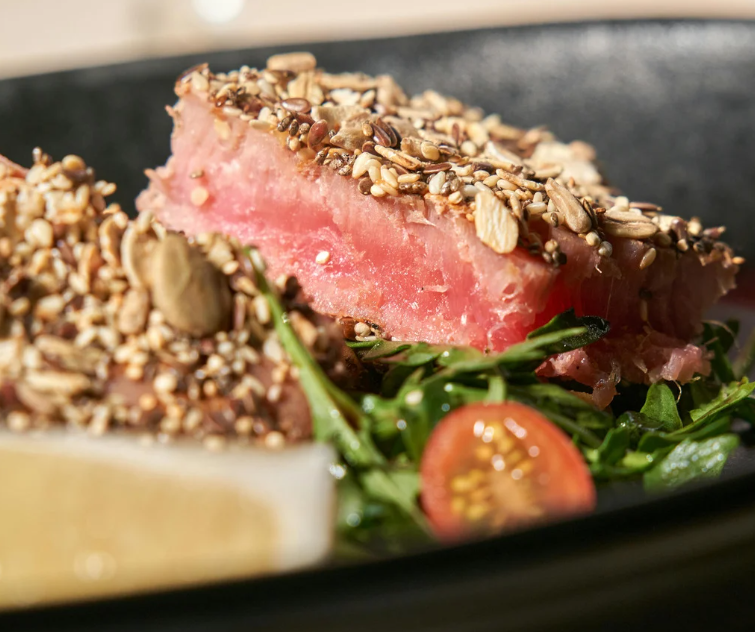
Tuna salad is the ultimate versatile meal—a high-protein staple for sandwiches, a refreshing topper for garden greens, or a quick snack enjoyed straight from a container.
However, because it combines delicate seafood with creamy binders like mayonnaise, it is one of the most frequently questioned items in the kitchen when it comes to shelf life.
If you have ever opened your refrigerator and hesitated, asking yourself, how long is tuna salad good for?, you are engaging in a vital piece of food safety intuition.
The direct answer, backed by the USDA and FDA, is that tuna salad is generally safe to consume for 3 to 5 days when stored properly in the refrigerator at or below 40°F. However, this window is not an absolute guarantee.
Factors such as the freshness of the tuna when opened, the presence of secondary ingredients like hard-boiled eggs, and the length of time the salad spent on the counter during preparation all play a role in determining safety.
In this comprehensive 2026 guide, we will explore the precise tuna salad refrigerator life expectancy, debunk common myths about mayonnaise spoilage, and provide the scientific indicators of when it is time to discard your leftovers.
How Long Is Tuna Salad Good For?
For those needing an immediate safety check, here are the standardized timelines for tuna salad storage:
- Refrigerated (constant ≤40°F): 3 to 5 days.
- Homemade Tuna Salad: 3 to 4 days (for peak quality).
- Tuna Salad with Eggs: 3 days (due to high-risk egg proteins).
- Room Temperature (above 40°F): 1 to 2 hours maximum.
- Summer Heat (above 90°F): 1 hour maximum.
- Frozen: Not recommended (extreme quality and texture loss).
Following these guidelines is essential for preventing foodborne illness while minimizing food waste.
How Long Is Tuna Salad Good For in the Fridge?
The most common environment for this dish is the refrigerator, but many home cooks underestimate how much “fridge hygiene” affects the answer to how long is tuna salad good for in the fridge.
For tuna salad to reach its maximum 5-day potential, several variables must be controlled.
The Critical Role of Temperature
Your refrigerator must be set to 40°F (4°C) or colder. Bacteria such as Listeria and Salmonella are known to thrive in temperatures slightly above this threshold.
If your fridge is overcrowded or the door is opened frequently, the internal temperature can rise into the “Danger Zone,” significantly shortening the tuna salad refrigerator life expectancy.
Airtight Containers vs. Open Bowls
Oxygen is the enemy of freshness. When tuna salad is exposed to air, the fats in the mayonnaise and the oils in the fish begin to oxidize, which leads to a “fishy” odor and a change in color.
To ensure your tuna salad lasts in the fridge, use a high-quality glass or BPA-free plastic container with a locking lid. This not only prevents oxidation but also ensures the tuna salad doesn’t absorb the flavors of other items, like onions or leftovers.
Why Fish Shortens the Window
Unlike chicken or ham salad, tuna is a lean marine protein. Once the vacuum seal of a can or pouch is broken, the fish is highly susceptible to bacterial colonization.
The moisture content in fish is naturally high, providing the perfect medium for microbial growth. This is why how long tuna salad lasts in a fridge environment is capped at five days, whereas some other leftovers might stretch to a week.
Refrigerator vs Fridge — Is There a Difference?
In modern search trends, people often use these terms interchangeably. Whether you are searching for how long is tuna salad good for in the refrigerator or how long is tuna salad good for in the fridge, the safety answer remains identical.
The only technical difference worth noting is the appliance’s reliability. A full-sized refrigerator typically has better air circulation and temperature recovery than a compact “dorm-style” fridge.
If you are storing tuna salad in a small office fridge, it is safer to consume it within 2 to 3 days, as those units often fluctuate in temperature more drastically.
How Long Is Homemade Tuna Salad Good For?
When you make your own salad from scratch, you have control over the ingredients, but you also lack the industrial preservatives found in some deli-counter versions.
How long is homemade tuna salad good for? Most experts recommend a “quality window” of 3 to 4 days.
Freshly Opened Canned Tuna
The clock starts the moment you drain the liquid from the can. If you leave a bowl of plain tuna on the counter for 30 minutes before mixing in your mayo and celery, you have already allowed bacteria a head start.
How long is tuna salad good for once made depends heavily on how quickly you move it from the mixing bowl to the refrigerator.
Mayo vs. Yogurt vs. Oil-Based Versions
- Mayonnaise-Based: Commercial mayo is acidic, which actually helps inhibit some bacterial growth. These usually last the full 5 days.
- Yogurt/Sour Cream-Based: These have a higher moisture content and lower acidity. They tend to “weep” (release water) after 2 days, making the salad soggy, though it may still be safe to eat until day 4.
- Oil and Vinegar-Based: These lack the dairy/egg protein of mayo and can often stay fresh and vibrant for the full 5 days without texture loss.
How Long Is Leftover Tuna Salad Good For?
We must distinguish between a freshly made batch and “leftovers” that have already been served. How long is leftover tuna salad good for if it sat on the dinner table for an hour?
Every time a container is taken out of the fridge, opened, and served with a spoon that might have touched a plate or another food item, you introduce “contaminants.”
If the salad has been served family-style at a dinner table, it is best to finish those leftovers within 24 to 48 hours.
The “double-dipping” risk or exposure to ambient air causes the bacterial count to climb much faster than a sealed, untouched container.
How Long Is Tuna Salad Good For With Mayonnaise?
There is a long-standing food myth that mayonnaise is the primary cause of food poisoning in salads. In reality, commercial mayonnaise is made with pasteurized eggs and contains high levels of vinegar and lemon juice (acid), which makes it an inhospitable environment for many bacteria.
The Real Culprit: The Protein
When you ask how long is tuna salad good for in the fridge with mayonnaise, the risk isn’t the mayo—it’s the tuna. The fish provides the nutrients bacteria need, and the mayo provides the moisture. Together, they create a high-risk environment.
Commercial vs. Homemade Mayo
If you are using homemade mayonnaise (made with raw egg yolks), the safety window for your tuna salad shrinks dramatically.
Because raw eggs carry a risk of Salmonella, any salad made with homemade mayo should be consumed within 24 to 48 hours. For the standard 5-day shelf life, always use shelf-stable, commercial mayonnaise.
How Long Is Tuna Salad Good For With Eggs?
Adding hard-boiled eggs to tuna salad is a classic way to enhance the creaminess and protein content, but it significantly alters the safety profile.
How long is tuna salad with eggs good for in the fridge? When you combine fish and eggs, you are dealing with two of the most perishable proteins in the culinary world. While plain tuna salad might stretch to five days, tuna egg salad should be consumed within 3 days for optimal safety.
Hard-boiled eggs are highly susceptible to bacterial growth once the shell is removed. Over time, the sulfur compounds in the eggs can also react with the oils in the tuna, leading to an unappealing “off” flavor and a rubbery texture that develops much faster than in a standard recipe.
How Long Is Tuna Salad Good For With Relish or Vegetables?
Many people prefer a crunch in their salad, adding celery, onions, or sweet pickle relish. How long is tuna salad good for with relish? Relish is acidic, which is actually a benefit for food safety. The vinegar in relish helps lower the pH of the salad, creating a slightly less hospitable environment for bacteria.
However, fresh vegetables like celery and onions contain a high percentage of water. Over 48 hours, these vegetables will begin to “bleed” moisture into the mayonnaise, causing the salad to become watery. While still safe to eat for 3 to 5 days, the texture is at its best in the first 48 hours.
How Long Is Tuna Salad Good For at 70 Degrees or Room Temperature?
This is the most dangerous territory for any seafood-based dish. The USDA is very clear on the “Danger Zone” (the temperature range between 40°F and 140°F).
The 2-Hour Rule
How long is tuna salad good for at 70 degrees? The absolute maximum is 2 hours. If the ambient temperature is a standard room temperature of 70°F, you have a two-hour window to serve and return the salad to the fridge.
Once that time is up, bacteria can multiply to a level that causes foodborne illness. You cannot “save” the salad by putting it back in the fridge after this point, as the toxins produced by bacteria like Staphylococcus aureus are heat-stable and cannot be neutralized by cooling.
The 1-Hour Rule (Outdoor Events)
If you are at a picnic or outdoor event where the temperature is 90°F (32°C) or higher, the safety window drops to 1 hour.
If you leave tuna mayo out of the fridge in the summer heat for sixty minutes, it must be discarded. To extend this time, always serve the tuna salad in a bowl nested inside a larger bowl filled with ice.
Can You Eat Tuna Salad After 4–7 Days?
We frequently see questions like is tuna good after 4 days in the fridge? Or can you eat tuna salad after 7 days? Here is the definitive breakdown:
- Day 4: Generally safe. This is the “sweet spot” where you should aim to finish the leftovers.
- Day 5: The final day of safety for most recipes. Perform a strict “sniff test” before eating.
- Day 6: Entering the high-risk zone. Even if it looks fine, the bacterial count is likely too high.
- Day 7: Discard immediately. Even if the salad “smells fine,” pathogens like Listeria—which can grow in cold temperatures—do not always produce a foul odor. Eating 7-day-old tuna salad is a major risk for severe food poisoning.
How Long Is Tuna Pasta Salad Good For?
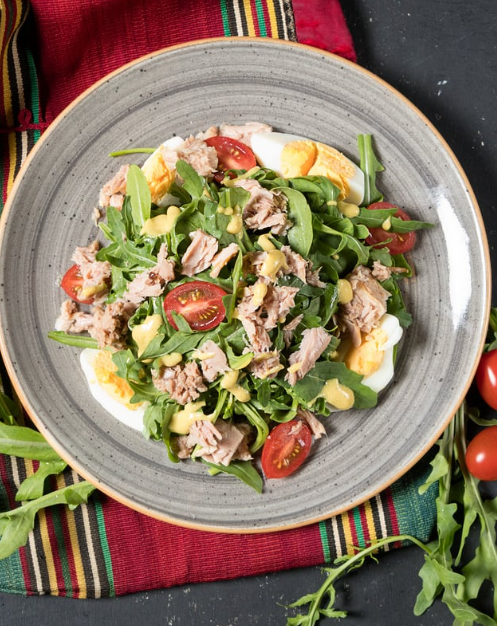
Tuna pasta salad (or tuna macaroni salad) is a meal-prep favorite. But does the addition of pasta change the timeline? How long is tuna pasta salad good for?
Carbohydrates like pasta and macaroni are highly absorbent. While they don’t necessarily make the fish spoil faster, they do absorb the dressing, which can make the salad feel “dry” after 2 to 3 days.
More importantly, cooked pasta is a starch that can harbor Bacillus cereus if not cooled quickly. For tuna macaroni salad, the safest window is 3 to 4 days.
If the salad uses an oil-and-vinegar dressing rather than mayonnaise, it may retain a better texture for the full 5 days, though the fish remains the limiting safety factor.
How Can You Tell If Tuna Salad Has Gone Bad?
Knowing how to tell if tuna salad has gone bad is a critical skill. Because tuna has a naturally strong scent, it can sometimes be difficult to distinguish between “fishy” and “spoiled.” Use these four sensory checks:
1. The Smell Test
Spoiled tuna salad will have a pungent, sharp, or sour ammonia-like odor. If it smells “funky” or more like vinegar than fish, it has fermented or colonized with bacteria.
2. Texture and Consistency
If the salad appears slimy or if there is a thick, cloudy liquid pooling at the bottom of the container, the proteins and fats have broken down. A “stringy” texture when you lift a spoonful is a major red flag for bacterial growth.
3. Color Changes
Fresh tuna salad is typically creamy white or slightly pink (depending on the tuna type). If you notice a grayish, brownish, or yellowish tint—or if the vegetables look translucent and mushy—the salad is past its prime.
4. Mold
Visible mold (green, white, or black fuzz) is rare in the first five days but can occur if the salad was contaminated during preparation.
If you see mold, do not attempt to “scoop it out.” The microscopic roots of mold penetrate deeply into soft foods; the entire batch must be thrown away.
What Happens If You Eat Bad Tuna Salad?
Accidentally consuming spoiled tuna salad can lead to Scombroid poisoning or standard bacterial food poisoning. Symptoms usually appear within minutes to hours and include:
- Nausea and projectile vomiting.
- Abdominal cramping and diarrhea.
- Facial flushing or a rash (specific to Scombroid poisoning from spoiled fish).
- Fever and chills.
In most healthy adults, these symptoms resolve within 24 to 48 hours with plenty of fluids. However, for vulnerable populations, seafood-borne illness can be life-threatening.
Can You Freeze Tuna Salad?
When people have a large amount of leftovers, the logical question is: how long does tuna salad last in the freezer? While you can technically freeze almost any food for safety, the culinary reality is that tuna salad does not freeze well.
The Emulsion Problem
Mayonnaise is a stable emulsion of oil, egg yolks, and acid. When mayonnaise is frozen, the microscopic bonds that hold the oil and water together are shattered by ice crystals.
Upon thawing, the salad will undergo “syneresis,” meaning the oil will separate and pool at the bottom, leaving you with a greasy, curdled, and unappealing texture.
Texture and Taste
Furthermore, the crunch of vegetables like celery or onions is completely lost during the freezing process.
They become mushy and translucent. If you must freeze tuna, it is better to freeze the plain tuna (removed from the can and placed in a freezer bag) and mix the salad fresh after thawing.
If you are determined to freeze the salad itself, it will stay “safe” for 1 to 2 months, but the quality will be so degraded that most people find it inedible.
How Long Is Canned Tuna Good For Once Opened?
Sometimes the confusion doesn’t lie with the salad, but with the tuna itself. How long is canned tuna good for once opened?
Once the vacuum seal is broken, the tuna is exposed to the air and begins to oxidize. You should never store opened tuna in its original tin can.
The metal can oxidize and impart a metallic “tinny” taste to the fish. Instead, transfer any unused tuna to a small glass or plastic airtight container. Once transferred, the plain tuna is good for 3 to 4 days in the refrigerator.
If you don’t plan to use it within that window, it is safer to discard it rather than trying to mix it into a salad on day four.
Reddit-Style Questions & Real-World Scenarios
Browsing how long is tuna salad good for Reddit threads reveals a dangerous amount of conflicting information. You will find users claiming they ate tuna salad after ten days and “felt fine,” while others report getting sick after day three.
Why You Should Ignore “Survival” Anecdotes
The reason Reddit answers vary is due to the “Survivorship Bias.” Just because one individual’s immune system handled a high bacterial load doesn’t mean yours will.
Additionally, the specific pH of their brand of mayonnaise or the exact temperature of their specific refrigerator 35°F vs. 42°F) creates vastly different safety outcomes.
In a 2026 health-conscious world, it is better to trust USDA and FDA science over anonymous forum anecdotes. If the science says 3 to 5 days, that is the boundary you should respect.
Tuna Salad Storage Tips to Make It Last Longer
To ensure your tuna salad stays safe and delicious for the full 5-day duration, follow these professional storage protocols:
The “Back of the Fridge” Rule: Store your tuna salad on the bottom shelf toward the back of the refrigerator. This is the coldest and most stable area. Avoid the door shelves, which fluctuate in temperature every time the door is opened.
Double-Sealing: If you are using a container that isn’t perfectly airtight, wrap the top in plastic wrap before snapping the lid on. This creates a secondary barrier against oxidation.
The “Clean Spoon” Mandate: Never use a spoon that has touched your mouth or another food item to scoop salad from the main container. Saliva contains enzymes and bacteria that will accelerate spoilage in the remaining salad.
Pre-Portioning: If you are meal prepping for the week, portion the tuna salad into five small, individual containers immediately. This prevents the “main batch” from being taken out of the fridge and exposed to room temperature every day.
How Long Is Tuna Salad Safe to Eat?
When considering how long tuna salad is good for, the answer is a balance of culinary quality and biological safety. For the best experience, aim to consume your tuna salad within 3 days. For safety, you have a hard limit of 5 days in the refrigerator.
Food safety is not a place to take risks. Because tuna is a high-protein, low-acid environment, it is the perfect habitat for the bacteria that cause food poisoning.
By using airtight storage, maintaining a cold refrigerator, and respecting the “2-hour rule” for serving, you can enjoy this convenient meal with total peace of mind. When the fifth day passes, remember the golden rule of the kitchen: When in doubt, throw it out.
Frequently Asked Questions (FAQ)
How long is tuna salad good for in the fridge?
It is safe for 3 to 5 days when stored in an airtight container at or below 40°F.
Can you eat tuna salad after 7 days?
No. Seven days is well beyond the safety limit. Pathogens like Listeria can grow even in cold temperatures, making week-old tuna salad a significant health risk.
Is tuna good after 4 days in the fridge?
Yes, day 4 is generally the final “high-quality” day. By day 5, you should perform a strict sensory check for smell and texture.
How long can tuna mayo last out of the fridge?
The maximum is 2 hours at room temperature (70°F) and only 1 hour if the temperature is above 90°F.
Can you freeze tuna salad?
It is not recommended. The mayonnaise will separate, and the vegetables will become mushy, resulting in a poor texture upon thawing.
Conclusion
In summarizing the critical question—how long is tuna salad good for—the evidence points to a strict but manageable window.
For the highest quality and safety, you should aim to consume your tuna salad within 3 to 5 days of preparation, provided it has been stored in a constant environment of 40°F or lower.
The lifecycle of your tuna salad is determined by more than just the date on the calendar. It is a combination of your storage methods, the freshness of your ingredients (especially when adding high-risk proteins like eggs), and your adherence to the 2-hour rule when the salad is out of the fridge.
While it may be tempting to push the limits to avoid food waste, the risk of scombroid or bacterial food poisoning from seafood is simply too high to ignore.
By prioritizing airtight containers, choosing the coldest part of your refrigerator for storage, and recognizing the physical signs of spoilage early, you can enjoy this protein-packed staple with total confidence.
In the world of food safety, the most important guideline remains the simplest: When in doubt, throw it out.
Authoritative References
1. USDA Food Safety and Inspection Service (FSIS) – Leftovers and Food Safety
2. U.S. Food & Drug Administration (FDA) – Refrigerator & Freezer Storage Chart
3. Mayo Clinic – Food Poisoning Symptoms and Causes
4. Academy of Nutrition and Dietetics (EatRight.org) – Keeping Food Safe
5. Centers for Disease Control and Prevention (CDC) – Seafood Safety and Scombroid Poisoning
