

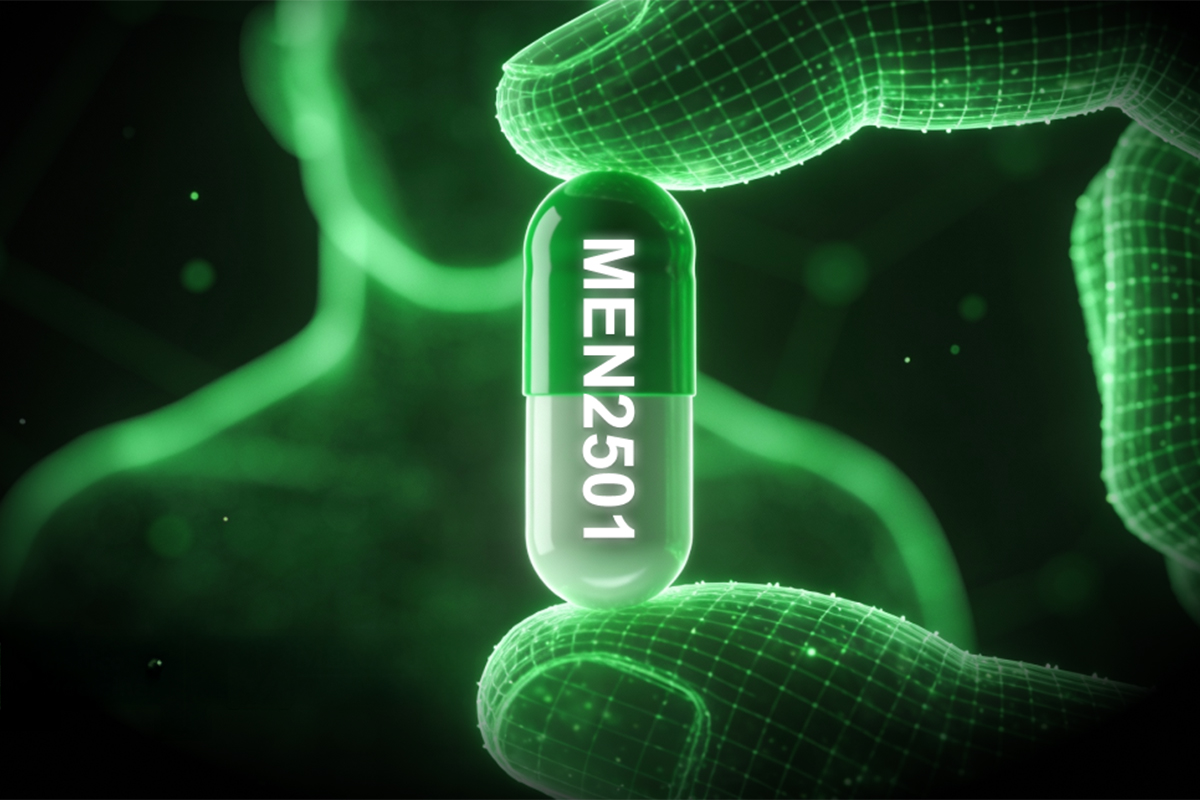
Phase 1 dosing milestone for MEN2501 signals growing confidence in generative AI drug discovery and its healthspan implications.
There is a quiet moment in every drug’s life when it stops being an idea and starts becoming a responsibility. For MEN2501, that moment arrived when the first patient received a dose.
AI-powered clinical-stage biotech Insilico Medicine has now collected a $5 million milestone payment from the Menarini Group after achieving first-in-patient dosing in a Phase 1 clinical trial of MEN2501, a drug candidate designed using Insilico’s generative AI platform [1]. The payment follows an earlier $3 million milestone triggered by regulatory approval in July 2025, bringing disclosed proceeds for the program to $8 million so far.
To investors, this reads as progress. To patients, it means something more fundamental: a new experimental option has finally crossed from theory into the clinic.
Longevity.Technology: This is about more than an oncology milestone; it is a vital stress test for a generative AI engine that could build the next generation of geroprotectors. By targeting chromosomal instability, Insilico is tackling a fundamental driver of cellular aging – the “genomic drift” that erodes our resilience over time. This research hints at a future where the same precision used to dismantle a tumor could be repurposed to reinforce the stability of healthy tissues, effectively “cleaning” the genetic noise that accumulates with age. If an AI platform can nominate a clinical candidate for a complex solid tumor in under eighteen months, the same logic can be applied to the entire catalog of age-related decline. This is the radical compression of the drug discovery timeline – a shift that is necessary if we are to keep pace with the multi-system failures of later life.
MEN2501 (formerly ISM9682) is aimed at solid tumors marked by chromosomal instability. That phrase can sound abstract, but it describes a very concrete problem. Some tumors behave like badly photocopied documents: each new copy introduces more errors. Over time, this genetic messiness helps the disease adapt, spread and resist treatment.
MEN2501 is designed to exploit that weakness. Instead of attacking broadly, it interferes with a key process these unstable cells depend on to keep dividing. If traditional therapies are blunt tools, this approach is closer to removing a specific cog from an already malfunctioning machine.
What makes the story notable is how that cog was identified. Insilico used generative AI to sift through massive biological and chemical possibilities, narrowing down candidates far faster than conventional discovery would allow. The result is not a miracle cure, but a molecule credible enough to be tested in people.
First-in-patient dosing is one of the most unforgiving checkpoints in drug development. Years of lab work, simulations and preclinical testing lead to a single question: is this safe enough to give to a human being? Many programs never get that far.
“The program rapidly advanced into a Phase I clinical trial and successfully completed first patient dosing,” said Dr Alex Zhavoronkov, founder and CEO of Insilico Medicine. “This milestone shows our shared commitment to delivering innovative therapies [1].”
Menarini CEO Elcin Barker Ergun framed it in operational terms: “Getting the first patient dosed… underscores how quickly promising science can move forward through focused clinical execution.”
What both are pointing to, without overstating it, is credibility. Speed matters, but only when paired with rigor.
MEN2501 was licensed to Stemline Therapeutics, Menarini’s oncology subsidiary, under agreements with a combined potential value exceeding $550 million. The structure is significant. Milestone payments and potential royalties rather than equity dilution.
In a market wary of cash burn and long timelines, non-dilutive capital changes the tone of the conversation. Each milestone payment says the same thing in plain language: another company believes this asset is worth advancing, with its own money and reputation on the line.
This is not Menarini’s first bet on Insilico. In January 2024, the two companies announced a separate global license for MEN2312, a KAT6 inhibitor for breast disease and other indications, also carrying a potential value above $500 million and already generating early milestone payments [2]. At that point, the collaboration began to look less like an experiment and more like a strategy.
A longevity lens
Longevity is often discussed in terms of aging biology, prevention and optimization. But in reality, the diseases that arrive later in life still define how long and how well people live.
Treatments for aggressive tumors are, by extension, longevity interventions. They don’t slow aging at the cellular level, but they do buy time, preserve function and reshape survival curves.
This is where AI-enabled drug discovery becomes relevant. Insilico reports that while early-stage discovery traditionally takes over four years, it has nominated 20 preclinical candidates from 2021 to 2024, often within 12 to 18 months, synthesizing far fewer compounds per program. Compression matters. Faster discovery means more shots on goal, earlier intervention and, over time, a better chance of keeping pace with diseases that evolve quickly.
MEN2501 is still early. Phase 1 trials focus on safety, not outcomes. There are many hurdles ahead, and no guarantees. But milestones like this mark a shift. AI-designed drugs are no longer confined to slide decks and simulations. They are entering clinics, generating revenue and being tested where it matters most.
Images courtesy of Insilico Medicine
[1] https://insilico.com/news/g3l291v091-insilico-medicine-receives-usd-5-million
[2] https://www.mobihealthnews.com/news/menarini-insilico-medicine-deepen-ai-partnership-potential-550m-deal
