

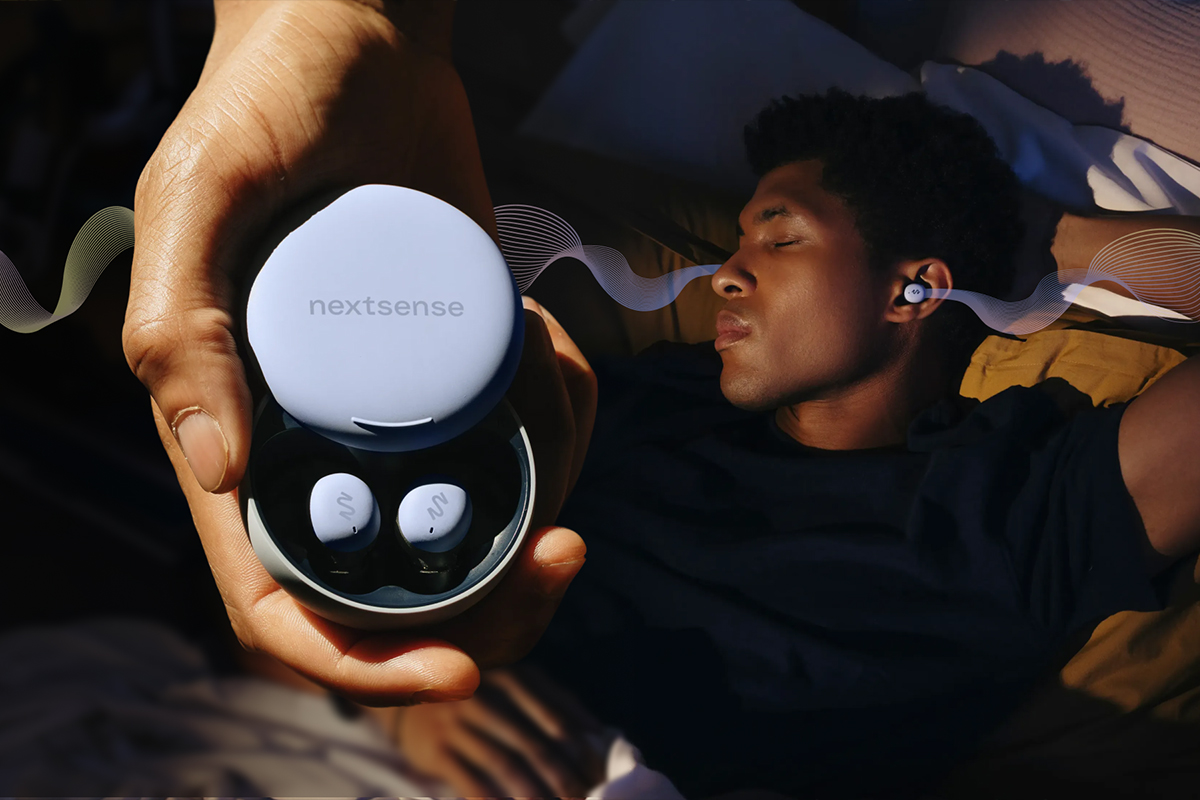
NextSense launches brain-sensing earbuds that move sleep tech beyond tracking and into real-time intervention.
For all the attention lavished on sleep in recent years, much of the consumer tech designed to support it has remained observational rather than interventional. Rings, watches and bedside devices have become adept at translating restless nights into charts and percentages, yet they rarely change the underlying biology in any meaningful way. Into this crowded and occasionally complacent market steps NextSense, a neurotechnology company now shipping Smartbuds – truly wireless earbuds that use in-ear EEG to both measure and modulate sleep in real time.
The premise is deceptively simple. Rather than inferring sleep stages from movement or heart rate, Smartbuds deploy six electroencephalography sensors inside the ear canal to detect neural activity directly. When the system identifies transitions between light sleep, deep sleep or brief awakenings, it delivers precisely timed audio stimulation intended to reinforce slow-wave activity – the phase of sleep most closely associated with physiological recovery, memory consolidation and metabolic regulation. The ambition is not better sleep data, but better sleep itself.
Longevity.Technology: Sleep is one of longevity’s least glamorous pillars – foundational, stubbornly under-treated and routinely reduced to a quiet, little score on a phone – so the pivot NextSense is making here, from passive monitoring to active modulation, feels like a meaningful escalation rather than another shiny metric in search of a purpose. Putting EEG into truly wireless earbuds is, on paper, a democratization of brain health – a clinical-grade signal dragged out of the lab and into the bedroom – but the real question is what happens when closed-loop “nudging” becomes consumer default: not just whether it can increase slow-wave activity over 106 nights, but whether it does so reliably across bodies, across ages, across the messy reality of insomnia, menopause, apnea, anxiety and the rest of modern life’s greatest hits. If Smartbuds can genuinely strengthen deep sleep without simply training users to outsource yet another bodily function to a subscription, it could mark an inflection point for healthspan tech – shifting wearables from quantifying decline to actively supporting recovery – though it also raises the less fun issues we will need to get serious about fast: safety, validation, data governance for intimate neural signals and, inevitably, who gets restorative sleep-as-a-service while everyone else is left with advice to “wind down” and a chamomile tea.
From tracking to intervention
The timing is not accidental. Poor sleep is increasingly recognized as both a driver and amplifier of chronic disease, with links to cardiovascular risk, insulin resistance, cognitive decline and mood disorders. Yet despite a global sleep economy estimated at hundreds of billions of dollars, meaningful intervention remains elusive for many of the 65% of Americans who report struggling with sleep [1], or the tens of millions living with diagnosed sleep disorders.
NextSense founder and CEO Jonathan Berent traces the company’s origin to a familiar asymmetry in consumer health technology. “Sleep shapes how we show up in the world. Yet for too long, technology has treated it like a score to track instead of a state to support,” he said. “We built Smartbuds to give people what they actually want and need: better rest. By responding to real-time brain dynamics, Smartbuds go beyond passive monitoring to actively improve sleep, unlocking true recovery.”
That distinction matters for longevity science, which has spent the past decade refining biomarkers, clocks and risk scores while struggling to translate insight into action. Closed-loop systems – those that sense and respond continuously – offer a potential bridge between measurement and modification, provided they are rigorously validated outside controlled environments.
EEG leaves the lab
Electroencephalography has long been the gold standard for sleep staging, but its use has been largely confined to sleep clinics and research laboratories. By embedding EEG sensors into an earbud form factor, NextSense is attempting to make neural data both comfortable and habitual, collecting information night after night rather than during a single, artificial study.
During beta testing, the company reports increases in slow-wave activity across more than 100 nights, alongside subjective improvements in perceived sleep quality and morning recovery for nearly half of participants. Over 1,000 nights of real-world EEG data have now been collected, positioning the dataset among the larger in-ear sleep EEG collections outside formal trials.
The data remain early, and the outcomes modest rather than transformative. That may be a strength. Longevity has learned, sometimes painfully, to distrust outsized claims; incremental physiological improvements, sustained over time, are more aligned with how healthspan is actually extended.
Access, cost and context
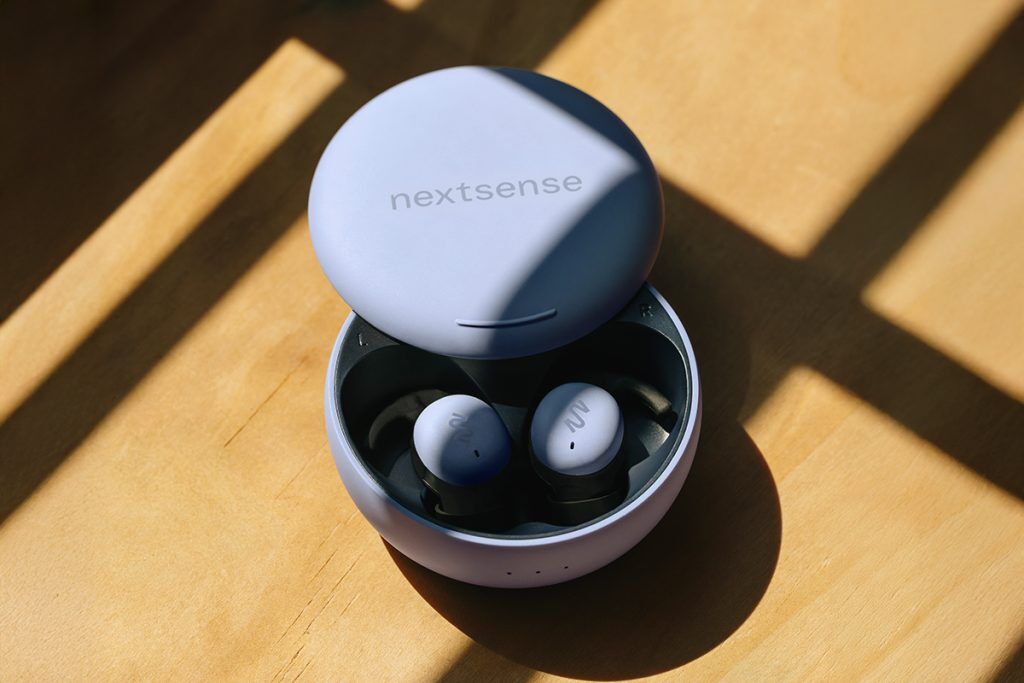
Retailing at $399.99 (with an early launch price of $249), requiring a subscription to maintain signal quality through regular replacement of ear tips and currently only compatible with recent iPhones, Smartbuds arrive with the familiar frictions of first-wave neurotech. This isn’t unusual for first-gen tech, but it does rather currently situate the product firmly within a premium market at a time when sleep deprivation disproportionately affects lower-income and older populations.
That tension – between innovation and accessibility, between optimization and equity – is not unique to NextSense. It is, however, increasingly central to the longevity conversation, as interventions move from population advice toward personalized, and often priced, biological support.
A quieter question
Sleep has always been a revealing test case for healthspan: universal, biologically essential and remarkably resistant to quick fixes. Technologies that claim to improve it will need patience, evidence and restraint. Whether Smartbuds represent a durable shift toward neural modulation or an elegant experiment remains to be seen.
What is clear is that sleep is no longer content to be measured politely from the wrist. It wants attention.
