

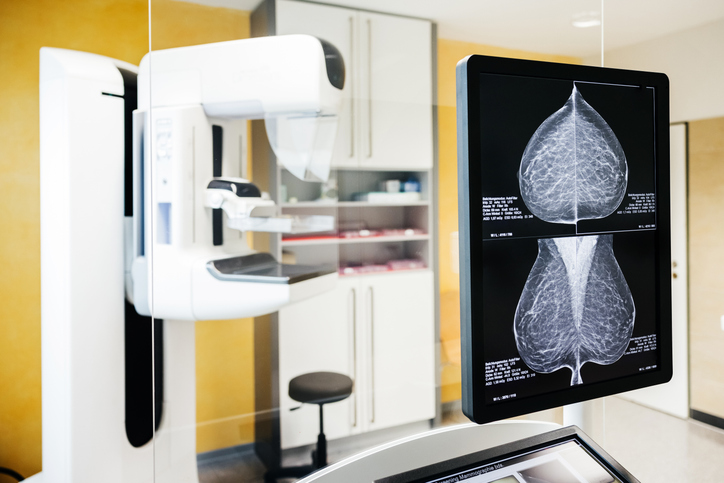
A new study shows that it may never be too late to benefit from breast cancer screening. Published today in the Journal of the National Cancer Institute, the study reports that women with stage IV metastatic breast cancer detected through screening have a 60% chance of survival, compared to 20% for those not detected through screening.
“There is understandably a lot of fear around cancer being found late, but our findings provide reassurance that long-term survival is still possible when it is found during screening,” said Amy Tickle, PhD, lead author of the study, who conducted the research during her PhD at King’s College London. “Our research highlights the importance of screening programs and we hope this encourages everyone who is invited to attend their appointment.”
Across many cancer indications, early diagnosis is often linked with better patient outcomes. Conversely, diagnoses that find advanced forms of cancer tend to be linked to a lower chance of survival and treatment success. However, Tickle and colleagues have shown that even when screenings find breast cancer at the most advanced stages, they can make a huge difference to patients.
The researchers looked at breast cancer screening records from Denmark between 2010 and 2019 together with death records from 2010 and 2022. This allowed them to calculate morality in women with and without breast cancer and estimate the mortality rate linked exclusively to this form of cancer within this population.
This data was then analyzed separately for each stage of breast cancer, comparing women who had never been screened, women whose cancer was detected through screening, and women whose cancer was not detected through screening.
“For women with stages I, II, and III breast cancer, survival did not vary by screening history,” said Peter Sasieni, PhD, professor of cancer prevention at King’s College London while the research was undertaken and now professor of cancer epidemiology at Queen Mary University of London. “But for stage IV breast cancer, we were surprised to see that the prognosis for those whose cancer was screened detected resembled that of women with stage III breast cancer—they were three times more likely to live for another 10 years than other women with stage IV breast cancer.”
Results also showed that cancers diagnosed by screening at stage IV were found to have a greater likelihood of surgical intervention. This suggests that even when the cancer has already started spreading, screenings may help identify the cancer while the spread may still be limited and a complete surgical removal of the tumor can still be attempted.
“Our results show that how breast cancer is detected could impact the patient’s survival chances,” said Tickle. “Further research is now needed to better understand the reasons behind this improved survival.”
