

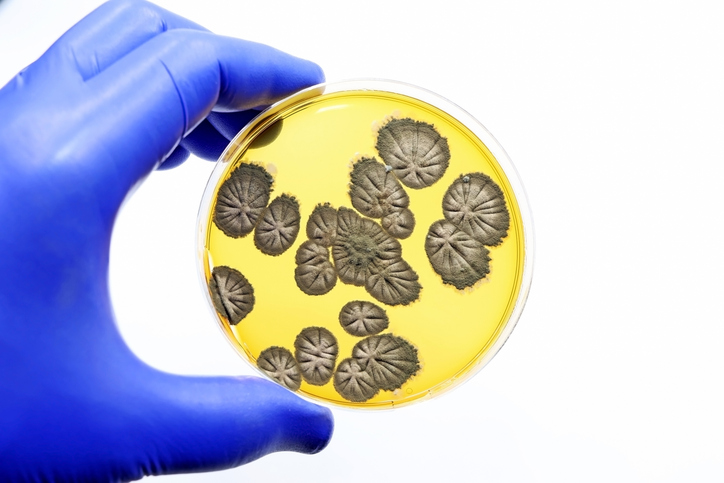
Fungal infection with Cryptococcus neoformans becomes more deadly in HIV patients who already have tuberculosis (TB), shows research led by the University of Exeter.
The scientists showed that the fungus appeared to become more aggressive in the presence of TB-causing bacteria. It multiplied faster and produced extra-large ‘titan’ cells that are harder for the immune system to kill, thickening its outer capsule and became generally harder for the immune system to kill.
C. neoformans is an encapsulated yeast that most often starts as a lung infection in people with suppressed immune systems and can move to the brain and nervous system causing cryptococcal meningitis. It is deemed a WHO Fungal Priority Pathogen largely due to the fact it accounts for a large number of deaths in patients with HIV or AIDS and kills over 100,000 people a year around the world, with most deaths seen in Sub-Saharan Africa.
Recent research suggests that C. neoformans infection is associated with a higher risk for death if people are also co-infected with TB. In this study, published in the Journal of Medical Microbiology, the researchers wanted to assess whether C. neoformans behaves differently in the presence of Mycobacterium tuberculosis, the bacteria that causes TB, and if this could support reports of the fungal infection being more deadly in patients infected with both pathogens.
“We know that these pathogens are commonly recovered from patients in endemic regions, but no one has investigated the impact of one on the other,” says Orlando Ross, first author of the study and PhD candidate at the MRC Centre for Medical Mycology at the University of Exeter, in a press statement.
“We hypothesized that co-incubation of C. neoformans with Mycobacterium species would result in C. neoformans cells changing in size and shape, towards a more pathogenic and dangerous form.”
To do this they created a simulation of an environment containing both pathogens and also macrophage white blood cells, which carry out a process called phagocytosis where pathogenic cells or microbes are consumed whole and destroyed by the immune system.
They showed that the fungus changed its cell density and diversity and also its capsule size in response to the presence of M. tuberculosis, effectively becoming more deadly for patients.
“While this study establishes that C. neoformans can sense and respond to mycobacterial cues in ways that enhance virulence-associated phenotypes, several key questions remain,” conclude the authors.
“The specific mycobacterial components or metabolic signals responsible for initiating these morphological transitions are not yet known; identifying the molecular pathways through which C. neoformans detects and interprets mycobacterial presence will be essential to determine whether this response is mediated by surface receptor signaling, secreted factors or direct cell–cell contact.”
