

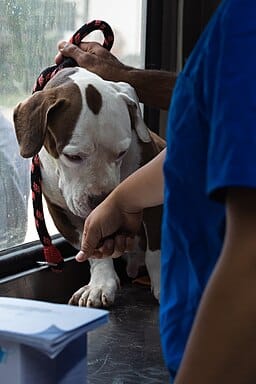
CHINO, Colombia (Aug. 9, 2024) ¬– U.S. Army veterinary technician Pfc. Ismael Hamilton, assigned to the 248th Medical Detachment Veterinary Service Support, reaches toward a dog at a mobile animal care site in Chino, Colombia during Continuing Promise 2024. Continuing Promise 2024, a U.S. Naval Forces Southern Command-led mission, features multinational coordination, collaboration, and caring through partner-led events, where U.S. military personnel, civilian mariners, civilian professionals, and volunteers conduct “diplomacy through good deeds,” which improve local infrastructure, bolster collective capabilities and skills, and facilitate an environment of collaborative learning. (U.S. Navy photo by Mass Communication Specialist Seaman Jasmin L. Aquino)
Chronic diarrhea in pets is a frequent complaint in veterinary practice. Because a number of factors may be involved, identifying the causal factor(s), treating the present condition, and managing the pet over the long term can be a frustrating and complicated process. In addition to diagnostic investigation, veterinarians have a variety of empirical treatments at their disposal, including dietary intervention (e.g., hydrolyzed protein diet), parasiticides, and antimicrobials.
Antimicrobials are a popular treatment for diarrhea but are known to induce dysbiosis, reduce microbial diversity, alter microbial metabolism, and negatively impact stool quality in dogs (see studies here: 1, 2, 3, 4). Because repeated antimicrobial use may come with the downsides of long-term disruption of intestinal microbial populations, increased host susceptibility to gastrointestinal disease, and increased risk of antimicrobial resistance, guidelines for rational (i.e. necessary and appropriate) antimicrobial use in dogs exist (see 5, 6, 7, 8).
Despite their risks and complications, antimicrobials have their role in managing canine diarrhea and gastrointestinal enteropathies. So, what can be done to minimize the negative effects that they have on stool quality and microbial disruption? More research is necessary but growing evidence suggests that dietary fiber and/or biotic supplementation may be a useful component of the management strategy.
Fiber and prebiotics
Dietary fibers and prebiotics (substrates selectively utilized by host microorganisms conferring a health benefit, 9) are commonly used in pet diets to improve or maintain stool quality, provide laxation, and positively manipulate gastrointestinal microbiota populations of healthy animals. Few studies have tested their effects in dogs receiving antimicrobial therapy, however. In a recent in vitro study, antimicrobial administration was shown to reduce microbial diversity and negatively affect the microbiota population’s ability to ferment test fibers, slowing short-chain fatty acid (SCFA) production and pH reduction (3). Microbial metabolism was also modified, with minimal butyrate being produced in fermentation vessels containing inoculum from dogs receiving the antimicrobial. A couple of test fibers, beet pulp and chicory pulp, increased SCFA production and microbial diversity over time, with microbial populations approaching that of control tubes. Similarly, dogs receiving an antimicrobial while fed a diet containing a blend of functional fibers (e.g., beet pulp, pea fiber, apple pomace, pumpkin, cranberry pomace, flaxseed) had lower fecal pH, lower dry matter percentage, and beneficial shifts in metabolite concentrations compared to those receiving an antimicrobial and fed a control diet (1). More in vivo research is necessary but the results of these studies suggest that functional fibers may aid in promoting microbial activity and recovery following antimicrobial treatment. It should be noted that dietary fibers can vary greatly in terms of solubility, viscosity, fermentability, and water-holding capacity. Because soluble and highly fermentable fibers can lead to loose stools, a blend of fibers that provides bulk and water-holding capacity necessary for adequate stool quality, as well as available substrate for microbial fermentative activity, is recommended.
Probiotics
Probiotics (live microorganisms that when administered in adequate amounts, confer a health benefit on the host, 10) are another potential strategy to mitigate antimicrobial-associated diarrhea. Demonstrated by the Cochrane systematic review of 33 randomized controlled trials by Guo et al. (11) and narrative review by Szajewska et al. (12), probiotics have been shown to moderately reduce the duration of diarrhea in humans receiving antimicrobials. Much less research has been conducted in dogs, but there is evidence of similar benefits. Using an in vitro canine gut model, Deschamps et al. (13) demonstrated that live Saccharomyces boulardii provided during and after antimicrobial treatment had positive effects on microbiome-related endpoints – mitigating the bloom of Enterobacteriaceae, accelerating the recovery of total bacterial load, promoting faster restoration of bacterial diversity, and reducing redox potential (promoting microbiome stabilization). Similar benefits have been demonstrated in vivo, along with clinical improvements in stool consistency. In shelter dogs given an antimicrobial, those receiving a live Enterococcus faecium strain SF68 (5 x 10⁸ colony forming units per day) had a higher percentage of days with normal stools than those receiving an antimicrobial and placebo (14). In another study, dogs receiving an antimicrobial + live Pediococcus Acidilactici GLP06 (2 x 10⁹ colony forming units per day; 2 x 10¹⁰ colony forming units per day) had better fecal scores, lower serum diamine oxidase (marker of intestinal leakage) concentrations, and lower tumor necrosis factor-alpha (marker of inflammation) concentrations than dogs receiving the antimicrobial alone (15).
Other approaches
Other potential strategies include synbiotics (mixture comprising live microorganisms and substrate(s) selectively utilized by host microorganisms that confers a health benefit on the host, 16) and postbiotics (preparation of inanimate microorganisms and/or their components that confers a health benefit on the host, 17). In dogs receiving antimicrobial therapy, those supplemented with a daily synbiotic composed of chitosan oligosaccharides (350 mg), Bifidobacterium (5 x 10⁸ colony forming units), Clostridium butyricum (2 x 10⁸ colony forming units), and Lactiplantibacillus plantarum (3 x 10⁸ colony forming units) had reduced diarrhea severity, improved intestinal morphology, enhanced gut microbial diversity, upregulated intestinal tight junction (occludin; claudin-1; zonula occludens-1) protein expression, and reduced serum inflammatory cytokine (tumor necrosis factor-alpha; interleukin-1 beta) concentrations than dogs given the antimicrobial alone (18). In an in vitro canine gut model, a Lactobacillus helveticus-derived postbiotic given during and after antimicrobial treatment diminished the growth of Enterobacteriaceae, accelerated the recovery of total bacterial load, promoted faster restoration of bacterial diversity, preserved SCFA concentrations, and upregulated beneficial metabolic pathways (13).
While research gaps and limitations exist, current evidence suggests that supplementation of dietary fibers and/or biotics may aid in mitigating the negative effects of antimicrobial administration in dogs. Further research is necessary to improve efficacy and individualize treatments based on animal health status, gastrointestinal microbiota populations, antimicrobial being administered, and specific strains and/or fermentative substances supplemented. For now, pet owners are suggested to work with their veterinarian to decide on the most appropriate strategy for their dog.
References
(1) Belchik SE, et al. Effects of a veterinary gastrointestinal low-fat diet on fecal characteristics, metabolites, and microbiota concentrations of adult dogs treated with metronidazole. J. Anim. Sci. 2024;102:1-16.
(2) Manchester AC, et al. Long-term impact of tylosin on fecal microbiota and fecal bile acids of healthy dogs. J. Vet. Intern. Med. 2019;33:2605-2617.
(3) Martini SE, et al. In vitro fermentation characteristics of dietary fibers using fecal inocula from dogs treated with metronidazole. Anim. Microbiome 2025;7:93.
(4) Pilla R, et al. Effects of metronidazole on the fecal microbiome and metabolome of healthy dogs. J. Vet. Intern. Med. 2020;34:1853-1866.
(5) Cerquetella M, et al. Proposal for rational antibacterial use in the diagnosis and treatment of dogs with chronic diarrhoea. J. Small Anim. Pract. 2020;61:211-215.
(6) Jessen LR, et al. European Network for Optimization of Veterinary Antimicrobial Therapy (ENOVAT) guidelines for antimicrobial use in canine acute diarrhoea. Vet. J. 2024;307:106208.
(7) Stravroulaki EM, et al. Short and long-term effects of amoxicillin/clavulanic acid or doxycycline on the gastrointestinal microbiome of growing cats. PLoS One 2021;16:e0253031.
(8) Ungaro R, et al. Antibiotics associated with increased risk of new-onset Crohn’s disease but not ulcerative colitis: a meta-analysis. Am. J. Gastroenterol. 2014;109:1728–1738.
(9) Gibson GR, et al. Expert consensus document: the International Scientific Association for Probiotics and Prebiotics (ISAPP) consensus statement on the definition and scope of prebiotics. Nat. Rev. Gastroenterol. Hepatol. 2017;14:491-502.
(10) Hill C, et al. The International Scientific Association for Probiotics and Prebiotics consensus statement on the scope and appropriate use of the term probiotic. Nat. Rev. Gastroenterol. Hepatol. 2014;11:506-514.
(11) Guo Q, et al. Probiotics for the prevention of pediatric antibiotic-associated diarrhea. Cochrane Database Syst. Rev. 2019;4:CD004827.
(12) Szajewska H, et al. Antibiotic-perturbed microbiota and the role of probiotics. Nat. Rev. Gastroenterol. Hepatol. 2025;22:155-172.
(13) Deschamps C, et al. Lactobacillus helveticus-derived postbiotic and live Saccharomyces boulardii restore gut microbiota after antibiotic disturbance in an in vitro canine gut model. Benef. Microbes 2025.
(14) Fenimore A, et al. Evaluation of Metronidazole with and without Enterococcus Faecium SF68 in shelter dogs with diarrhea. Topics Comp. Anim. Med. 2017;32:100-103.
(15) Zhang Y, et al. Host-derived Pediococcus Acidilactici GLP06 mitigates antibiotic-associated diarrhoea in dogs. Probiotics Antimicrob. Proteins 2025.
(16) Swanson KS, et al. The International Scientific Association for Probiotics and Prebiotics (ISAPP) consensus statement on the definition and scope of synbiotics. Nature Rev. Gastroenterol. Hepatol. 2020;17:687-701.
(17) Salminen S, et al. The International Scientific Association of Probiotics and Prebiotics (ISAPP) consensus statement on the definition and scope of postbiotics. Nat. Rev. Gastroenterol. Hepatol. 2021;18:649-667.
(18) Shen H, et al. Synbiotic supplementation mitigates antibiotic-associated diarrhea by enhancing gut microbiota composition and intestinal barrier function in a canine model. Probiotics Antimicrob. Proteins 2025;17:2586-2599.
