

Bitter taste sensitivity. The photic sneeze reflex. Earwax type. On the spectrum of genetic variation, these traits fall on the innocuous, even whimsical, end. At the opposite extreme lie rare, life-threatening mutations. Between those poles sits a vast and more subtle territory, one that includes genetic variants that influence behavior. Somewhere in there, nicotine addiction lies.
For decades, scientists have known that nicotine exerts its grip on the brain by binding to specialized receptors—nicotinic acetylcholine receptors (nAChRs)—that activate reward circuits. But what if some people are born with slightly altered versions of nAChRs—variants that weaken nicotine binding, rendering the chemical’s effects less compelling? A new large-scale genetic study published in Nature Communications suggests exactly that.
A massive international sequencing effort, spearheaded by biotechnology company Regeneron, spanning nearly 200,000 people across Mexico, Japan, and the United Kingdom has identified rare variants in a single gene that consistently reduce how much people smoke. The study, which analyzed exome data from the Mexico City Prospective Study (MCPS), Biobank Japan, and UK Biobank, provides some of the clearest human genetic evidence to date that disrupting the gene CHRNB3 lowers cigarette consumption.
Unlike common genetic signals identified through genome-wide association studies (GWAS), these are rare coding variants, directly altering the structure or function of the encoded protein. Strikingly, the specific mutations differ across ancestries, yet they converge on the same biological outcome: reduced cigarettes per day. The findings raise the possibility of developing addiction therapies that begin with human genetic evidence rather than animal models or serendipitous pharmacology.
Population-specific cigarette consumption variants
The discovery began with the MCPS—a large population-based cohort that sequenced the protein-coding regions of roughly 150,000 participants. Among nearly 38,000 current smokers analyzed, researchers identified a rare missense variant in CHRNB3 known as p.Glu284Gly that was strongly associated with smoking fewer cigarettes per day. Individuals with one copy of the variant smoked significantly less than non-carriers, and while only four people in the MCPS had two copies, they reported significantly lower cigarette consumption. The variant is enriched in individuals of Indigenous Mexican ancestry and is rare outside that population, occurring in approximately 1.4% of that group.
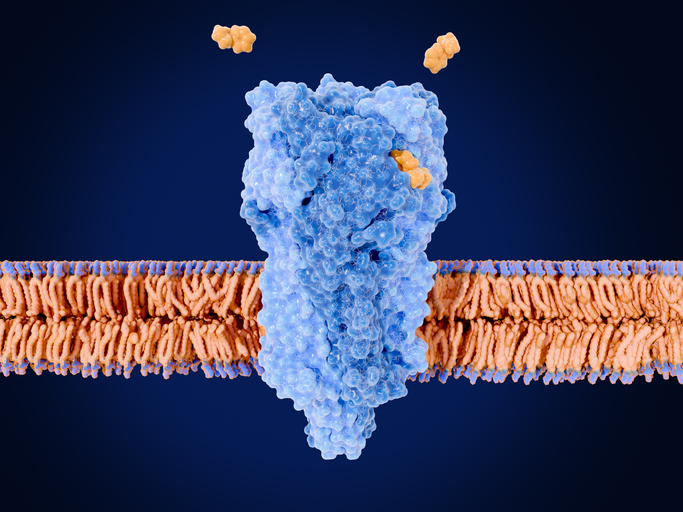
The CHRNB3 gene encodes the β3 subunit of nAChRs, five-part ion channel complexes that respond to nicotine in the brain. When nicotine binds to these receptors, it activates neural circuits involved in reward and reinforcement, and studies have shown that structural alteration of the nAChR subunits can blunt the reinforcing effects of nicotine, reducing how much is consumed. For p.Glu284Gly, the variant does not seem to influence whether someone initiates smoking but rather how heavily they smoke once they start.
To determine whether the Mexican finding reflected a population-specific effect or a broader biological principle, the Regeneron researchers turned to other cohorts. In Biobank Japan, they identified a distinct rare splice donor mutation in CHRNB3, enriched in East Asian populations, that was also associated with reduced cigarettes per day. The Mexican and East Asian variants were not present in the UK Biobank, but aggregating rare damaging coding variants in the same gene revealed the same directional effect. The key mutations driving the associations differ by ancestry. The p.Glu284Gly variant is essentially absent outside Indigenous Mexicans, while the East Asian splice variant is not found in Europeans or Indigenous Mexicans.
Rather than pooling all individuals into a single meta-analysis, the investigators treated each cohort as an independent test of the broader hypothesis: that reduced or disrupted CHRNB3 function lowers cigarette consumption. Study co-author Veera M. Rajagopal, PhD, senior manager of neurology and ophthalmology therapeutic area genetics at Regeneron, explained the rationale.
“The three cohorts in our study—Mexico City Prospective Study (MCPS), UK Biobank, and Biobank Japan—were not analyzed jointly in a traditional meta-analysis sense, and for good reason,” Rajagopal told Inside Precision Medicine. “The key variants driving the signal in each population are largely population-specific: p.Glu284Gly is essentially absent outside Indigenous Mexicans, and the East Asian splice donor variant is absent in Europeans and Indigenous Mexicans. A conventional joint analysis pooling individuals across cohorts would therefore not meaningfully increase power to detect these specific variants.”
Rajagopal continued, “What we did instead was use each cohort as an independent replication dataset for the broader hypothesis—that loss of function of CHRNB3 reduces cigarettes per day—rather than for the specific variants. This cross-ancestry convergence of effect, despite divergence in the underlying variants, is arguably more compelling evidence for the gene’s causal role than a single-population finding would be. That said, a more integrated analysis leveraging haplotype information and ancestry-specific imputation panels could in the future yield additional insights, particularly for identifying further population-specific variants in understudied ancestries.”
The findings also clarify a long-standing puzzle. Previous GWAS had repeatedly flagged a region on chromosome 8 near CHRNB3 as influencing smoking quantity, but it was unclear which gene in that region was causal. The new rare-variant evidence strongly implicates CHRNB3 itself. The role of CHRNB3 appears distinct from that of its receptor cousin CHRNB2, which encodes another nicotinic receptor subunit. In a 2023 Nature Genetics study, Rajagopal and the Regeneron team demonstrated that rare damaging variants in CHRNB2 reduce the odds of ever becoming a smoker. In contrast, CHRNB3 seems to influence smoking intensity among those who already smoke.
Translatability—tantalizing or tangible
Given the low frequency of p.Glu284Gly, approximately 1.4% in Indigenous Mexicans, Rajagopal said that the population-level screening for this variant would therefore not be an effective standalone clinical tool for identifying at-risk smokers. “Looking ahead, understanding an individual’s nicotinic receptor biology could theoretically inform better-tailored treatment,” said Rajagopal. “For example, identifying patients who may be more likely to respond to a therapy targeting β3-containing receptors, should such a therapy be developed.”
Still, Rajagopal emphasized that the finding does not translate directly into a screening test, cautioning that the field is still in early translational territory. “At this stage, the variant does not have immediate clinical utility in the conventional sense,” said Rajagopal. “This is an area where the field remains at an early stage of prospective translational development, and to our knowledge, no therapy for smoking or other substance use disorders has yet been developed through a true genetics-first pathway.”
As an option for smoking cessation, Rajagopal considered varenicline, a partial agonist at α4β2 nicotinic receptors and a therapy that has been recommended previously, among others. Varenicline was discovered and developed before large-scale human sequencing was available; in this case, genetics provided post hoc reinforcement rather than prospectively driving discovery.
“Subsequent human genetic studies, including research from our team, have reported associations between rare CHRNB2 coding variants and lower odds of heavy smoking, which retrospectively supports the biological pathway varenicline targets,” said Rajagopal. “CHRNB3 now represents an opportunity to do exactly that: to use human genetic evidence as the starting point for a drug development program, rather than as confirmation after the fact. While genetic evidence suggests that inhibiting CHRNB3 could help reduce or stop smoking, it’s too early to say whether a treatment is possible, safe, and efficacious.”
Important questions remain. Rajagopal noted, “Our dataset has several important limitations that we noted in the paper. The phenotype, self-reported cigarettes per day, is a proxy for nicotine dependence and does not capture the full clinical picture of tobacco use disorder (dependence severity, withdrawal, treatment, etc.). The sample of homozygous carriers is very small (only four individuals in our discovery cohort), limiting what we can currently infer about complete loss of function. In terms of what would most accelerate translation, it would be helpful to prioritize functional validation, deep clinical phenotyping, and longitudinal outcome data.”
Still, the implications are striking. Smoking remains one of the leading preventable causes of death worldwide. Hidden within human genetic diversity are natural experiments suggesting that modestly dampening a single receptor subunit can meaningfully reduce cigarette consumption. Whether this insight ultimately leads to a new class of addiction therapies remains uncertain, but CHRNB3 now stands as one of the clearest cross-ancestry genetic signals pointing toward a potentially druggable target in nicotine dependence.
