

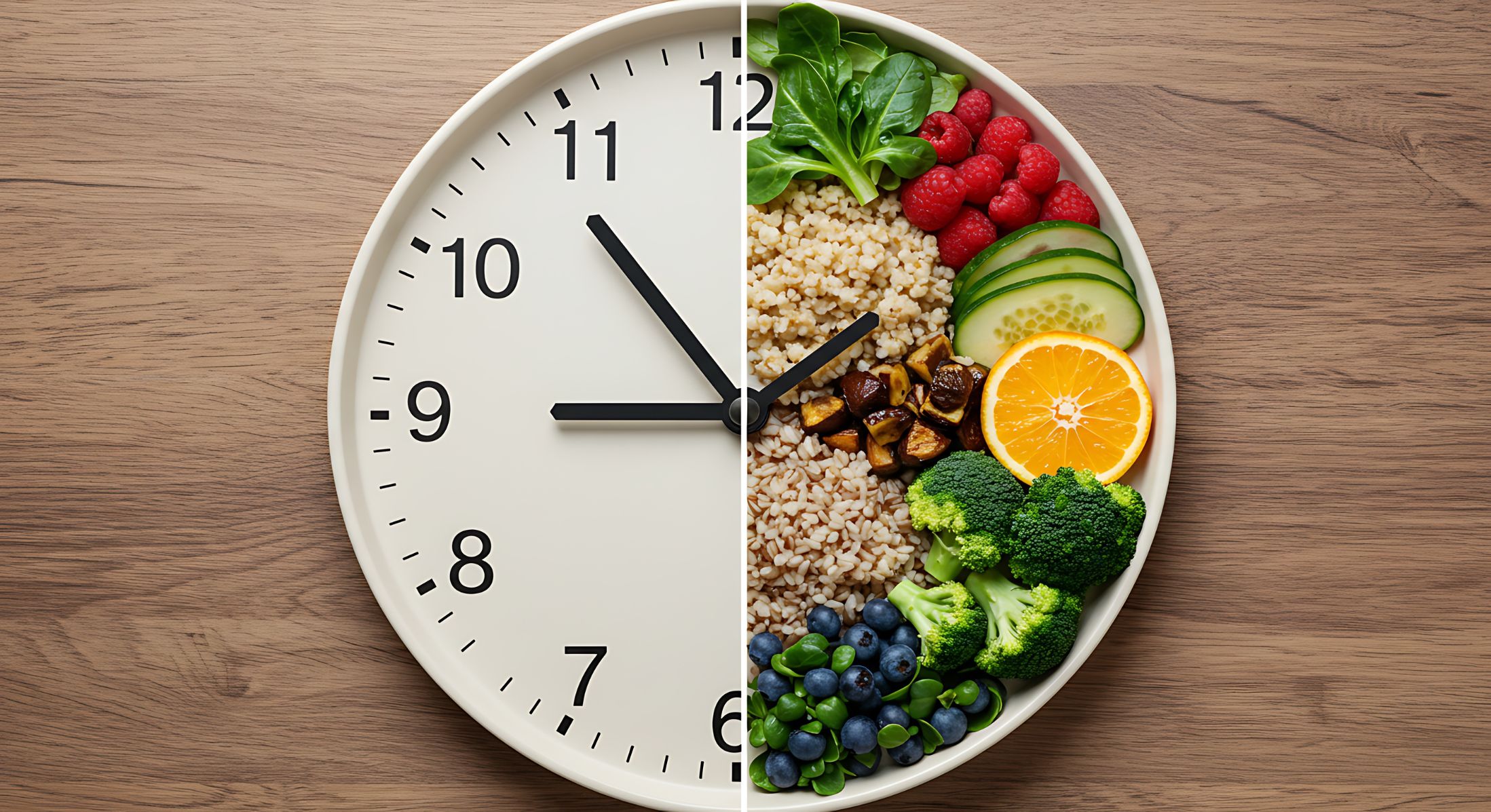
Definition and types of intermittent fasting
Intermittent fasting (IF) refers to the voluntary abstinence or reduction of food intake for defined periods of time. Several eating patterns fall under this umbrella, including time restricted eating (TRE) or feeding where meals are consumed within a limited daily window such as eight to ten hours, alternate day fasting which alternates full fasting days with eating days, modified protocols such as the well-known five to two approach where caloric intake is reduced on selected days each week, and religious fasts such as Ramadan where abstention occurs during daylight hours. While these approaches differ in structure, they all introduce repeated periods without nutrient intake, which trigger coordinated physiological responses across the gut and metabolic systems.
Proposed mechanisms linking IF, gut function, and metabolism
Rather than acting through a single pathway, IF initiates a sequence of physiological events that unfold across the fasting–feeding cycle, beginning in the gut and extending to systemic metabolism. Viewing IF as a cycle helps clarify how digestive, microbial, immune, and metabolic processes interact over time.
The fasting phase: rhythm, motility, repair, and metabolic switching
The cycle begins with the absence of food, which acts as a powerful synchronizer of circadian rhythms. Morning or early-afternoon eating improves glucose handling, lipid metabolism, and blood pressure patterns, while late-night intake can blunt insulin sensitivity1.
As fasting continues, the intestine enters a motility phase marked by activation of the migrating motor complex, a pattern of cyclic contractions that occurs only in the absence of food. This housekeeping mechanism clears residual nutrients and bacteria from the small intestine and may help limit bacterial overgrowth2.
Prolonged fasting also initiates a repair-oriented state. Reduced nutrient exposure lowers endotoxin translocation and dampens inflammatory signalling. Indeed, IF has been shown to reduce pro-inflammatory cytokines and LPS-mediated monocyte activation³, while increasing regulatory cytokines supporting lipid metabolism and immune balance. IL-6 may also rise transiently during fasting, but in this context appears to promote lipid mobilization rather than chronic inflammatory signalling4. This transient effect could be beneficial for patients with IBD by supporting metabolic and immune regulation, though fasting should be approached cautiously in this population to avoid malnutrition or symptom exacerbation5. At the cellular level, fasting activates autophagy, improves mitochondrial efficiency, and reduces oxidative stress, supporting tissue maintenance and metabolic flexibility6.
As fasting is prolonged beyond 10 to 14 hours, the liver begins to run low on glycogen and the body shifts from glucose to fat (ketone bodies) as its main fuel7. Beyond energy supply, ketones act as signalling molecules, influencing oxidative stress, inflammation, and gene transcription linked to metabolic resilience. IF often reduces post-prandial insulin exposure simply by reducing the number of insulin-triggering eating events, which may improve insulin sensitivity.
Nutrients reaching the colon: microbial fermentation, hormones, and satiety
When feeding resumes, nutrients that escape digestion in the upper gut reach the colon, where they are fermented by the gut microbiota into short-chain fatty acids (SCFAs). The gut microbiome itself follows a circadian rhythm, with daytime feeding favouring SCFA-producing Firmicutes and overnight fasting supporting Bacteroidetes and bile-acid turnover. IF often increases microbial α-diversity, which is typically higher during the day8, while individuals with metabolic diseases, such as type 2 diabetes, often exhibit reduced diversity9. Higher microbial diversity correlates inversely with body fat, suggesting some benefits may be secondary to weight loss10. IF also enriches beneficial taxa such as Faecalibacterium prausnitzii and Akkermansia muciniphila while reducing pathogens6.
SCFAs play a central role in linking the microbiome to host metabolism. They strengthen the intestinal barrier, reduce inflammation, and stimulate the release of satiety hormones such as GLP-1 and PYY, directly influencing appetite regulation and glycaemic control. These hormonal effects help explain why many individuals experience reduced snacking and spontaneous calorie reduction during IF7.
Breaking the fast: a critical determinant of benefit
Breaking the fast can either reinforce or undermine the benefits of IF. Very large or highly refined meals may overload digestion, slow gastric emptying, and reduce absorption of key minerals such as iron, zinc, and calcium, especially when phytate-rich foods are eaten without enhancers like vitamin C or animal protein. Repeated intake of high-sugar or low-fiber meals can also blunt microbial fermentation and satiety signals. Additionally, some individuals may overeat during feeding windows, particularly after long fasting periods or when consuming ultra-palatable foods.
Conclusion:
Clinical evidence remains limited, but current data indicate that early TRE, confining food intake to earlier hours of the day, yields the most consistent benefits on glucose regulation, lipid metabolism, and circadian alignment1. However, intermittent fasting is not a therapeutic shortcut nor a universal solution. Its potential benefits depend on careful implementation, gradual adaptation, and overall dietary quality rather than on fasting duration alone. For long-term health, the most effective approach is one that can be maintained over time and integrated into a balanced lifestyle. Extended fasting protocols should only be undertaken with medical or dietetic supervision11, and intermittent fasting is not appropriate for everyone. Individuals with diabetes, eating disorders12, hypotension, during pregnancy or lactation, or those engaged in high-intensity training should seek professional guidance or avoid fasting altogether.
Key words: Gut microbiota, metabolism, intermittent fasting (IF), time-restricted eating (TRE), alternate day fasting (ADF)
References:
- Liu, J., Yi, P., Liu, F. (2023). The Effect of Early Time-Restricted Eating vs Later Time-Restricted Eating on Weight Loss and Metabolic Health. The Journal of Clinical Endocrinology & Metabolism, 108(7):1824–1834 https://doi.org/10.1210/clinem/dgad036
- Pimentel, M., Soffer, E.E., Chow, E.J. et al.Lower Frequency of MMC Is Found in IBS Subjects with Abnormal Lactulose Breath Test, Suggesting Bacterial Overgrowth. Dig Dis Sci 47, 2639–2643 (2002). https://doi.org/10.1023/A:1021039032413
- Guevara‑Cruz, , Hernández‑Gómez, K. G., Condado‑Huerta, C., González‑Salazar, L. E., Peña‑Flores, A. K., Pichardo‑Ontiveros, E., Serralde‑Zúñiga, A. E., Sánchez‑Tapia, M., Maya, O., Medina‑Vera, I., Noriega, L. G., López‑Barradas, A., Rodríguez‑Lima, O., Mata, I., Olin‑Sandoval, V., Torres, N., Tovar, A. R., & Velázquez‑Villegas, L. A. (2024). Intermittent fasting, calorie restriction, and a ketogenic diet improve mitochondrial function by reducing lipopolysaccharide signaling in monocytes during obesity: A randomized clinical trial. Clinical Nutrition, 43(8), 1914‑1928. https://doi.org/10.1016/j.clnu.2024.06.036
- Mohr, E., Jasbi, P., Bowes, D. A., Dirks, B., Whisner, C. M., Arciero, K. M., Poe, M., Gu, H., Gumpricht, E., Sweazea, K. L., & Arciero, P. J. (2022). Exploratory analysis of one versus two‑day intermittent fasting protocols on the gut microbiome and plasma metabolome in adults with overweight/obesity. Frontiers in Nutrition, 9, 1036080. https://doi.org/10.3389/fnut.2022.1036080
- Haskey, N., Lewis, A. G., Lavallee, C., Yousuf, M., Taylor, L., Jilani, S., Gold, S., Lu, C., Ghosh, S., Panaccione, R., & Raman, M. (2025). Time-restricted feeding improves inflammatory and metabolic biomarkers in Crohn’s disease with overweight: A randomized, placebo-controlled pilot trial. Journal of the Canadian Association of Gastroenterology, 8(Suppl 1), i31. https://doi.org/10.1093/jcag/gwae059.080
- Pérez-Gerdel, T., Camargo, M., Alvarado, M., & Ramírez, J. D. (2023). Impact of intermittent fasting on the gut microbiota: A systematic review. Advanced Biology, 7(8), Article 2200337. https://doi.org/10.1002/adbi.202200337
- Paukkonen, I., Törrönen, E.-N., Lok, , Schwab, U., & El‑Nezami, H. (2024). The impact of intermittent fasting on gut microbiota: A systematic review of human studies. Frontiers in Nutrition, 11, 1342787. https://doi.org/10.3389/fnut.2024.1342787
- Ashique, S., Debnath, B., Mojgani, N., Tariq, M., Haider, T., Shorog, E., Yasmin, S., Islam, A., Sharma, H., Hussain, M. S., Madan, A., Malik, T., & Ansari, M. Y. (2025). Gut microbiota modulation and health benefits of various fasting regimens. Current Research in Biotechnology, 10, 100311. https://doi.org/10.1016/j.crbiot.2025.100311
- Reitmeier, , Kiessling, S., Clavel, T., List, M., Almeida, E.L., Ghosh, T.S., Neuhaus, K., Grallert, H., Linseisen, J., Skurk, T., Brandl, B., Breuninger, T.A., Troll, M., Rathmann, W., Linkohr, B., Hauner, H., Laudes, M., Franke, A., Le Roy, C.I., Bell, J.T., Spector, T., Baumbach, J., O’Toole, P.W., Peters, A., & Haller, D. (2020). Arrhythmic gut microbiome signatures predict risk of type 2 diabetes. Cell Host & Microbe, 28(2), 258‑272.e6. https://doi.org/10.1016/j.chom.2020.06.004
- Mohr, A. E., Sweazea, K. L., Bowes, D. A., Jasbi, P., Whisner, C. M., Sears, D. D., Krajmalnik-Brown, R., Jin, Y., Gu, H., Klein-Seetharaman, J., Arciero, K. M., Gumpricht, E., & Arciero, P. J. (2024). Gut microbiome remodeling and metabolomic profile improves in response to protein pacing with intermittent fasting versus continuous caloric restriction. Nature Communications, 15, 4155. https://doi.org/10.1038/s41467-024-48355-5#
- Mikhael-Moussa, H., Bertrand, V., Lejeune, E., Dupont, C., Aupetit, A., Achamrah, N., & Melchior, C. (2025). The Association of Avoidant/Restrictive Food Intake Disorder (ARFID) and Neurogastroenterology Disorders (Including Disorders of Gut-Brain Interaction [DGBI]): A Scoping Review. Neurogastroenterology and Motility, 37(9), e70039. https://doi.org/10.1111/nmo.70039
- Mikhael-Moussa, H., Bertrand, V., Lejeune, E., Dupont, C., Aupetit, A., Achamrah, N., & Melchior, C. (2025). The Association of Avoidant/Restrictive Food Intake Disorder (ARFID) and Neurogastroenterology Disorders (Including Disorders of Gut-Brain Interaction [DGBI]): A Scoping Review. Neurogastroenterology and Motility, 37(9), e70039. https://doi.org/10.1111/nmo.70039
