

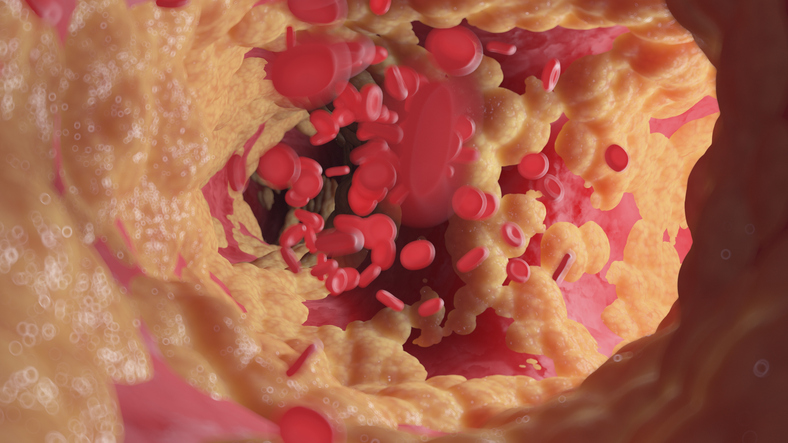
The global clinical race to rewrite cholesterol biology continues to heat up. A single infusion of experimental gene editing therapy has cut LDL cholesterol by more than 50% in patients with inherited high cholesterol, and the effects are holding for months.
In a Phase I study conducted with Shanghai Jiao Tong University School of Medicine and the Shanghai Key Laboratory of Precision Gene Editing and Clinical Translation, China-based YolTech Therapeutics reported that its in vivo base-editing therapy YOLT-101 reduced LDL cholesterol by 52.3% and circulating PCSK9 protein by 74.4% at 24 weeks in patients receiving the highest dose. The treatment is designed for heterozygous familial hypercholesterolemia (HeFH), a genetic condition that drives lifelong elevation of LDL cholesterol and sharply increases cardiovascular risk.
The data, published in a Nature study, come from six treated patients, three of whom received the top dose of 0.6 mg/kg. In those individuals, reductions were dose-dependent and sustained through the six-month follow-up period. The therapy uses adenine base editing delivered intravenously via GalNAc-modified lipid nanoparticles to permanently disrupt the PCSK9 gene in liver cells, thereby lowering LDL cholesterol at its source.
YolTech’s results immediately invite comparison to those from Verve Therapeutics, which has been advancing its own PCSK9-editing programs. In April 2025, Verve reported that four patients treated with 0.6 mg/kg of VERVE-102 achieved a 53% reduction in LDL cholesterol and a 60% reduction in PCSK9 levels. By that measure, YOLT-101 performs nearly identically on LDL lowering and may produce somewhat deeper PCSK9 suppression, though cross-trial comparisons remain inherently limited.
Verve also holds longer-term durability data from its first-generation program, VERVE-101, in which a single patient treated at 0.6 mg/kg maintained a 57% LDL reduction 18 months after one dose. That extended follow-up supports the central promise of the field: that a one-time genomic intervention could deliver durable cholesterol control.
Both base-editing candidates surpass the 40% to 50% LDL reductions achieved by Leqvio, the siRNA therapy developed by Novartis, which requires repeat dosing. The distinction is strategic as much as clinical. Rather than suppressing PCSK9 temporarily, base editing aims to permanently switch it off.
Delivery technology has emerged as a critical differentiator. Both YOLT-101 and VERVE-102 rely on GalNAc-modified lipid nanoparticles engineered to overcome a core challenge in HeFH: impaired LDL receptor function. Traditional lipid nanoparticles depend on apolipoprotein E adsorption and uptake through the LDL receptor pathway to enter hepatocytes. In HeFH patients, reduced LDL receptor availability can blunt that process. By incorporating GalNAc, which binds to the asialoglycoprotein receptor abundantly expressed on liver cells, the therapies bypass reliance on LDL receptor–mediated uptake and improve delivery efficiency. The approach builds on earlier successes in siRNA therapeutics, where GalNAc conjugation enabled highly selective liver targeting.
Safety monitoring remains ongoing, particularly with respect to off-target edits and liver enzyme elevations. However, the emerging clinical data suggest that the long-envisioned shift from chronic lipid management to single-dose genomic intervention may be edging closer to reality. The global competition to permanently disable PCSK9 is no longer conceptual. It is playing out in human trials, and the margins between competitors are narrowing.
