

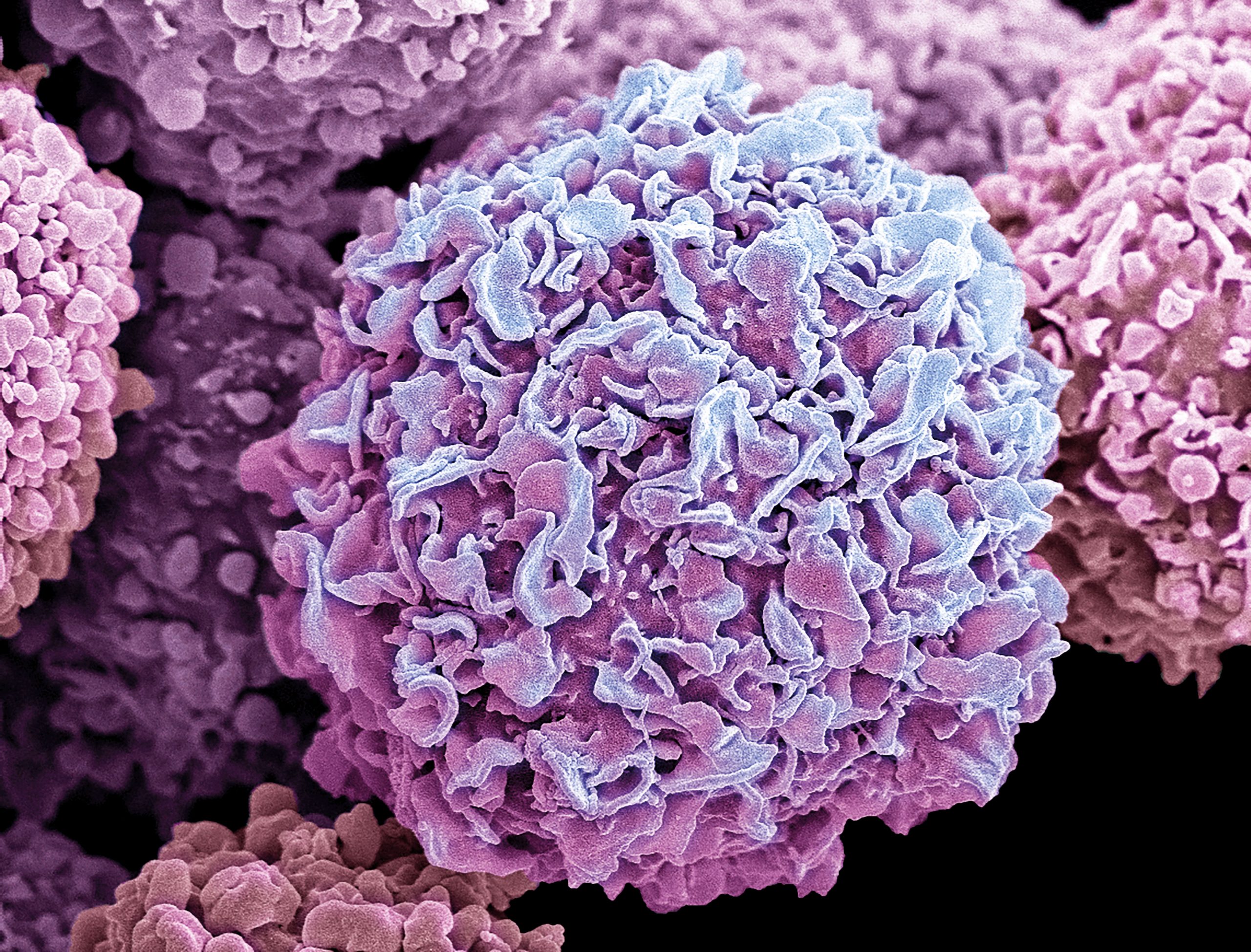
A new microfluidic study is offering fresh insight into how circulating nutrients may directly shape tumor behavior—without the confounding effects of the immune system, microbiome, or whole-body metabolism.
In a paper published in ALP Bioengineering, co-first authors Maryam Kohram and Carolina Trenado-Yuste report that high-fat conditions accelerated growth and invasion in a three-dimensional (3D) microfluidic model of triple-negative breast cancer (TNBC). Notably, the effect appeared to stem from enhanced matrix remodeling rather than increased proliferation.
Isolating diet’s direct effects on cancer cells
The relationship between diet and cancer progression has long been explored in animal models. But as Kohram emphasized, whole-organism studies make it difficult to disentangle direct tumor effects from systemic influences, including the tumor microenvironment.
“In this study, we were only looking at the effect of the diet only on the cancer cells themselves, instead of looking at the entire dynamics,” Kohram explained. “Diet can affect, for example, the immune system. They can affect the microbiome in the body. They can affect a lot of things, but in this study, we reduced the number of parameters to see the effect of the diet only on the cancer cells.”
Using a simplified 3D microfluidic tumor system, the team engineered “micro tumors” composed of human TNBC cells embedded in a collagen-based matrix that mimics tissue. The model included only four core components: cancer cells, extracellular matrix, defined culture media, and controlled interstitial flow.
Trenado-Yuste added that while dietary effects have been studied in vivo, isolating nutrient-driven mechanisms is challenging. “People have studied this using mouse models before, but it is difficult to isolate the effects of diet, So that’s why using this simplified system allows us to study the direct effects of the different dietary conditions on how micro tumors in this case progress over time.”
Modeling five dietary states
The researchers tested five physiologically inspired media conditions: baseline (normal diet), high insulin, high glucose, high ketone, and high fat.
The high insulin condition mimicked a postprandial state when the insulin levels in the blood have a peak. High glucose served as a simplified proxy for diabetes. High ketone modeled a ketogenic diet. High fat represented hyperlipidemia.
Despite the growing interest in ketogenic diets and metabolic interventions for cancer, the team observed no measurable differences in tumor behavior under four of the five conditions.
“In the other four, we didn’t see any differences,” Kohram said. “They were behaving in every test that we did… exactly the same.”
That included the ketogenic condition. While some mouse studies have suggested potential therapeutic benefits of ketogenic diets, the researchers cautioned that their model did not show direct effects on tumor cells themselves.
“From our results, you can probably make the conclusion that maybe the ketogenic diet is affecting other things in the body, not the cancer cells themselves,” Trenado-Yuste said.
High fat drives expansion and invasion
The outlier was the high-fat condition.
“From the five conditions, when these micro tumors are in the high fat diet, tumors progress faster and also farther,” Trenado-Yuse said.
Importantly, this effect was not driven by increased proliferation or decreased cell death.
“They’re not dividing or dying faster than the other cells,” Kohram clarified. “But we saw they are bigger.”
Instead, the tumors appeared to expand and hollow out internally. “They are just expanding, and the middle is becoming empty. So they’re hollowing out,” she said.
The team hypothesized that enhanced matrix degradation was enabling this expansion. Cancer cells in 3D environments can migrate either by squeezing through existing pores or by enzymatically degrading the surrounding matrix.
“These cells that are in the high fat media, they can degrade their matrix at a higher rate so that they can start expanding,” Kohram explained.
MMP1 emerges as a key player
Transcriptomic analysis pointed to a known mediator of matrix remodeling: matrix metalloproteinase 1 (MMP1).
MMP1 degrades the matrix, Kohram says, and they found that the cells in the high fat diet have an increased expression of MMP1, much higher than the other conditions. Imaging confirmed elevated MMP1 expression in tumors cultured under high-fat conditions compared to baseline.
While MMP1 has previously been linked to invasion and metastasis, the study underscores how metabolic context may influence its expression.
“It is known that the way cells move in 3D… one way is for them to open the pores, and the other way is for them to degrade the matrix so that they can start moving through the matrix,” Trenado-Yuse noted.
The next mechanistic question remains unresolved.
“A very important question would be, how is this high-fat diet actually increasing MMP-1?” Kohram said. “We did not get to that question yet.”
Not a clinical recommendation
Both authors were careful to stress that their findings should not be interpreted as dietary guidance for patients.
“This study was not done in mouse models or in humans,” Kohram said. “There are further steps that we need to take before we can actually give patients recommendations on their diet.”
Trenado Yuste echoed that point. “This is not a therapy,” she said. “We want to make sure that there are all these books saying, ‘Okay, if you eat this, you will cure cancer.’ That’s not the case.”
Rather, the study provides a mechanistic framework for understanding how circulating lipids may directly alter tumor architecture and invasion dynamics in TNBC.
