

Another Alzheimer’s antibody comes up short in clinical trials, but this time it’s not an amyloid-targeting therapy. Despite pharmacodynamic responses and sustained target engagement throughout the CNS, Alector’s humanized TREM2 antibody did not meet the primary endpoints for clinical benefit in patients with early Alzheimer’s in a Phase II double-blind, placebo-controlled trial. The Nature Medicine article also reports treatment-emergent adverse events, the most frequent being a type of brain swelling or bleeding previously seen with amyloid-targeting drugs.
Although recent approvals of amyloid-targeting therapies marked a major milestone after decades of failed drug development, these treatments provide only modest benefits and carry safety risks like amyloid-related imaging abnormalities (ARIA), particularly in people with certain genetic risk factors.
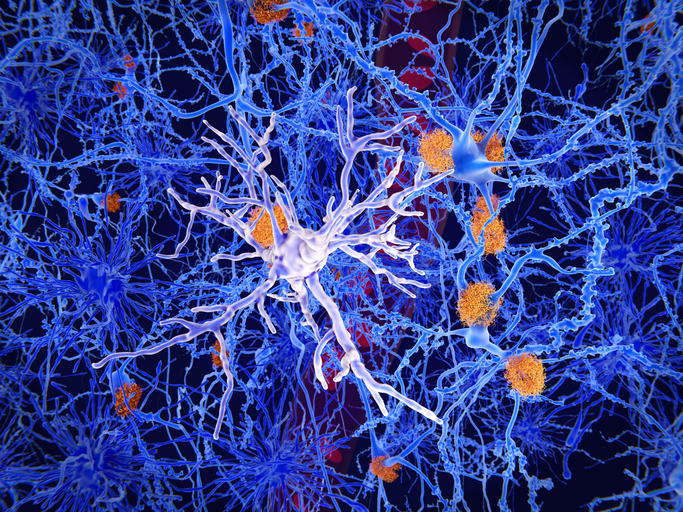
Researchers have increasingly looked beyond amyloid to the brain’s immune system for new therapeutic strategies. Brain-patrolling microglia play a key role in detecting and clearing pathological proteins. A receptor on microglia called TREM2 acts as a sensor for damage signals such as amyloid deposits, lipid molecules, and cellular debris. When activated, TREM2 triggers immune pathways that promote microglial survival, movement, and the engulfment of toxic material.
Genetic evidence suggests that TREM2 is important in Alzheimer’s disease, as variants in the TREM2 (triggering receptor expressed on myeloid cells 2) gene, including a mutation known as R47H, increase the risk of developing late-onset Alzheimer’s by two- to four-fold. Patients carrying such mutations often show weaker microglial responses to plaques and more severe neuronal damage. Animal studies have also supported the idea that boosting TREM2 activity might help counter disease progression by strengthening the brain’s immune defense.
Based on these findings, Alector scientists developed AL002, an experimental monoclonal antibody designed to activate TREM2 signaling. The antibody binds to the receptor and triggers internal cellular pathways that amplify microglial responses. Early laboratory experiments and animal studies suggested that stimulating TREM2 could enhance plaque clearance and improve memory in mouse models of Alzheimer’s.
Initial human testing for AL002 appeared promising. In a Phase I trial involving healthy volunteers, AL002 showed clear biological activity in the brain. Biomarkers in cerebrospinal fluid indicated increased TREM2 signaling, and the drug was generally safe and well tolerated across a wide dose range. Encouraged by these results, researchers launched a larger Phase II clinical trial to determine whether the drug could slow cognitive decline in people with early Alzheimer’s disease.
The trial, known as INVOKE-2, enrolled participants across North America, Europe, Australia, and South America between 2021 and 2023. Among nearly 2,000 people screened, 381 were randomly assigned to receive either a placebo or one of three doses of AL002 given once every four weeks. Participants had early-stage disease, including mild cognitive impairment or mild Alzheimer’s dementia. Early in the trial, a subset of participants was discovered to have treatment-emergent magnetic resonance imaging (MRI) findings resembling the ARIA. Most of the severe cases were observed exclusively in the APOE ε4 homozygotes (see ‘Safety’ below), who were discontinued and excluded from further enrollment. The final analysis set consisted of 356 participants who received treatment lasting between 48 and 96 weeks.
Early in the study, investigators observed MRI findings resembling ARIA, a type of brain swelling or bleeding previously seen with amyloid-targeting drugs. Because the most severe cases occurred in individuals carrying two copies of the APOE ε4 risk gene, those participants were removed from the trial and excluded from further enrollment. The main analysis ultimately included 356 participants without this high-risk genotype.
Despite successfully engaging its biological target, AL002 did not produce clinical benefits. The study’s primary measure was change in the Clinical Dementia Rating–Sum of Boxes (CDR-SB), a scale used to track cognitive and functional decline. After up to 96 weeks of treatment, there were no statistically significant differences between the placebo group and any AL002 dose group. Other cognitive and functional assessments, including the Mini-Mental State Examination and Alzheimer’s Disease Assessment Scale, also showed no evidence that the drug slowed disease progression.
Biomarker analyses told a similar story. Although AL002 clearly activated TREM2-related pathways, it did not reduce amyloid deposits in the brain or alter markers of tau pathology, neurodegeneration, inflammation, or synaptic dysfunction. Imaging scans using positron emission tomography revealed no reduction in amyloid burden compared with placebo.
Safety findings raised additional concerns. While most side effects were mild or moderate, ARIA-like changes were common among people receiving AL002. These MRI abnormalities, often involving microbleeds or brain swelling, occurred far more frequently in treated participants than in those receiving placebo. They were particularly common in individuals carrying APOE ε4 variants. In most cases the events were asymptomatic and resolved after treatment pauses, but they led to drug discontinuation for some participants.
Researchers also observed subtle changes in brain structure among treated participants, including slightly greater overall brain volume loss and enlargement of the brain’s ventricles. These changes were more pronounced in individuals who experienced ARIA, suggesting that inflammation associated with the imaging abnormalities might contribute to the structural shifts.
Although the trial failed to demonstrate clinical benefit, it offers important information regarding the role of microglial biology in Alzheimer’s disease. The results show that activating TREM2 signaling alone may not be sufficient to alter disease progression, at least at the stage tested. Scientists also note that TREM2 may have complex effects: microglial activation might be protective early in the disease but potentially harmful as pathology advances. Another possibility involves soluble TREM2, a fragment released from the receptor that was reduced by AL002 treatment. Some studies suggest this molecule may have protective functions in the brain, meaning lowering it could offset potential benefits of receptor activation.
Overall, the findings emphasize the complex nature of Alzheimer’s biology and the challenges of translating promising immune-based approaches into effective therapies. While AL002 did not slow disease progression, researchers say the study points to a deeper investigation into how microglia and TREM2 influence the course of Alzheimer’s and whether different strategies targeting the brain’s immune system could still hold therapeutic promise.
