

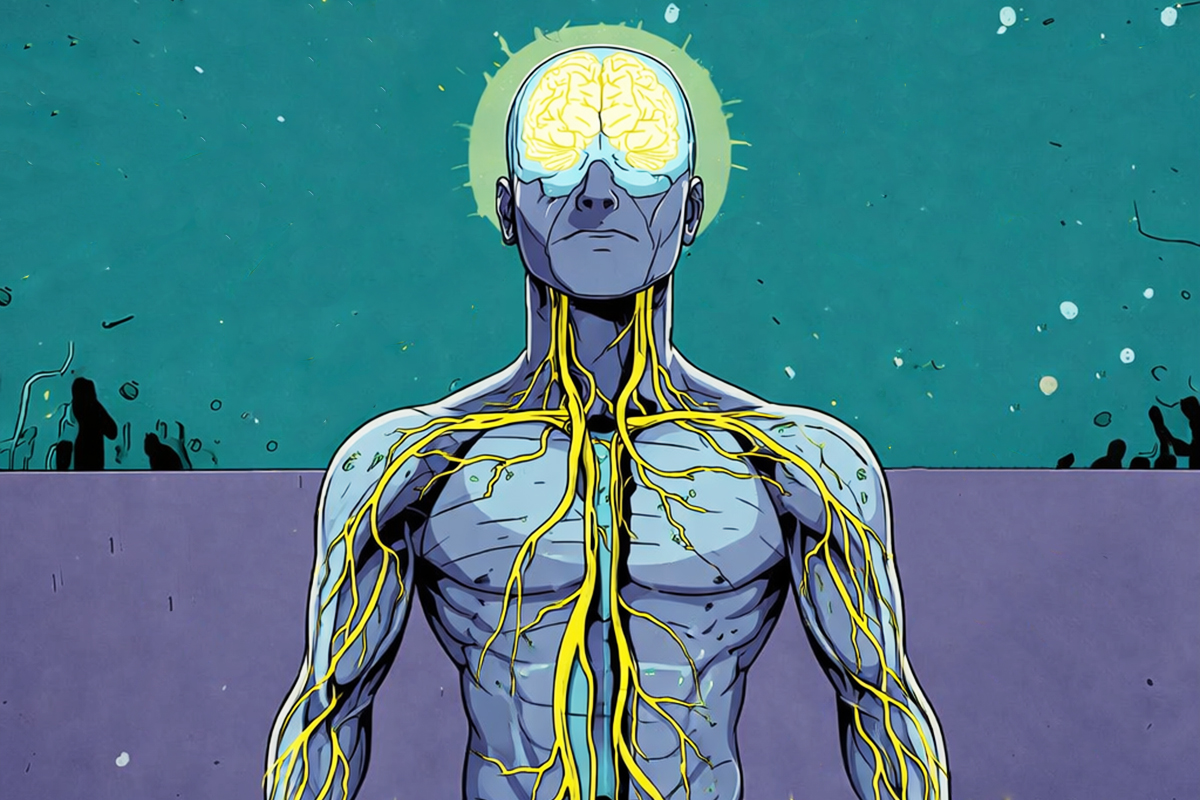
Vesalic CEO on targeting neurodegenerative disease ‘upstream’ after discovering a metabolic dysfunction in the blood of ALS patients.
The recent emergence of British biotech Vesalic has challenged the established treatment paradigm for neurodegenerative diseases, with the company claiming that motor neuron diseases like amyotrophic lateral sclerosis (ALS) – and potentially other conditions – may not be confined to the brain and central nervous system. Instead, the London-based company argues that a systemic metabolic dysfunction, detectable in blood, could be driving neuronal injury from the outside in.
Vesalic is building on what it describes as a breakthrough discovery: a disease-specific alteration in the lipid composition of extracellular vesicles (EVs) circulating in the blood of ALS patients. These vesicles appear to carry a “toxic cargo” capable of harming motor neurons, pointing to biology that originates beyond the central nervous system. If validated, the findings challenge decades of drug development efforts that have focused primarily on targets within the brain and spinal cord.
Longevity.Technology: Vesalic is building both a therapeutic program designed to neutralize this toxic exosome cargo before it reaches motor neurons, and a blood-based biomarker platform that the company says can detect ALS with greater than 90% accuracy. Should it prove successful, the company’s discovery could help reframe conditions such as ALS, Parkinson’s and Alzheimer’s as downstream consequences of upstream metabolic and cellular abnormalities that accumulate with age. To learn more about the broader hypothesis underpinning its platform, we sat down with Vesalic co-founder and CEO Dr Valeria Ricotti.
Describing the discovery made by the company as “serendipitous”, Ricotti explains that the lipid signature observed in ALS patients’ EVs reflected an “upstream biology” rather than end-stage degeneration of motor neurons.
“These EVs act as vectors of dysfunction,” she says. “We observed that EVs from ALS patients harm motor neurons in a dish and we see similar patterns in Parkinson’s. We think the CNS is particularly vulnerable because neurons are long-lived and largely non-regenerative.”
Motor neurons ‘most vulnerable’
Vesalic’s theory is that this systemic metabolic dysfunction accumulates over time and eventually affects the most vulnerable cells – the motor neurons in the brain.
“What we observed is that if patients are treated with a therapy that addresses the core of the disease, the biomarker progressively normalizes,” explains Ricotti. “That means we’re not capturing downstream neurodegeneration; we’re capturing an upstream underlying dysfunction.”
This led to the formation of Vesalic’s broader hypothesis: that neurodegenerative diseases may not be purely neurological diseases.
“We believe that these conditions may instead be organ-specific manifestations of a systemic abnormality in protein processing and cellular homeostasis,” says Ricotti. “It is not merely an end-stage marker. It is upstream and contributory. And aging plays a role in making this vulnerability visible.”
Of course, neurodegenerative diseases are notoriously complex, multisystemic conditions and Ricotti is quick to stress that the discovery of a potential upstream driver should be viewed realistically.
“These are complex diseases – I don’t think there is one single cause,” she says. “What we’re building evidence for is that there is a cellular metabolic abnormality that does not sit solely in the brain or motor neurons. This abnormality is not simply a symptom of neurodegeneration.
“If this toxicity is a significant contributor – not necessarily the sole root cause, but a meaningful contributor – can we halt damage by intercepting it? That’s our therapeutic approach.”
New ALS biomarker ‘ready’
Vesalic’s discovery led to its two-pronged approach – developing both diagnostic and therapeutic programs for ALS. Current diagnostic tests for ALS look for certain proteins (neurofilaments) in blood and cerebrospinal fluid biomarkers, which are indicators of advanced nerve cell damage.
“A neurofilament test is accurate and clinically relevant but non-specific, it represents a downstream mechanism and only captures the end of the avalanche,” says Ricotti. “We’re trying to see what happens at the beginning of that avalanche. So yes, we’re working on a diagnostic – but the diagnostic platform is not just limited to diagnosis. It expands the narrative around what happens in neurodegenerative diseases and how aging contributes to their manifestation.”
According to Vesalic, its ALS biomarkers are more than 90% accurate, scalable, and have been tested on an independent platform.
“Our biomarkers are ready – they could already be used as exploratory markers,” says Ricotti. “Our next step is to find partners to start using them in clinical trials. We’re opening a new door to upstream targeting. With our biomarkers, we can rapidly assess whether interventions are targeting the root cause of the disease. We believe that a treatment would have to change the underlying metabolic abnormality in order to change the biomarker signature.”
Importantly from a drug development perspective, Vesalic’s biomarkers can also function as a pharmacodynamic tool.
“For us, biomarkers are most meaningful if you can also offer a therapy,” says Ricotti. “While accurate diagnosis of neurodegenerative diseases is very important, the ultimate goal is to bring forward medicines to help slow or halt disease progression. Our diagnostic and therapeutic platforms are specifically designed to be complementary. The same biology we uncovered with the biomarkers underpins our therapeutic approach.”
The road to the clinic
On the therapeutic side, Vesalic has identified a lead biologic compound targeting motor neuron disease. Proof-of-concept in vivo studies in mice are ongoing.
“Importantly, there is currently no mouse model for sporadic ALS, which represents over 90% of cases,” says Ricotti. “We created and patented a sporadic ALS mouse model and are now testing our monoclonal antibody in it.”
If the proof-of-concept is successful, Vesalic will move into discussing IND-enabling studies with regulators.
“Given the high unmet need, we believe progression to clinic could be relatively fast if the data package is convincing,” says Ricotti. “Our goal is to file by the end of 2027, depending on regulatory requirements.”
“We funded the company unconventionally through private individuals, family and friends, and we operate virtually on a lean budget,” she adds. “We are now raising funds to reach IND, mainly focused on high-net-worth individuals and family offices, but we’re also starting to engage with VCs.”
‘Cellular-level’ dysfunction
There are currently no peer-reviewed publications pertaining to Vesalic’s discovery because the company opted to protect its intellectual property by operating in stealth mode for the past three years.
“Instead of applying for grants and exposing our innovation to peer review, which can jeopardize IP, we chose to channel the work through a company structure to move faster,” says Ricotti. “We’re not aware of anyone pursuing this specific approach. Now that we’re public, I expect more attention – but we’ve built a strong patent portfolio and we are well protected.”
As excitement grows over the potential neuroprotective benefits seen in patients receiving GLP-1 treatments, does Ricotti see this as further indication of a link between neurodegeneration and metabolic dysfunction?
“It makes sense,” she says. “Metabolism may be optimized for a certain age. For genetic, epigenetic or environmental reasons, that optimization may fail later in life. It’s interesting to view neurodegenerative diseases as systemic metabolic conditions causing a susceptibility rather than fixed and isolated CNS disorders.”
“Understanding this biology opens multiple therapeutic avenues. Each neurodegenerative disease is distinct and manifests differently, but many, including Alzheimer’s and Parkinson’s, have systemic features, and we have observed disease-specific lipid signatures across multiple diseases. The signatures differ, but they belong to the same lipid families – suggesting a cellular-level dysfunction.”
