

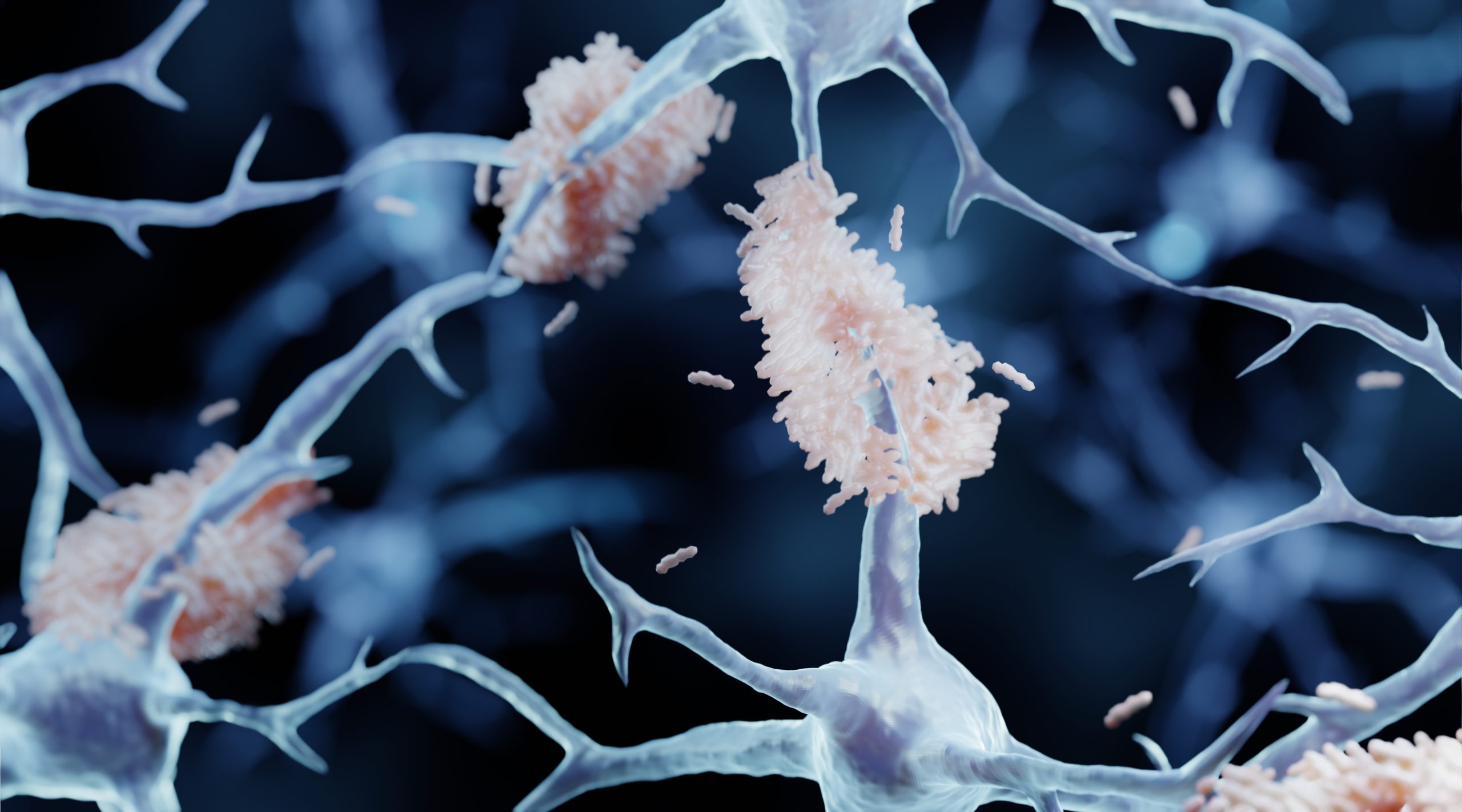
Researchers at Washington University School of Medicine in St. Louis have developed genetically altered astrocytes that express chimeric antigen receptors (CARs) as a promising immunotherapy system capable of clearing accumulations of amyloid-β (Aβ)—a hallmark pathological feature of Alzheimer’s disease (AD)—in the brains of mice.
Recently approved anti-Aβ antibody therapies have shown moderate success in slowing AD progression. However, these treatments require large doses, repeated administration, and are associated with potentially serious side effects. To reduce the frequency of treatment and potentially improve the efficacy of anti-amyloid therapy, scientists headed by Marco Colonna, MD, the Robert Rock Belliveau, MD, professor of pathology at WashU Medicine engineered CAR-expressing astrocytes—CAR-As, as a new type of cellular immunotherapy. Their tests in mice showed that a single injection of the CAR-A treatment prevented amyloid plaques from developing when given before plaques start to form. A single treatment in animals that had already developed plaques also cut the amount of amyloid plaques in half.
“This study marks the first successful attempt at engineering astrocytes to specifically target and remove amyloid beta plaques in the brains of mice with Alzheimer’s disease,” said Colonna. “Although more work needs to be done to optimize the approach and address potential side effects, these results open up an exciting new opportunity to develop CAR-astrocytes into an immunotherapy for neurodegenerative diseases and even brain tumors.”
Colonna is senior author of the team’s published paper in Science, titled “Targeting amyloid-β pathology by chimeric antigen receptor astrocyte (CAR-A) therapy,” in which they stated, “Overall, our results demonstrate the effectiveness of the anti-Aβ CAR-A concept and highlight the therapeutic potential of CAR-A for decreasing Aβ deposition and treating AD.”
Alzheimer’s disease starts with the buildup of amyloid-β into plaques in the brain, setting off a chain of events that results in brain atrophy and cognitive decline. “Alzheimer’s disease (AD) is the leading cause of dementia and is characterized by progressive amyloid accumulation followed by tau-mediated neurodegeneration,” the authors wrote. Microglia, immune cells that reside in the brain, are responsible for removing brain waste but can become dysfunctional when overwhelmed in the context of neurodegenerative disease.
“Currently, the most effective strategy for slowing AD progression involves anti-Aβ monoclonal antibodies, three of which have recently received clinical approval,” the team continued. However, they noted “Current mAb treatments carry potential side effects including amyloid-related imaging abnormalities. Another challenge is determining the optimal treatment window.” There is an urgent need for new therapeutic approaches that offer improved efficacy, safety, convenience, and flexibility for AD treatment, they stated.
Like CAR T cell therapies used for cancer treatment, in which T cells of the immune system are genetically modified to attack cancer cells, the team’s new approach equips cells—in this case brain cells called astrocytes—with a CAR homing device to grab onto a target for destruction. These new CAR-astrocyte cells have features that transform them into super cleaners that remove damaging proteins from the brain that play a role in cognitive decline. “We introduced anti-Aβ CARs into astrocytes using an adeno-associated virus (AAV), creating CAR-expressing astrocytes (CAR-A) that could act as super-phagocytes, specifically targeting and removing extracellular Aβ aggregates,” they explained.
To reduce the cleaning burden on microglia, first author Yun Chen, PhD, then a graduate student in the labs of Colonna and co-author David M. Holtzman, MD, the Barbara Burton and Reuben M. Morriss III distinguished professor of neurology at WashU Medicine, transformed astrocytes, the most abundant cell type in the brain, into amyloid-cleaning machines. He custom-designed and delivered a gene to astrocytes that codes for the chimeric antigen receptor (CAR) via a harmless virus injected into mice.
The CAR, now present on the surface of astrocytes, enabled the cells to capture and engulf amyloid beta proteins. With their newly acquired ability, the astrocytes—a cell type generally responsible for keeping the brain tidy—concentrated their efforts on only cleaning amyloid beta plaques in mice prone to its buildup. Two different CAR constructs were created and evaluated in mouse models of AD.
Mice carrying genetic mutations that increase people’s risk of developing Alzheimer’s disease develop amyloid-β plaques that saturate the brain by six months of age. Chen, at this time a postdoctoral researcher in the Holtzman lab, administered the AAV-delivered CAR-A constructs by injection into young mice before they developed plaques, and into older mice with brains that were saturated with plaques. The animals were followed for three months.
The researchers found that as the younger mice aged, the CAR-astrocytes prevented amyloid beta plaque development. At nearly six months of age, when untreated mice normally have brains saturated with harmful plaques, brains of the treated mice were plaque free. The older mice that had already plaque-saturated brains at the time of treatment exhibited a 50% reduction in the amount of amyloid-β plaques compared with mice receiving an injection of a virus lacking the CAR gene.
“Early intervention—before plaque formation—achieved greater amyloid prevention, suggesting the potential for a one-time, disease-modifying treatment … A single AAV injection led to sustained CAR expression in astrocytes for at least three months and decreased plaque load,” the authors wrote in summary. “Single-nucleus RNA sequencing shows that CAR-A treatment induces a distinct glial response to amyloid pathology involving coordinated activity of astrocytes and microglia.”
The researchers have filed a patent, with help from the Office of Technology Management at WashU, related to the approach used to engineer CAR-astrocytes. “Consistent with the antibody drug treatments, this new CAR-astrocyte immunotherapy is more effective when given in the earlier stages of the disease,” said Holtzman. “But where it differs, and where it could make a difference in clinical care, is in the single injection that successfully reduced the amount of harmful brain proteins in mice.”
In future studies, the authors aim to continue improving their CAR-astrocyte immunotherapy by fine-tuning its design to better target harmful proteins, while ensuring no harmful effects on normal brain cell functions. Additionally, by adjusting the CAR homing device to recognize specific markers on brain tumors, they could potentially switch astrocytes’ function from cleaning up debris to directly killing tumor cells. Such an approach could offer a promising new way to treat brain tumors and other central nervous system diseases.
“Looking ahead, continued optimization will be critical to maximize amyloid clearance while preserving neuronal integrity, minimize off-target effects, and extend this approach to additional cell types,” the authors stated. “Together, these findings position CAR engineering as a scalable and tunable strategy for treating neurodegenerative disease.”
In a related perspective, Jake Boles, PhD, and David Gate, PhD, at Feinberg School of Medicine, Northwestern University, said that the study by Colonna et al. helps to establish a foundation for “increasingly innovative” CAR strategies in AD. “As CAR technologies mature and the ability to selectively neutralize toxic proteins improves, these approaches hold substantial promise for AD and other neurodegenerative disorders,” they wrote.
