

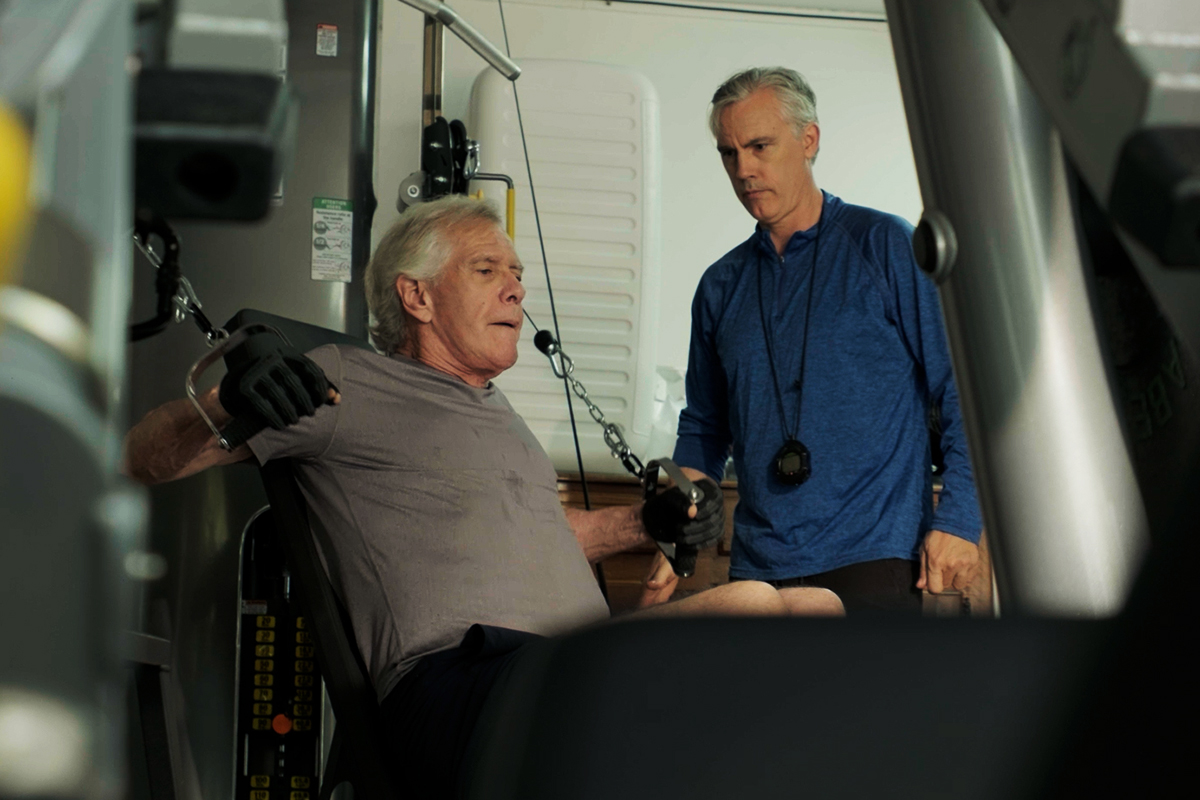
New documentary featuring leading geroscientists examines lifestyle, longevity research and the shifting public conversation around aging.
The longevity revolution is currently undergoing a massive translation project – moving from the rarefied air of the laboratory into the messy reality of global policy and public consciousness. Forever Young, a new documentary directed by David Donnelly, arrives at exactly this inflection point. Featuring a Who’s Who of geroscience from the Buck Institute, Harvard and Stanford, the film attempts to take the dense, often impenetrable language of aging biology and make it legible to the people whose lives it will actually change.
Fresh from picking up the Active Cinema Audience Award at the Mill Valley Film Festival, this independently backed project brings together many of the field’s heavy hitters – including Drs Eric Verdin, Steve Horvath and Nir Barzilai. But rather than just cataloging biomarkers, the film leans into the most empowering, if slightly daunting, reality of modern geroscience: that the ‘genetic hand’ we’re dealt is far less important than the environment and lifestyle choices we use to play it.
Longevity.Technology: Longevity science is currently caught in a massive disconnect: the research is accelerating and the capital is flowing, but the public conversation is still struggling to keep pace with the noise. We have arrived at a moment where even though the claims are getting louder, the actual understanding of what this shift means for the average human life remains dangerously thin. If the field is to matter beyond the conference circuit and the occasional self-experimenting biohacker, it has to be translated – not diluted, but made legible to the people whose lives it may eventually change. That is where a film like Forever Young becomes interesting; not because documentaries settle scientific debates – they do not – but because they can widen the conversation, placing questions of aging, prevention and human agency into the cultural mainstream. This matters because preventive longevity is no longer just a luxury ‘optimization’ hobby for the well-informed few; it is a massive societal reckoning. It’s becoming inextricably bound up with how we rethink health systems, the future of work and the staggering economic cost of doing almost everything too late. We are finally moving away from viewing aging as an immutable fact to be endured, and toward seeing it as a biological process that can be influenced, interpreted and managed with far more sophistication than traditional medicine ever allowed.
In that sense, the real value of Forever Young isn’t that it settles the science – it’s that it helps the longevity conversation finally grow up. To find out more about the science of lifestyle and longevity – and the barriers to translating prevention into everyday medicine – we sat down with Dr James Johnson, one of the film’s producers.
From genetic destiny to lifestyle agency
The film places strong emphasis on a shift now familiar within geroscience: the move away from genetic determinism toward a more dynamic understanding of how lifestyle and environment shape aging.
“When I was in medical school,” Johnson says, “we were taught that genetics drives 80% of mortality – that you are born into a fixed fate with respect to getting cancer, cardiovascular disease, diabetes and so on. That notion turned out to be completely wrong.”
Instead, emerging evidence suggests that daily behaviors – movement, diet, sleep and social connection – interact with biology in ways that can profoundly shape long-term health.
“Your daily choices – how you move, what you eat, how you sleep, the quality of your relationships – are overwhelmingly what determine how well you age,” he says.
The film references research suggesting that lifestyle and environmental factors may account for the vast majority of lifespan variation, with genetics playing a smaller role (although other recent research points to an opposing view). Johnson notes that the estimate comes from large-scale genealogical analyses comparing relatives with individuals sharing the same environment.
“As modern research deploys newly available biomarkers of aging, such as epigenetic markers, we can expect to gain more nuanced information about the relative contribution of each factor to lifespan and healthspan.” In the trailer, Johnson even categorizes the quality of one’s relationships as a “fifth vital sign,” arguing that social connectivity is as mathematically significant to the biology of aging as traditional physical parameters.
A field in scientific debate
If researchers broadly agree that aging can be influenced, there is far less consensus about the mechanisms that might allow it to be slowed – or even reversed.
“What the researchers agree on is a paradigm shift away from viewing aging as an inalterable fact of life,” Johnson says, “and toward a view of aging as a biological process that biomedical science can modulate.”
The disagreements lie in how far such modulation might ultimately go.
“In the most optimistic scenario, could we halt or even reverse the processes of aging? The field is sharply divided on these points.”
The field is currently split between the true believers – those convinced that targeting cellular damage and epigenetic reprogramming can dramatically rewrite the human healthspan – and the pragmatists who take a far more cautious, incremental view. It’s a classic collision between biological potential and clinical friction.
“Right now we’re in a scientific revolution where multiple competing models are fighting for supremacy,” Johnson says, “but none can yet marshal enough definitive proof to declare victory.”
The challenge of translating longevity science
Even if the science is settled, the translation is stalled. As Johnson notes, the barriers are a trifecta of the structural, the informational and the behavioral.
The structural issue is the most glaring: our healthcare systems are essentially 20th-century reactive engines, designed to treat disease rather than intercept it decades earlier. We are asking physicians to lead a longevity revolution despite a near-total lack of training in nutrition or lifestyle medicine – all while they operate within regulatory frameworks that never prioritized prevention.
“The FDA doesn’t classify aging as a disease,” Johnson points out, “which effectively caps the interventions we can even study.”
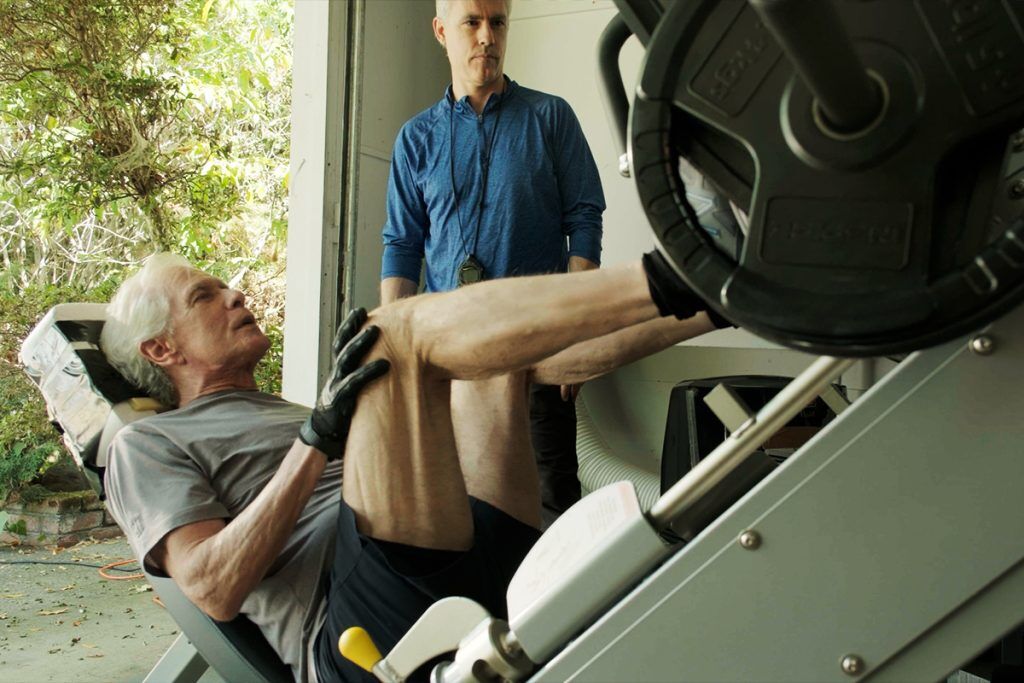
But the hardest barrier isn’t the policy; it’s the person. Most effective longevity interventions – exercise, fasting, dietary discipline – require a level of sustained effort that the modern environment isn’t built to support. This isn’t just an oversight; it’s an entrenched ‘sick-care’ architecture that we are now trying to retrofit for a future it was never designed to handle. As Johnson puts it: “Getting people to do things that require discipline is incredibly difficult – even when the stakes are as high as they could possibly be.”
Balancing empowerment with realism
The rise of wearables and biological tracking tools has given people unprecedented insight into their own health. Yet the culture of optimization surrounding longevity can sometimes tip toward excess.
“It’s true that some people appear to have overindulged in the search for that power,” Johnson says, referring to intense data-tracking regimes adopted by some longevity enthusiasts.
“But it doesn’t have to be that way. You can learn what you need to know to make your life better, and apply that knowledge in a way that is measured and health-promoting rather than frantic.”
In that sense, Forever Young attempts not simply to catalogue scientific ideas, but to place them within a broader human context – one in which longevity science may empower individuals without turning aging itself into a project of endless optimization.
