

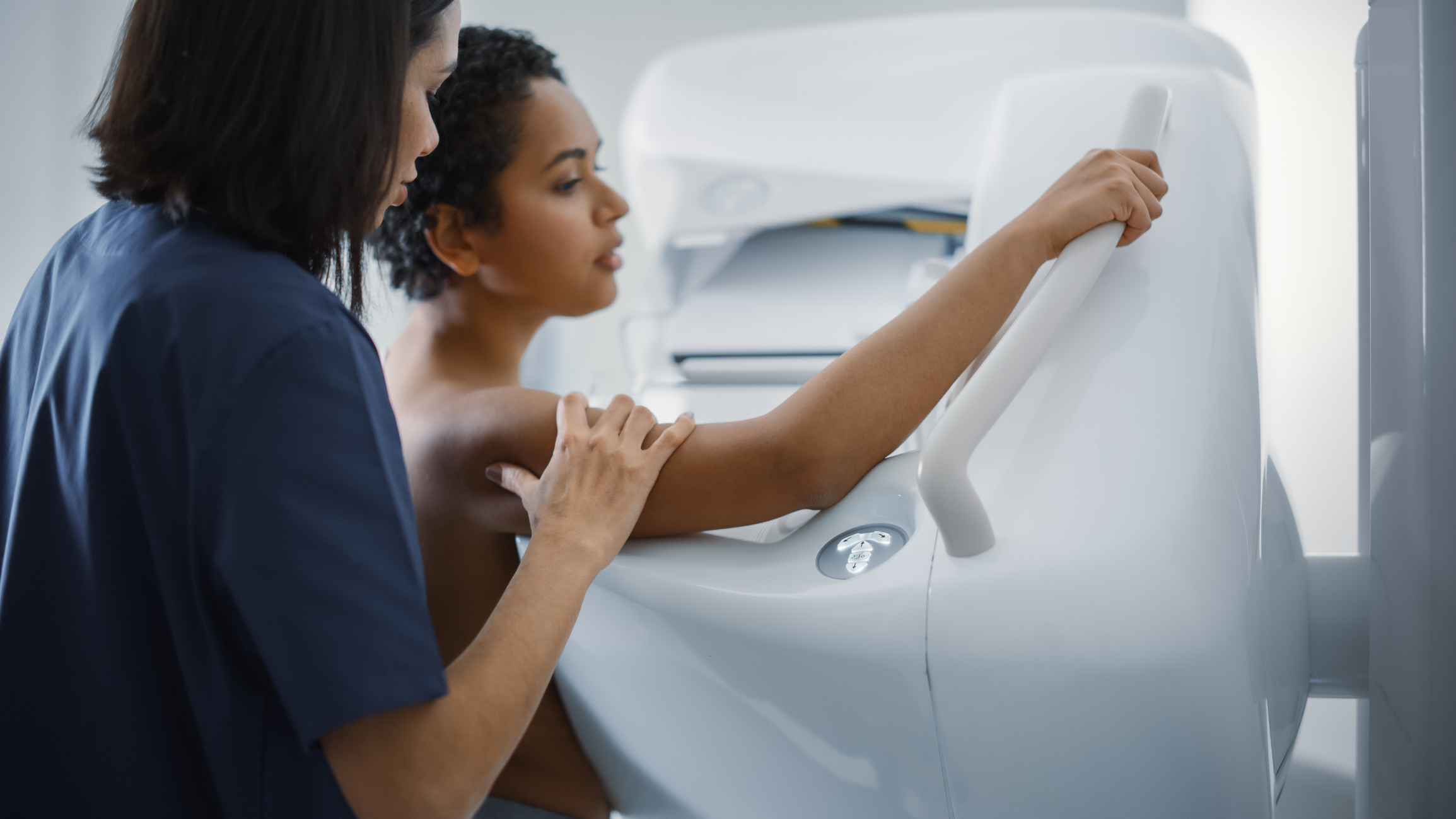
Using artificial intelligence (AI) to analyze X-ray mammogram scans from standard breast screening could be used as a method to assess whether women are at risk for heart disease as well as cancer.
As reported in the European Heart Journal, the researchers used AI to measure the amount of calcium in breast arteries seen on the X-rays. They showed that using AI to analyze a women’s mammogram screen for breast arterial calcium could be used to calculate cardiovascular risk.
“We found that the more calcium visible in the breast arteries on a mammogram, the higher a woman’s risk of a serious heart event such as a heart attack, stroke or heart failure,” said lead author Hari Trivedi, MD, an associate professor and researcher at Emory University, in a press statement.
“This was true even in younger women under 50—a group often considered low-risk—and held up after accounting for other risk factors like diabetes and smoking. This is the largest study of its kind and covers multiple races across two major U.S. health systems.”
In this study, the researchers included 123,762 women aged 40 to 79 years who had screening mammograms for breast cancer at two large health systems in the U.S. and did not have known cardiovascular disease at the start of the study.
The AI measured the area of calcium in the breast arteries (BAC) in mm2 and grouped women into four groups: no BAC, mild BAC (0–10 mm²), moderate BAC (10–25 mm²), and severe BAC (over 25 mm²). The women were then followed up for approximately seven years to see who had major adverse cardiovascular events defined as a combination of: acute myocardial infarction (heart attack), stroke, heart failure, and all‑cause death.
Compared with women with no BAC, those with mild BAC had about a 30% higher risk for experiencing one or more of these serious cardiovascular events and those with moderate BAC about an 80% higher risk. Women in the severe BAC group had roughly three times the risk of having a major heart or circulation event as those with no BAC. These findings remained significant even after correcting for the PREVENT score, a standard heart‑disease risk tool based on age, blood pressure, cholesterol, diabetes, smoking, and other factors.
“For women, this means a mammogram you’re already having could also provide important information about your heart health—prompting a conversation with your doctor about preventive steps such as cholesterol testing or medication,” said Trivedi. “For clinicians, it offers a practical way to identify women at cardiovascular risk who are currently being missed.”
Cardiovascular disease remains the leading cause of death in women but is often underdiagnosed. This research shows that images already generated for cancer screening can be used to help clinicians to identify women who may be at increased risk for cardiovascular events.
“While BAC is more prevalent with age, its presence in younger women is a strong indicator of elevated cardiovascular risk,” conclude the authors. “Our analysis confirmed that moderate to severe BAC in this younger cohort was associated with significantly lower major adverse cardiovascular event-free survival, identifying a high-risk group that might otherwise be overlooked by age-weighted risk models.”
