

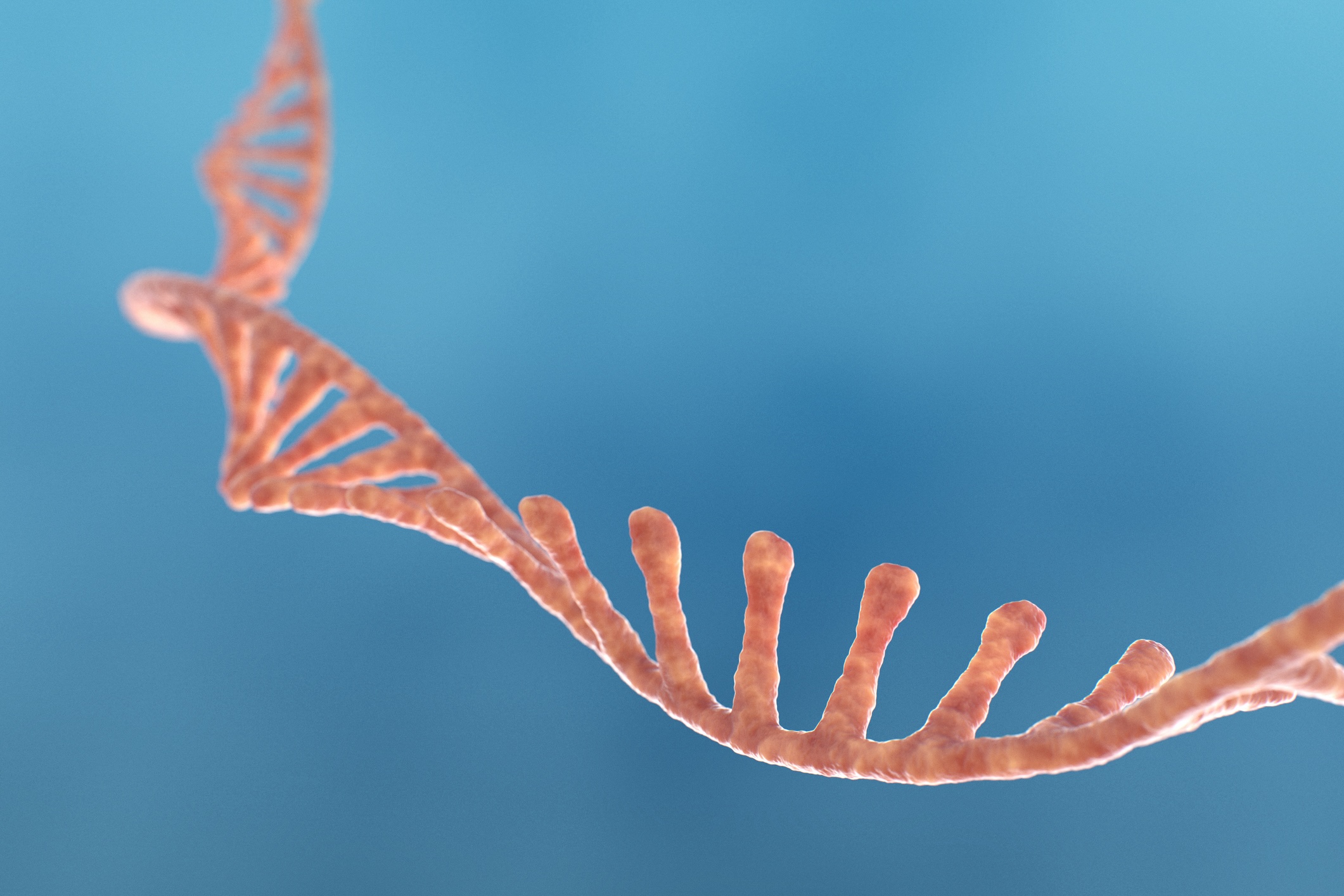
For the first time, researchers have created functional long non-coding (lnc)RNAs outside cells and used them to treat disease, revealing a whole new purpose for what was previously dismissed as “junk DNA.”
The findings, in Science Signaling, could open up new treatments using this mysterious, non-coding RNA, once known as genomic “dark matter.”
Indeed, the Canadian team suggests that lncRNA molecules have the potential to become a whole new class of therapeutics that operate similarly to small-molecule drugs.
“This is a completely new paradigm for drug discovery, and we think that the dark transcriptome is a great opportunity to find new treatments that will really change lives in the future,” said senior author Omar Khan, PhD, from the University of Toronto.
There are nearly 36,000 known lncRNAs and they make up the vast majority of the human transcriptome, albeit with few known functions.
These transcripts—more than 200 nucleotides in length—do not encode proteins but are now known to be important regulators of gene expression.
Yet despite their essential role in biology, lncRNAs have mostly been overlooked as a form of nucleic acid that could treat disease.
To investigate further, Khan and team examined how sequence and chemical modifications could affect the function of GAPLINC, MIST, and DRAIR lncRNA in situations of acute inflammation such as sepsis.
Human and mouse GAPLINC have high sequence homology, allowing the researchers to probe the clinical translation potential in mice.
Including MIST and DRAIR, which are both mouse-specific, allowed them to investigate whether additional lncRNAs could be reengineered for exogenous use in vivo with the same pipeline.
Khan and co-workers synthesized pure mature forms of modified and unmodified GAPLINC, MIST, and DRAIR, which were functionally screened in vitro and therapeutically deployed in vivo.
Results revealed that based modification of all three lncRNAs, locally delivered in the form of lipid nanoparticles, reduced acute inflammation in mouse macrophages by reducing expression of pro-inflammatory cytokines. In addition, GAPLINC also suppressed inflammation in human immune cells.
Gene expression analysis uncovered how modifying lncRNA base could exert transcriptional control over key proinflammatory cytokines, highlighting the possibility of using chemical modifications to fine-tune lncRNA action.
“Our work establishes lncRNA as a previously unidentified drug modality and the potential to use chemical base modifications to control the functional performance of lncRNA-based therapeutics,” the researchers concluded.
They added: “Collectively, exogenous and reengineered lncRNAs represent a previously unidentified opportunity to create novel therapies and understand cellular regulation.”
